
In This Article
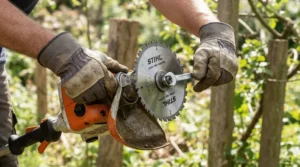
A brush cutter for brambles is a handheld or backpack-mounted powered cutter, fitted with a metal blade rather than nylon line, that slices through thorny, woody bramble stems at ground level. Unlike a standard strimmer, it has the torque, guard and cutting tool to clear stems thicker than a pencil safely.
Brambles don’t read garden manuals. Left alone, they send out arching stems up to 2.5 metres long that root wherever the tips touch soil. One stray cane becomes a thicket by next summer. A nylon-line strimmer meets that thicket and simply gives up, or worse, whips thorny debris back at your shins.
Timing helps, too. The RSPB treats March to September as the main nesting window, so early October is when clearing becomes sensible rather than risky.
This guide compares seven real machines, from budget petrol to professional backpack. Along the way it covers each secondary question buyers ask. Is a backpack brush cutter worth the money? Does a lightweight brush cutter have the grunt? Which blade type for woody stems actually works? What protective gear do you need? And how far into a thicket can you realistically cut, which is the clearance depth question?
One honest note on method. Every pick rests on manufacturer specifications, UK retailer listings, and published reviews and forum discussions. I haven’t used these machines myself. Where verified reviews are thin, I say so rather than invent anything.
Brush Cutter for Brambles at a Glance: Quick Comparison
| Model | Power / Type | Weight (excl. blade, fuel, battery) | Best For |
|---|---|---|---|
| Husqvarna 525RX Mark II | 25.4cc petrol, handheld | around 5.5 kg | All-round garden clearing |
| Stihl FS 94 RC-E | 24.1cc petrol, handheld | 4.6 kg | Tight corners, lighter frames |
| Einhell GC-BC 52 I AS | 51.7cc petrol, handheld | check listing | Tight budgets, occasional use |
| Husqvarna 553RBX | 50.6cc petrol, backpack | 12.1 kg | Large, dense infestations |
| Makita UR101C | 36V cordless, backpack power pack | around 5.2 kg (tool) | Quiet, fuel-free clearing |
| Stihl FS 131 | 36.3cc petrol, handheld | 5.8 kg | Dense, older brambles |
| Stihl FSA 200 | 36V cordless, handheld | 5.7 kg (bare tool) | Noise-sensitive neighbourhoods |
Looking at the comparison above, the Husqvarna 525RX Mark II and Stihl FS 94 RC-E share a weight-first philosophy. The Stihl FS 131 and Husqvarna 553RBX trade carried weight for raw cutting muscle. Budget buyers should note that the Einhell GC-BC 52 I AS offers the most engine for the least money, though I couldn’t confirm its weight from the sources I found. The cordless pair, the Makita UR101C and Stihl FSA 200, swap fuel and noise for battery planning.
💬 Just one click — help others make better buying decisions too!😊
Top 7 Brush Cutter for Brambles Picks: Expert Analysis
Each machine below gets the same treatment: what the spec sheet means in practice, who it suits, and what reviewers or retailers say. Prices are ranges only, so check current pricing before you buy.
1. Husqvarna 525RX Mark II — pro-grade balance without pro-grade weight
Lightness is the headline. At around 5.5 kg before you fit a cutting tool, this machine stops a long session among thorns turning into a shoulder-and-wrist ordeal.
The 25.4cc X-Torq engine delivers about 1.0 kW. That looks modest beside a 50cc brute, but it is enough to keep a metal blade moving through pencil-thick canes, which is what most garden and hedge-bottom brambles are made of. The adjustable bullhorn handle lets you sweep low without cranking your wrists, and Husqvarna lists a 45 cm cutting width. It ships with a 4-tooth grass blade and a Tap ‘n’ Go line head. One UK dealer says an optional saw blade and guard is the route to clearing light woody overgrowth like bramble, so budget for that.
Based on the spec comparison, this is the sensible default for a typical overgrown garden or small paddock. Independent owner reviews for this exact Mark II are thin in what I could verify. UK arborist forum users do repeatedly say a 35cc-class machine from Husqvarna or Stihl is plenty for bramble and nettles. That places this lighter 25cc model at the “canes yes, saplings no” end of the range.
Pros:
- ✅ Around 5.5 kg keeps fatigue low
- ✅ Adjustable bullhorn handle for low sweeping cuts
- ✅ Grass blade and line head both supplied
Cons:
- ❌ Saw blade for woody stems costs extra
- ❌ 25cc output struggles with thumb-thick saplings
Expect roughly £400-£520, depending on the retailer. That is solid value for a professional-grade machine you’ll still be using in a decade.
2. Stihl FS 94 RC-E — the lightest machine in this line-up
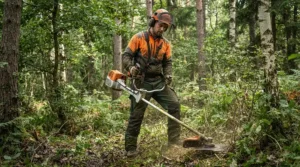
At 4.6 kg without fuel or cutting tool, the Stihl FS 94 RC-E is the featherweight here. Stihl’s own listing positions it as its lightest brushcutter in the segment, and the loop handle is designed for tight spots where a wide bike handle would catch on fence posts.
The 24.1cc 2-MIX engine produces 0.9 kW. Add ErgoStart for easier pull-starting and the ECOSPEED throttle limiter, and you have a machine built for frequent, moderate work rather than brute force. Total length is 178 cm. One catch: it comes with an AutoCut line head, and the metal blade is sold separately, so a line head alone won’t touch woody canes.
Vibration deserves attention. Stihl declares 5.5 m/s² with a metal tool and 6.1 m/s² with the mowing head. Under HSE’s daily-exposure maths, that means roughly 1 hour 20 minutes to 1 hour 40 minutes before you reach the action value. It’s fine for garden jobs, but plan breaks.
I couldn’t verify a meaningful pool of independent owner reviews, and retailer copy is manufacturer-led. On paper, this suits hedge-bottom bramble, fence lines and tight borders.
Pros:
- ✅ Just 4.6 kg, gentle on shoulders
- ✅ Loop handle suits cramped corners
- ✅ ErgoStart makes starting less of a battle
Cons:
- ❌ Metal blade must be bought separately
- ❌ Higher declared vibration than rivals
Prices run around £380-£500, so check current price. It’s good value if weight matters most and you’ll add the right blade.
3. Einhell GC-BC 52 I AS — the budget brute
Most engine for the least money is the pitch. The 51.7cc two-stroke is rated at 1.5 kW, which out-muscles both lighter petrol picks above. The kit includes a 255 mm brush blade, a 420 mm twin-line spool, a harness and an adjustable bike handle, so you can start on brambles straight from the box.
Extra power matters when a blade snags in a dense tangle, because the engine keeps turning instead of bogging down. The split aluminium shaft also means it fits in a car boot, a genuine perk for allotment holders. Auto choke and a primer keep starting simple.
There’s a trade-off. One arborist-forum user mentions that a 53cc two-stroke feels like too much machine with a blade on. More power means more weight and more kickback energy to control. I couldn’t confirm the weight or vibration figures from the sources I found. Check those on the retailer’s spec sheet before you commit, particularly if you’ll use it for hours.
I found no verified independent review pool for this model, so treat durability as unproven.
Pros:
- ✅ Highest power output per pound spent
- ✅ Blade and line head both included
- ✅ Split shaft eases storage and transport
Cons:
- ❌ Weight and vibration figures hard to verify
- ❌ Long-term durability data is thin
Expect around £130-£215. As a budget option for occasional heavy clearing, the value verdict is positive, provided you wear proper gear.
4. Husqvarna 553RBX — a backpack brush cutter built for serious acreage
This is the heavyweight. The Husqvarna 553RBX puts its 50.6cc, 2.3 kW engine on your back and leaves only the shaft and handle in your hands. A flexible drive shaft keeps the cutting head nimble. Total weight is 12.1 kg, but it sits on an integrated harness rather than hanging from your shoulder.
That layout is the whole point of a backpack brush cutter. A heavy, powerful engine becomes bearable because your hips carry it, and the cutting end feels far lighter than the same power in a handheld. The J-handle and 46 cm cutting width suit long sweeping passes, and Smart Start reduces starter-pull effort by up to 40% according to Husqvarna. It ships with a Multi 275-4 grass blade and a trimmer head, and the saw blade is not included.
My analysis is that it’s overkill for a back garden but ideal for field margins, neglected woodland edges or professionals. I couldn’t verify independent owner reviews, and at least one UK retailer listed it out of stock, so confirm availability.
Pros:
- ✅ Engine weight rides on your back
- ✅ Power to spare for woody stems
- ✅ Flexible shaft makes the head nimble
Cons:
- ❌ 12.1 kg total is a lot to carry
- ❌ Hard to justify for occasional jobs
Pricing sits around £870-£1,050. Verdict: premium value only if you clear brambles regularly.
5. Makita UR101C — quiet backpack power without the petrol
Fuel mixing, pull-starting and exhaust fumes all vanish here. The Makita UR101C is a 36V brushless cutter with a bike handle, drawing power from a Makita PDC01 portable power pack. That pack carries up to four batteries on your back.
Makita rates maximum output at about 1 kW, which it compares to a 30mL-class petrol trimmer. With a metal blade (255 mm), that is capable of canes and soft woody growth. Automatic torque drive adjusts speed to the load, and Active Feedback Sensing cuts the motor if the blade is suddenly forced to stop. With the nylon head, declared vibration is 2.5 m/s², right at the HSE action value. Metal-blade figures weren’t in the listings I found.
Real-world feedback is limited. A published review of the closely related US XRU16PT found the padded backpack-style harness reduced fatigue. The same reviewer said thicker woody stems would need a brush saw blade. Treat that as a hint, not proof, because it’s a different model.
Pros:
- ✅ No fuel mixing, low noise
- ✅ Backpack batteries keep the tool light
- ✅ Motor cuts out if the blade jams
Cons:
- ❌ Roughly 30cc-petrol power, not for saplings
- ❌ Batteries and power pack add serious cost
The bare tool costs around the mid-£400s, and full kits cost considerably more. It’s good value when you already own Makita 18V batteries.
6. Stihl FS 131 — the best all-rounder for dense, older brambles
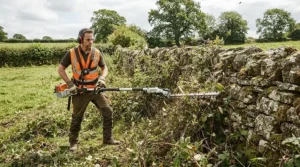
Think of the Stihl FS 131 as the machine you buy once and stop thinking about. Its 36.3cc 4-MIX engine makes 1.4 kW, and it weighs 5.8 kg. A metal grass blade, an AutoCut head and a padded double harness are all supplied. The bike handle gives you a smooth, sweeping action across wide thickets.
Power at 1.4 kW sits comfortably in the range arborist-forum users describe as ample. One poster reports that a 35cc four-stroke with a mulching blade handles brambles fine. Vibration with the metal tool is declared at 3.4 m/s² (right) and 3.7 m/s² (left). On HSE’s maths that is about three and a half hours before the action value, a clear improvement over the lighter models. The 0.71 litre tank also reduces refuelling stops.
Weight is the compromise. At 5.8 kg, it is still manageable, but the bike handle is less nimble than a loop handle in tight corners. I couldn’t verify a large independent review pool, though forum users generally speak well of the Stihl and Husqvarna professional range.
Pros:
- ✅ Strong 1.4 kW engine for dense growth
- ✅ Metal blade supplied in the box
- ✅ Lower vibration with metal tool
Cons:
- ❌ Premium price tag
- ❌ Bike handle is clumsy in tight corners
Expect around £720-£900. It’s higher up-front, but it’s the best fit for older, woodier stands.
7. Stihl FSA 200 — cordless muscle for noise-sensitive neighbours
The Stihl FSA 200 is Stihl’s most powerful cordless brushcutter. It runs on the 36V AP system with a brushless EC motor, weighs 5.7 kg without battery, and reaches up to 450 mm cutting diameter with its standard blade. A loop-handle R variant lists 4.8 kg. Three speed levels plus an energy-saving mode let you trade power against runtime.
Runtime is where the details matter. Stihl-listed figures suggest up to roughly an hour on an AP 300 S at the lowest level, and dealer figures show a lot less at higher power settings. Brambles will have you on the higher settings, so plan on two batteries. Stihl lists BrushCut and WoodCut tools as compatible, which matters for woody stems.
My analysis is that this suits households where petrol noise or fuel storage is a problem, and where bramble patches are modest. I found no verified owner reviews, as listings were still awaiting first reviews.
Pros:
- ✅ Quiet running, no exhaust fumes
- ✅ Low-maintenance brushless motor
- ✅ Compatible with BrushCut and WoodCut tools
Cons:
- ❌ Runtime drops fast at higher power
- ❌ Bare tool excludes battery and charger
Plan on around £640-£700 for the bare tool, with batteries extra. The value verdict is good if you’ll use the AP battery system across other tools.
Step-by-Step: How to Clear Brambles Safely With a Brush Cutter
Even the best brush cutter for brambles fails if the job is planned badly. Here’s a sequence that works for any machine above.
- Check for wildlife first. Watch the patch for a few days. The RSPB advises looking for active nesting before cutting any vegetation, and disturbing an active nest can be an offence under the Wildlife and Countryside Act 1981.
- Walk the ground. Remove wire, stones and rubble that a blade could throw.
- Fit the right blade. Match your cutting tool to the stems, and use only tools your manual approves.
- Gear up fully. Visor, hearing protection, gloves, boots and tough trousers come before the engine does.
- Cut top-down. Take the tall growth first, then work down in layers.
- Work in a controlled arc. Let the blade do the work, and swing from your hips, not your arms.
- Rake and remove. Long barbed lengths left on the ground trip people for years.
- Treat regrowth. Dig out crowns and roots where practical, then monitor for new shoots.
The common first-month mistakes are simple. Buyers fit a line head and wonder why nothing happens, skip hearing protection, or start in spring with birds nesting. Another is cutting without a plan for the waste. Brambles resprout, so schedule a quick follow-up pass in a month or two.
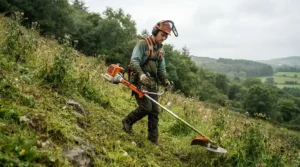
Real-World Scenarios: Matching a Brush Cutter for Brambles to Your Plot
Scenario 1: The suburban back-fence clearance. You have about 20 square metres of brambles, a budget near £450, and neighbours on both sides. A lightweight brush cutter such as the Husqvarna 525RX Mark II or the Stihl FS 94 RC-E (plus a blade) is the logical match. Neighbours who hate petrol noise should consider the Stihl FSA 200 instead.
Scenario 2: The neglected half-acre. Years of untouched scrub, older woody stems, and several full days of work ahead. The Stihl FS 131 is the sensible handheld. If the job is recurring or professional, the Husqvarna 553RBX earns its price through comfort alone.
Scenario 3: The occasional allotment clear-out. You’ll use it twice a year and don’t want to spend much. The Einhell GC-BC 52 I AS gets you a blade and power for a fraction of the cost, but verify weight and wear full protective gear.
Scenario 4: The quiet, fuel-free household. You already own Makita 18V batteries and want no fuel can in the shed. The Makita UR101C is the natural fit for modest patches.
How to Choose a Brush Cutter for Brambles
The best brush cutter for brambles balances three things. It needs enough power to keep a metal blade turning through woody canes, a weight you can carry for the whole job, and a cutting tool rated for the machine. Work through these steps in order:
- Match output to stem thickness. Around 1 kW handles pencil-thick canes. Thumb-thick stems and saplings reward 1.4 kW and above.
- Pick the handle for your terrain. Bike handles suit big sweeping passes, loop handles suit tight corners, and a backpack layout suits long sessions.
- Confirm the blade situation. Check whether a metal blade ships in the box, because the Stihl FS 94 RC-E doesn’t include one.
- Be honest about weight. A machine you can use for 90 minutes beats a more powerful one you abandon after 30.
- Read the vibration figure. Anything near or above 5 m/s² means regular breaks.
- Choose fuel type by life, not specs. Petrol gives refuelling flexibility and cordless gives quiet, but you must budget for spare batteries.
- Budget for extras. Gear, a spare blade and fuel or batteries often add a meaningful sum.
Blade Type for Woody Stems: What Actually Cuts Brambles
The blade type for woody stems decides whether clearing takes an afternoon or a week. Here’s the ladder, from gentlest to most aggressive:
- Nylon line suits grass and soft growth only. It will not cleanly sever woody canes.
- Grass blade (3 or 4-tooth) handles tall grass, nettles and soft bramble regrowth. This is what the Husqvarna 525RX Mark II ships with.
- Brush blade has fewer, stronger teeth and copes with tougher stems.
- Saw (chisel-tooth) blade is the aggressive option for woody stems and small saplings.
- Mulching blade chops stems into short pieces.
Forum experience points the same way. One experienced UK user says a flat blade with tipped-up ends works well on brambles, because the canes grow so horizontally that ordinary tri-blades can skim over them. Others recommend a mulching blade so you don’t leave six-foot lengths of barbed stem behind. A reviewer of a Makita cordless model noted that thicker woody stems call for a brush saw blade.
Safety matters here. Fit only blades your manual approves, use the correct guard, and never put a larger blade on a small machine because it “should fit”. The lighter machines in this guide, such as the Stihl FS 94 RC-E, are best paired with modest brush blades rather than aggressive saw blades.
Backpack Brush Cutter vs Handheld: Which Suits Brambles?
A backpack brush cutter moves weight off your arms and onto your back and hips. A handheld hangs everything from a shoulder harness. Neither is universally better, so here is how they compare.
| Factor | Handheld petrol (Stihl FS 131, Husqvarna 525RX Mark II) | Backpack petrol (Husqvarna 553RBX) | Backpack cordless (Makita UR101C) |
|---|---|---|---|
| Carried weight | around 5.5-5.8 kg on harness | 12.1 kg on back | around 5.2 kg tool plus backpack pack |
| Runtime | tank-limited, quick refuel | 0.8 litre tank | battery-limited, up to four on back |
| Noise | loud | loud | much quieter |
| Best For | Gardens and paddocks | Large, regular clearance | Quiet, fuel-free jobs |
In the table above, backpack designs win when sessions run long and patches are large, because they let you keep swinging comfortably. Handheld machines like the Stihl FS 131 are simpler, cheaper and easier to store, which is why most homeowners should start there. The Makita UR101C is the interesting middle path, combining backpack ergonomics with low noise, though battery cost bites.
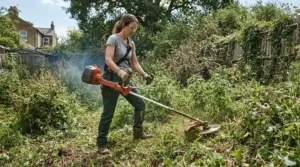
Lightweight Brush Cutter: When Less Power Is More
A lightweight brush cutter is not a compromise for the weak. It is a strategy. The Stihl FS 94 RC-E at 4.6 kg, the Stihl FSA 200 R variant at 4.8 kg and the Husqvarna 525RX Mark II at around 5.5 kg all aim at sustained, controlled work rather than raw force.
Here’s the maths that matters. A kilo shaved off the machine feels far greater after an hour, because you constantly swing and lift it. Lighter machines are also easier to hold low and flat, which is exactly the posture brambles demand. Lower weight usually means lower power, so a lightweight brush cutter handles canes beautifully but struggles with thick, woody saplings.
My advice is to use technique to make up the difference. Take smaller bites, keep the blade sharp, and let the cutting tool do the work rather than forcing it. If your patch has mostly stems under about a thumb’s width, a lightweight brush cutter is usually the smarter choice. If it has saplings, step up to the Stihl FS 131 or accept a heavier machine.
Protective Gear for Bramble Clearing: What You Actually Need
Protective gear is not optional with a blade spinning near thorns. At minimum, plan on:
- Face and eye protection: a mesh visor, ideally with safety glasses beneath.
- Hearing protection: the Stihl FS 94 RC-E lists a 108 dB(A) sound power level, and petrol machines are loud.
- Gloves: thorn-resistant, ideally with some anti-vibration padding.
- Boots: sturdy, ideally steel-toe.
- Legs and arms: thick, thorn-resistant trousers or protective chaps, plus long sleeves.
Vibration is the quiet hazard. The HSE sets a daily exposure action value of 2.5 m/s² and a limit of 5 m/s² for hand-arm vibration under the Control of Vibration at Work Regulations 2005. Those rules apply to employers, but your hands don’t check your employment status. At the Stihl FS 94 RC-E‘s declared 5.5-6.1 m/s², the action value arrives in roughly 1 hour 20 to 1 hour 40 minutes. The earlier Husqvarna 525RX listing shows 2.1 m/s² on the front handle, so it sits below that threshold. These are declared test figures, and real brambles often produce more vibration. Take breaks, keep blades sharp, and stop if you notice tingling or numbness.
Clearance Depth: How Far Into a Thicket Can You Cut?
By clearance depth, I mean two things. First, how far into a thicket you can work from where you stand. Second, how low to the ground you can take the stems.
On the first point, shaft length sets your reach. The Stihl FS 94 RC-E has a total length of 178 cm, the Stihl FS 131 180 cm, and the Makita UR101C 1,760 mm. The Husqvarna 553RBX uses a 1,483 mm tube. Because you hold the machine at your hip, my rough estimate is a working reach of about 1.2 to 1.5 metres from your feet. Mature canes can run well beyond that, so don’t try to reach everything from one spot. Work in bands, trim the tops first, then step forward and repeat.
On the second point, cut as low as possible. Brambles have powerful roots and regrow readily, as the Woodland Trust notes. The RHS recommends digging out the main stump and as many roots as possible after cutting. A brush cutter gets you to stump height. A fork and spade finish the job. Machines with a bike handle, like the Stihl FS 131, make low sweeping cuts easier, while a loop handle on the Stihl FS 94 RC-E helps in tighter spots.
Price and Value: What Clearing Brambles Really Costs
| Model | Typical price range | Value view | Best For |
|---|---|---|---|
| Einhell GC-BC 52 I AS | around £130-£215 | Lowest entry cost | Occasional use |
| Stihl FS 94 RC-E | around £380-£500 | Light, blade extra | Tight corners |
| Husqvarna 525RX Mark II | around £400-£520 | Balanced all-rounder | Regular garden use |
| Makita UR101C | bare tool mid-£400s | Needs batteries and pack | Existing Makita owners |
| Stihl FSA 200 | around £640-£700 bare | Needs AP batteries | Quiet neighbourhoods |
| Stihl FS 131 | around £720-£900 | Power plus metal blade | Dense, older brambles |
| Husqvarna 553RBX | around £870-£1,050 | Professional grade | Heavy regular clearance |
The Einhell GC-BC 52 I AS is the cheapest way in, while the Stihl FS 131 buys you the strongest handheld option. Cordless models look affordable until you add batteries and chargers, so price the whole system. Petrol machines add fuel, oil and plug costs, but spread them over many years.
FAQ
❓ What size engine do I need for a brush cutter for brambles?
❓ Can a lightweight brush cutter handle brambles?
❓ Is a backpack brush cutter worth it for a garden?
❓ How do I stop brambles growing back after clearing?
❓ How much does a brush cutter for brambles cost in the UK?
Conclusion
Choosing a brush cutter for brambles comes down to matching the machine to the thicket. The Husqvarna 525RX Mark II is the balanced all-rounder, and the Stihl FS 94 RC-E is the lightest option for tight spots. The Einhell GC-BC 52 I AS is the budget route to real power. The Stihl FS 131 is my pick for dense, older brambles. Both the Makita UR101C and the Stihl FSA 200 make sense if noise or fuel is your problem. The Husqvarna 553RBX earns its place only if you clear large areas regularly.
Whatever you choose, treat the blade as seriously as the engine, and treat protective gear as non-negotiable. Cut low, clear in layers, and dig out the roots afterwards. Brambles are stubborn, but with the right machine and a sensible plan, you’ll win the argument this autumn.
✨ Ready to choose your brush cutter for brambles?
🔍 Click any highlighted machine name above to check current pricing and availability, then pick the one that fits your plot, your budget and your shoulders. Your future self (and your shins) will thank you! 🌿
Recommended for You
- Brush Cutter For Smallholdings: 7 Best Picks For UK Land (2026)
- Brush Cutter vs Strimmer: 7 Best Picks For UK Gardens (2026)
- Brush Cutters Under £250: 7 Best Picks For UK Gardens (2026)
Disclaimer: This article contains affiliate links. As an Amazon Associate, I earn from qualifying purchases. If you purchase products through these links, we may earn a small commission at no additional cost to you.
✨ Found this helpful? Share it with your friends! 💬🤗
