

In This Article
Every garden has a tell. It isn’t the lawn, and it isn’t the roses. It’s the line where one meets the other. Get that line crisp and the whole plot looks cared for. Let it slump into a ragged, grass-chewed smudge and even a gorgeous border looks like it has given up.

That line is the job of a lawn edger for flower beds. It slices a clean, vertical boundary between turf and soil, so grass stops marching into your planting. The RHS notes that well-kept edges finish off a freshly mown lawn and stop grasses creeping into borders, and that redefining the edge once a year makes the regular trimming far easier. Sensible advice, and the reason this guide exists.
Here’s the catch. “Lawn edger” covers wildly different tools: rolling-blade machines, pivoting line trimmers, battery shears and honest-to-goodness steel. The right choice depends on your bed shapes, your wrists and the size of your shed.
So I’ve pulled together seven genuinely available UK options. Each is judged on manufacturer specifications, retailer data and the review evidence I could actually verify. There are no invented tests and no fake testimonials, just analysis you can use.
Along the way you’ll find dedicated advice on picking a lawn edger for small garden plots, getting real curved cutting control around sweeping beds, achieving proper border definition, and keeping up planting bed maintenance through the seasons.
Quick Comparison: Lawn Edger for Flower Beds at a Glance
Not every tool here does the same job, which is exactly why a side-by-side view helps. Some cut a fresh trench, some trim overhanging grass, and one is just a very sharp piece of steel.
| Product | Type | Power | Best For |
|---|---|---|---|
| Ryobi RY18EGA-0 | Rolling-blade edger | 18V ONE+ battery | Recutting straight and gently curved bed lines |
| Einhell GE-LE 18/190 Li-Solo | Rolling-blade edger | 18V Power X-Change battery | Splitting the shaft for easy storage |
| Flymo Contour Cordless 20V | Pivoting line trimmer/edger | 20V battery | Cord-free edge trimming and general tidying |
| Flymo Contour XT | Pivoting line trimmer/edger | Corded, 300W | Budget buyers with a short run to the socket |
| Worx WG801E.9 | Cordless edging shear | 20V PowerShare battery | Finicky border trims and a small garden |
| Spear & Jackson Razorsharp Edging Shears | Manual shears | Hand-powered | Quiet, post-mowing touch-ups |
| Spear & Jackson Lawn Edging Knife | Manual half-moon style tool | Hand-powered | Cutting crisp new bed outlines |
The table shows the first big decision: cut or trim. The Ryobi RY18EGA-0 and Einhell GE-LE 18/190 Li-Solo physically re-cut your edge. The two Flymo models and the Worx WG801E.9 mostly tame grass that has crept past the edge, and the two Spear & Jackson tools cover the manual end. If your beds have already lost their shape, start with a cutting tool. If they’re sharp already, a trimmer is quicker and kinder to your back.
💬 Just one click — help others make better buying decisions too!😊
Top 7 Lawn Edger for Flower Beds Picks: Expert Analysis
I’ve ordered these roughly from “recuts the edge” to “keeps it tidy”. Prices are ranges only, because they move constantly. Check the current price before you buy. For independent lab context, Which? tests grass trimmers and lawn edgers by passing the trimmer head close to a spade edge repeatedly. That’s a sensible proxy for real flower bed work.
1. Ryobi RY18EGA-0 — rolling-blade edger that recuts your bed lines
This is the one that actually cuts a fresh edge rather than just trimming grass. Its 22cm blade bites vertically into the turf, creating the trench-style boundary a half-moon iron would, minus the stamping and the sore lower back.
On the specs, the 18V ONE+ platform means any ONE+ battery fits. Ryobi quotes up to 46 minutes of edging from a 5.0Ah pack, which is plenty for several beds. A four-point height adjustment sets cutting depth, and front and rear guide wheels keep the line steady. Bare weight is about 3.3kg, creeping towards 3.8kg with a battery, fine for a session but noticeable on a long run.
Based on the spec comparison, this suits straight and gently curving borders best, because the guide wheels like a plan. Tight-radius beds mean slow, deliberate nudging. It’s also overkill if your edge is already sharp and you only need a tidy.
On review evidence, Which? has put this model through its test lab, but the full verdict sits behind its paywall, so I won’t paraphrase it. I couldn’t verify enough owner feedback to summarise either.
Pros:
- ✅ Genuinely recuts the edge, not just trims
- ✅ Shares batteries across 200+ Ryobi tools
- ✅ Four depth settings for different soil conditions
Cons:
- ❌ Bare tool, so battery and charger cost extra
- ❌ Guide wheels struggle on tight curves
Price: around £100-£150 for the bare tool. Excellent value if you already own ONE+ batteries; harder to justify if you’d be buying into a whole new battery system.

2. Einhell GE-LE 18/190 Li-Solo — split-shaft edger for compact storage
Einhell billed this as Europe’s first cordless lawn edge trimmer when it launched in 2021, and the concept still holds up. A double-sided blade of about 19cm cuts into the turf, with front and rear rollers guiding progress along the line.
The depth adjustment has three stages, from 36.5mm to 45mm. That’s a deeper floor than many rivals, which makes it good for establishing a proper trench and less ideal for light skimming. Retailer listings put the weight at around 3kg, similar to the Ryobi. The split shaft is the clever bit: it folds the machine down for a shed shelf or a boot, a real perk if storage is tight.
Here’s what the spec sheet won’t say: the narrow depth range and fixed roller layout make this a straight-line specialist. I’d lean on it for long, mostly straight borders and let hand tools handle the fiddly bits.
On review evidence, I couldn’t verify a meaningful pool of independent user reviews at the time of research, so I’m not going to pretend otherwise. Check recent buyer feedback on the listing before committing.
Pros:
- ✅ Split shaft folds away for easy storage
- ✅ Double-sided blade extends useful life
- ✅ Part of the wide Power X-Change battery range
Cons:
- ❌ Bare unit with battery and charger separate
- ❌ Shallow-to-deep range suits straight borders best
Price: roughly £100-£130 for the bare tool. A sound pick if you’re already in the Power X-Change family; otherwise factor in battery costs.
3. Flymo Contour Cordless 20V — twist-head trimmer that edges without a cable
The magic here is the pivoting head. Twist it and the line trimmer switches from trimming to edging mode, so one machine handles lawn edges, wall bases and the awkward grass round a bird bath.
Weight is listed at about 3kg, which is manageable for anyone used to a standard strimmer. The 20V battery frees you from the extension lead, a bigger deal than it sounds when you’re edging round the far end of a long border. It trims rather than trenches, so it keeps a defined edge looking sharp but can’t create one from scratch.
For borders that are already established, it’s a quick, low-effort routine tool. Think of it as the weekly flick of the duster, rather than the spring clean.
On review evidence, the eBay listing shows strong average ratings, but from a small sample of owner ratings, so treat it as a hint rather than proof. At least one owner mentions that batteries eventually age and a replacement can cost nearly as much as a new trimmer. Weigh that against the convenience.
Pros:
- ✅ Cord-free for long borders and awkward corners
- ✅ Twist head switches between trim and edge modes
- ✅ Familiar strimmer handling, easy to learn
Cons:
- ❌ Trims existing edges but won’t recut them
- ❌ Battery replacement can be pricey
Price: roughly £80-£130 depending on kit contents. Good value for a tidy-up tool, and a sensible all-rounder for a lawn edger for small garden plots.
4. Flymo Contour XT — corded budget trimmer with a tilting edging wheel
If you want to spend as little as possible and have a socket within reach, this is the cheapest way into powered edging here. A 300W motor drives a 25cm cutting width, and an inline wheel guides the head along paths and borders. Press a button, rotate the head, and you’re in edging mode. Weight is around 2.8kg, which helps for longer sessions.
Practically, 300W is modest. It’s fine for grass and soft weeds along a flower bed edge, but it won’t thrill on thick, matted growth. Because it’s corded, the lead is a hazard around spiky planting, so keep it on the lawn side of the border.
Retailer reviews were broadly positive on the swivelling head, with owners saying it saves reaching for shears or a half-moon iron. The less flattering feedback is worth knowing: one reviewer says the line broke quickly while edging, another that auto-feed only works when the machine stops, and another found the safety switch awkward to hold.
Based on the spec comparison, it’s a budget helper rather than a border-shaping tool.
Pros:
- ✅ Very low outlay for powered edging
- ✅ Lightweight at roughly 2.8kg
- ✅ Tilting wheel guides along edges
Cons:
- ❌ Cable limits reach and risks snagging
- ❌ Line feed and switch design draw some complaints
Price: under £60. A fair value starter, especially for a lawn edger for small garden spaces with a nearby socket.
5. Worx WG801E.9 — featherweight cordless shear for tricky border trims
Forget the roar of line trimmers. This 20V PowerShare shear weighs about 0.5kg without a battery and runs at roughly 66dBA, so you can edge at 8am without a neighbourly glare. Three interchangeable blades (including a short grass-shear blade and longer shrub blades) and tool-free blade changes make it more versatile than it looks.
It’s brilliant for what it’s designed to do: snip the grass overhang along a border, shave round plant bases and neaten the bit your mower missed. What it can’t do is recut a lost edge, and it has no height adjustment. Think trimmer, not trencher.
Because it’s so light, it suits anyone with weaker wrists, arthritis or just a bad back. For planting bed maintenance, it’s a lovely way to keep intricate shapes crisp without bending to shears.
On review evidence, I couldn’t verify a meaningful independent review pool, so I’ll stay silent on owner sentiment rather than guess.
Pros:
- ✅ Very light at around 0.5kg bare
- ✅ Quiet, roughly 66dBA
- ✅ Tool-free blade swaps add versatility
Cons:
- ❌ Trims overhang but can’t recut edges
- ❌ Battery and charger sold separately
Price: check current price, bare tool only. Excellent for border definition upkeep once the shape exists.
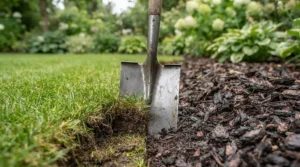
6. Spear & Jackson Razorsharp Edging Shears — classic long-handled shears for quiet touch-ups
Sometimes the best tech is none at all. Long-handled shears let you stand upright and clip edges after every mow, no battery, no cable, no noise.
The Kew Gardens Collection version (4870KEW) was rated a Best Buy by Kitchen Garden magazine in 2022. It uses 19cm carbon steel blades, light aluminium handles and measures about 94cm overall. In practice, that length saves your back, and carbon steel takes a keen edge when kept sharp and oiled. The RHS specifically recommends edging shears used after each mow for neat edges.
The trade-off is time. On a long border, hand shears are slower and more tiring than any powered tool, and they won’t cut a fresh trench. They shine on small beds, curves and delicate spots near plants, so they are excellent for curved cutting control.
The magazine’s verdict called them sturdy and comfortable, with a crisp cut and easy-on-the-hands grips. That’s one expert source rather than a broad owner pool, so weigh it accordingly.
Pros:
- ✅ Silent, no battery or cable to manage
- ✅ Superb control around curves and plants
- ✅ Magazine-rated Best Buy for crisp cuts
Cons:
- ❌ Slow and tiring on long borders
- ❌ Won’t recut a degraded edge
Price: roughly £30-£70 depending on version. Superb value for small gardens and anyone allergic to charging batteries.
7. Spear & Jackson Lawn Edging Knife — manual half-moon tool for crisp new outlines
Meet the tool that does what the RHS actually recommends for creating a lawn edge: a half-moon edger or flat-backed spade. This manual edging knife weighs around 760g, so it’s light to carry and nimble to steer.
The half-moon shape lets you cut precise, sweeping curves by overlapping small cuts, which is ideal for new bed outlines. A footplate helps push it into the soil, saving your hands.
The limitation is ground conditions. Reviews I found suggest light tools like this work best in soft soil, and struggle in compacted or stony ground. Winter is often the sweet spot, when borders are quieter and soil is moist.
For flower beds with strong geometry or curves, nothing beats it for planting bed maintenance on a budget. Pair it with edging shears and you have a complete manual kit.
The review context here comes from comparison guides rather than a large owner pool, so treat it as a steer.
Pros:
- ✅ Total control over curves and outlines
- ✅ Light and no charging required
- ✅ Cheapest route to a professional edge
Cons:
- ❌ Physical effort on long borders
- ❌ Harder going in dry, compacted soil
Price: check current price; typically a budget tool. Superb value, with the caveat that it costs you elbow grease rather than money.
How the Top 7 Compare
| Product | Key Spec | Weight | Price Range | Evidence Base | Best For |
|---|---|---|---|---|---|
| Ryobi RY18EGA-0 | 22cm blade, 4 depth settings | ~3.3kg bare | £100-£150 (bare) | Which? lab-tested | Recutting edges |
| Einhell GE-LE 18/190 Li-Solo | 19cm double-sided blade, split shaft | ~3kg | £100-£130 (bare) | Limited verified reviews | Easy storage |
| Flymo Contour Cordless 20V | Twist-head trimmer | ~3kg | £80-£130 | Small retailer sample | Cord-free trimming |
| Flymo Contour XT | 300W, 25cm cut, edging wheel | ~2.8kg | Under £60 | Mixed retailer reviews | Budget starter |
| Worx WG801E.9 | 20V shear, ~66dBA | ~0.5kg bare | Check current price | Limited verified reviews | Light border trims |
| Spear & Jackson Razorsharp Edging Shears | 19cm carbon steel blades | Hand tool | £30-£70 | Magazine Best Buy | Quiet touch-ups |
| Spear & Jackson Lawn Edging Knife | Half-moon style, ~760g | ~760g | Check current price | Comparison guides | Curved new outlines |
Looking at the comparison above, the Ryobi RY18EGA-0 is the strongest cutting-edge pick if you want a deep, defined trench, while the Flymo Contour XT wins on sheer affordability for a lawn edger for small garden duty. Buyers who dislike noise should consider the Worx WG801E.9 or the Spear & Jackson Razorsharp Edging Shears, though neither will rebuild a lost edge. Weight matters too: the Worx WG801E.9 is a fraction of the others, which counts for a lot on long sessions.
Planting Bed Maintenance: A Practical Year-Round Routine
Owning a lawn edger for flower beds is only half the story. The other half is when and how you use it. Here’s a rhythm that works with the seasons, built on the RHS advice for creating a lawn edge and then adapted for powered tools.
Winter reset (the big cut). Redefining edges is a great job for the quieter winter months, as the RHS suggests. Cut a clean line with a half-moon edging tool or a rolling-blade edger like the Ryobi RY18EGA-0. Avoid frozen or waterlogged ground, because both leave you with ragged results.
Spring setup. Once the edge is sharp, drag excess soil away from the lawn side and top up mulch. A well-defined drop to the border helps keep mulch in place, which is the whole point of a deep edge.
Summer upkeep (weekly). After each mow, clip the edge with shears or a trimmer. A Flymo Contour Cordless 20V or Worx WG801E.9 makes this a ten-minute job on most plots.
Autumn tidy. Remove fallen leaves from the trench before they rot, and re-trim any overhang before the first frosts.
Common mistakes in the first 30 days:
- Edging on wet days, which smears soil.
- Cutting too deep with a powered edger and scalping the turf.
- Skipping a guide line, which gives wobbly curves.
A lawn edger for small garden beds will reward consistency far more than force.

Real-World Scenarios: Which Edger Fits Which Garden?
Specs are abstract. Here are three typical UK situations and the tool I’d steer each towards, based on the spec comparison.
The terraced-house courtyard. Imagine a 30m² garden with two curved beds and a socket by the back door. Budget is modest and storage is tight. The Flymo Contour XT earns its place here, backed by a pair of Spear & Jackson Razorsharp Edging Shears for the curves. Total outlay stays low, and you’ll edge in under fifteen minutes.
The family garden with long, straight borders. Picture a semi with 20 metres of lawn edge and a patio. Time is short, weekends are busy and the fence line is straight. The Ryobi RY18EGA-0 or Einhell GE-LE 18/190 Li-Solo makes sense, because a rolling blade eats long runs quickly. If you already own either battery system, the choice effectively makes itself.
The keen gardener with intricate beds. Think sweeping borders, rose beds and plenty of delicate plants. Here curved cutting control matters more than speed. The Spear & Jackson Lawn Edging Knife sets the outline once a year, and the Worx WG801E.9 keeps it tidy weekly with barely any noise or weight.
Across all three, notice the pattern: the best flower bed edging setup is often a pair of tools rather than a single hero product.
Problem → Solution Guide: Fixing Common Edging Headaches
Even with the right kit, edging throws up predictable problems. Here are five common ones and how to solve them.
Problem 1: Wobbly curves. Lay a hosepipe or rope along your intended line, then cut against it. Rolling edgers drift on tight radii, so for those bends use a hand tool like the Spear & Jackson Lawn Edging Knife.
Problem 2: Grass creeping back within weeks. The edge is probably too shallow. Recut deeper in winter and keep a clear drop to the border. Rolawn recommends re-establishing a clean edge and then trimming it weekly after cutting, which matches the cutting-then-trimming routine above.
Problem 3: Scalped turf. You’ve set the depth too deep. Raise the cutting height on the Ryobi RY18EGA-0 or Einhell GE-LE 18/190 Li-Solo and try again on a spare patch.
Problem 4: Line snapping on trimmers. Edging against brick or stone is hard on nylon line. If it keeps breaking, as some Flymo Contour XT reviewers report, keep the head slightly off hard surfaces.
Problem 5: Battery fading mid-job. Edge in short bursts, charge before use and avoid storing batteries in a freezing shed. A spare battery in an existing tool platform can be the cheapest fix.
What Is a Lawn Edger for Flower Beds?
A lawn edger for flower beds is a tool that cuts a clean, vertical line between turf and planting soil. It can be powered (a rolling blade or pivoting line head), or manual (edging shears or a half-moon iron), and it keeps grass out of borders while giving the bed a crisp, defined outline.
The key distinction is between cutting tools, which slice a trench into the ground, and trimming tools, which clip grass that has grown over the edge. A rolling-blade machine like the Ryobi RY18EGA-0 is a cutter. A tool like the Worx WG801E.9 is a trimmer. Most gardens benefit from both, used at different times of year.
How to Choose a Lawn Edger for Flower Beds
Follow these steps and you’ll narrow the field quickly.
- Decide whether you need to cut or trim. If your edge has lost its shape, you need a cutting tool such as a rolling-blade edger or a half-moon iron. If it’s already crisp, a trimmer or shears will do.
- Measure your border length. Under ten metres of edge? Manual tools are fine. Over twenty metres, a powered edger saves real time.
- Check your bed shapes. Straight runs suit rolling edgers. Tight curves demand hand tools or a pivoting trimmer head, for proper curved cutting control.
- Pick your power source. Corded is cheapest but limited by reach. Cordless costs more but frees you up. Choose a battery platform you’ll reuse across other tools.
- Weigh the weight. A bare weight above 3kg is fine for short jobs, but wrists will notice on longer ones. Lighter shears or knives suit anyone with joint issues.
- Check noise and neighbours. Quiet tools like the Worx WG801E.9 or manual shears let you edge at any hour without complaints.
- Read recent owner feedback. Look for patterns in reviews, not individual rants, and favour sources like Which? for independent lab results.
Lawn Edger for Small Garden Plots: What Actually Works
A lawn edger for small garden spaces has different priorities from one for a country acre. You don’t need runtime or raw power. You need low weight, easy storage and quick set-up.
For compact plots, my analysis points towards three sensible routes. The Flymo Contour XT is the cheapest powered option, provided a socket is within reach. The Worx WG801E.9 is a delight where beds are small and intricate, because its lightness lets you work close to plants. And a pair of Spear & Jackson Razorsharp Edging Shears costs little, stores in a shed corner and needs no charging.
What you probably don’t need is a deep-cutting machine. A rolling-blade edger like the Einhell GE-LE 18/190 Li-Solo has a useful split shaft for storage, but if your total edge is only a few metres, a manual tool may serve you better and cost less.
One practical point: small gardens often feature tight curves around patios and raised beds. Rolling edgers dislike those, so hand tools or pivoting trimmers win. If you’re searching for a lawn edger for small garden duty, prioritise manoeuvrability over specifications.

Curved Cutting Control: Edging Round Beds Without the Wobble
Straight lines are easy. Curves are where edging goes wrong. Curved cutting control is the ability to follow a bed’s flowing outline without drifting, cutting corners or leaving ragged steps.
Rolling-blade edgers rely on guide wheels, which want to travel in straight lines. On gentle curves they cope; on tight radii you’ll be nudging and pivoting, so the cut can look faceted. The Ryobi RY18EGA-0 and Einhell GE-LE 18/190 Li-Solo both use front and rear guides, so expect the same behaviour from each.
Pivoting trimmer heads, such as the Flymo Contour Cordless 20V, handle curves more naturally because you steer by hand. The trade-off is that they only trim.
Manual tools win outright for curves. A half-moon edging knife lets you cut in small overlapping steps, the technique the RHS recommends for creating a continuous cut. The Spear & Jackson Lawn Edging Knife is the obvious candidate. Mark your curve with a hosepipe, cut against it, then maintain it with shears.
A top tip: always cut on the lawn side of your guide and keep the blade vertical. Tilting is the number one cause of sloping, sloppy edges.
Border Definition: Edger vs Edging Shears vs Spade
Good border definition is what separates a tidy garden from a merely mown one. It’s the visual boundary that makes a bed look intentional. So how do the main tool types compare?
| Tool Type | Cuts Fresh Edge? | Effort | Noise | Best For |
|---|---|---|---|---|
| Rolling-blade edger (Ryobi RY18EGA-0, Einhell GE-LE 18/190 Li-Solo) | Yes | Low | Moderate | Long borders and annual recuts |
| Trimmer with edging mode (Flymo Contour XT, Flymo Contour Cordless 20V) | No | Low | Higher | Weekly tidying |
| Battery shear (Worx WG801E.9) | No | Very low | Low | Delicate trims near plants |
| Edging shears (Spear & Jackson Razorsharp Edging Shears) | No | Moderate | Silent | Small gardens, post-mow touch-ups |
| Half-moon tool (Spear & Jackson Lawn Edging Knife) | Yes | High | Silent | New outlines and tight curves |
Reading the table, the cutting tools build border definition while the trimming tools preserve it, so the smartest setups pair one of each. A Spear & Jackson Lawn Edging Knife plus a Worx WG801E.9 covers cutting and trimming for modest outlay and minimal noise. Meanwhile, a Ryobi RY18EGA-0 plus a trimmer suits larger plots. Rolawn’s guidance supports this approach, noting that manual edging suits most lawns while larger ones may benefit from a motorised edger.
Features That Actually Matter (And Those That Don’t)
Marketing loves a long feature list. Here’s my filter for what genuinely changes your results.
Worth caring about:
- Adjustable cutting depth. Different soils and seasons need different depths, so this is essential for cutting tools like the Ryobi RY18EGA-0.
- Weight and balance. A comfortable machine gets used; a heavy one gathers dust.
- Battery platform. Compatibility with tools you already own can save more money than any discount.
- Blade or line durability. Hard edges chew nylon, as some Flymo Contour XT reviewers note.
Nice but not essential:
- Extra blades. The Worx WG801E.9 includes several, but most people use one.
- Split shafts. Great for storage, as on the Einhell GE-LE 18/190 Li-Solo, irrelevant if you have ample space.
- Brand halo. Independent testing matters more than the badge. Which? lab results are a better guide than packaging claims.
Mostly marketing: headline “RPM” figures, which tell you little about real-world cut quality. Take them with a pinch of salt.
Long-Term Cost & Maintenance
The sticker price is only part of the story. Batteries, blades and replacement line all add up over a few seasons, so total cost of ownership matters.
| Option | Upfront | Ongoing Costs | Best For |
|---|---|---|---|
| Ryobi RY18EGA-0 | £100-£150 bare, plus battery | Blade replacement, charging | Existing ONE+ owners |
| Einhell GE-LE 18/190 Li-Solo | £100-£130 bare, plus battery | Double-sided blade lasts longer | Power X-Change owners |
| Flymo Contour Cordless 20V | £80-£130 | Line, eventual battery replacement | General tidiers |
| Flymo Contour XT | Under £60 | Replacement line | Low-budget buyers |
| Worx WG801E.9 | Check current price | Blades, battery | Light, frequent trims |
| Spear & Jackson Razorsharp Edging Shears | £30-£70 | Sharpening and oil | Long-term value |
| Spear & Jackson Lawn Edging Knife | Check current price | Occasional sharpening | Longest-lasting budget tool |
The cheapest tools to run over time are the manual ones: Spear & Jackson Razorsharp Edging Shears and the Spear & Jackson Lawn Edging Knife cost almost nothing beyond a sharpening stone and a bit of oil. Cordless tools cost more upfront but add convenience, and the real saving comes from sharing a battery across your toolshed. One owner of the Flymo Contour Cordless 20V notes that batteries can age out, so budget for a replacement in a few years. The Flymo Contour XT avoids that issue entirely, though its cable is the price you pay.
Safety, Noise and UK Regulations
Edging looks innocent, but spinning blades and flying debris deserve respect.
Eye and foot protection. Wear safety glasses and sturdy footwear whenever you’re using a powered tool. Line trimmers like the Flymo Contour XT can throw grass and grit, and one reviewer notes spray even with the guard fitted.
Corded kit. Always use an RCD-protected socket outdoors, keep the cable behind you and never edge in wet conditions.
Blade guards. The Einhell GE-LE 18/190 Li-Solo includes a blade protection cap, and rolling-blade edgers like the Ryobi RY18EGA-0 should be stored with guards in place.
Noise. Battery shears such as the Worx WG801E.9 sit around 66dBA, far quieter than petrol equipment. Manual tools are silent.
Standards. Look for UKCA or CE marking on powered tools sold in the UK. Check the current requirements for your product when buying, as rules and transitional arrangements can change.
Wildlife and timing. Check borders for nesting birds, hedgehogs and other wildlife before you cut, especially in spring and summer.

FAQ
❓ Is a lawn edger for flower beds better than a strimmer?
❓ Which lawn edger for small garden beds is easiest to store?
❓ What gives the best curved cutting control around round beds?
❓ How often does planting bed maintenance edging need doing?
❓ Do I need a cordless model, or will corded do?
Conclusion
Choosing the right lawn edger for flower beds comes down to a handful of honest questions. Does your edge need recutting or just tidying? How long is your border? Do your beds curve? And how much noise, weight and effort can you live with?
If you want to rebuild an edge and own the matching battery, the Ryobi RY18EGA-0 is my pick for cutting. Power X-Change households should look closely at the Einhell GE-LE 18/190 Li-Solo. For quick, cord-free tidying, the Flymo Contour Cordless 20V is a sensible all-rounder, while the Flymo Contour XT keeps costs low. The Worx WG801E.9 is a joy for light, quiet trims, and the two Spear & Jackson tools remain unbeatable for curved cutting control and long-term value.
Whichever route you take, remember the secret that no spec sheet reveals: border definition and planting bed maintenance are habits, not purchases. A sharp edge, recut each winter and trimmed after every mow, will make even modest beds look expensive.
✨ Ready to Sharpen Up Your Borders?
🌿 Click on any highlighted product above to check current pricing and availability, then pick the tool that suits your garden and get cutting. Your flower beds will thank you! 🌷
Recommended for You
- Lawn Edging Tool For Straight Lines: 7 Best Picks For UK Lawns (2026)
- Manual Vs Electric Lawn Edger: 7 Proven Picks For UK Lawns (2026)
- Lawn Edgers Under £50: 7 Proven Picks, No Regrets (2026)
Disclaimer: This article contains affiliate links. As an Amazon Associate, I earn from qualifying purchases. If you purchase products through these links, we may earn a small commission at no additional cost to you.
✨ Found this helpful? Share it with your friends! 💬🤗
