

In This Article
Mow a lawn beautifully and leave the edges ragged, and the whole garden looks like it’s wearing a cheap suit with the tie undone. Mow it badly but edge it with a ruler-straight line, and people assume you know what you’re doing. That’s the odd magic of a good lawn edging tool for straight lines: it takes ten minutes of effort and changes how the entire garden reads from the patio.
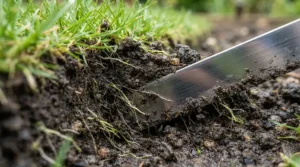
The catch is that “edging tool” covers a messy range of gear. There are half-moon manual blades, root-cutting spades, wheeled cordless machines and trimmers that flip into edging mode. Choose the wrong type and you’ll fight wobbly lines, scalped turf or a sore back.
This guide is written for British gardens, with their clay soils, damp winters and driveways that butt up against the lawn. It compares seven real, currently available tools, from sub-£30 manual blades to a cordless wheeled edger. It also explains what the specifications mean in practice, and it covers a lawn edger for clean borders, guide wheels, blade sharpness and edging technique in dedicated sections. A word on method: I haven’t personally used these tools. The analysis below comes from published specifications, UK editorial reviews and the horticultural guidance of the RHS, and I’ve flagged where review data is thin.
Prices throughout are ranges and may vary, so check current prices before buying.
Quick Comparison: Lawn Edging Tool for Straight Lines at a Glance
| Tool | Type | Weight | Standout | Best For |
|---|---|---|---|---|
| Spear & Jackson Carbon Lawn Edging Knife | Manual half-moon | 0.92kg | Lightweight, wide foot ledges | Best for long straight runs in soft soil |
| Ambassador Stainless Steel Lawn Edger | Manual half-moon | 0.85kg | Crisp, clean cut | Best for tidy lawn borders on a budget |
| Spear & Jackson Lawn Edging Knife | Manual half-moon | 0.76kg | Stainless, weatherproof | Best for clay soil and damp days |
| Wolf Garten Lawn Edger | Manual, interchangeable head | 1.59kg (with shaft) | Choose your own shaft | Best for taller gardeners and multi-tool owners |
| Radius Garden Root Slayer | Manual, root-cutting | 2.18kg | Serrated root-cutting teeth | Best for root-heavy borders |
| Flymo Contour XT | Corded trimmer/edger | around 2.1-2.8kg (sources vary) | Edging wheel, 25cm cut | Best for small to medium lawns, quick upkeep |
| Ryobi RY18EGA-0 | Cordless wheeled edger | 3.3kg (bare tool) | Guide wheels, 4 depth settings | Best for long edges beside paths and driveways |
Weight matters more than it looks on a spec sheet. The 0.76kg stainless blade and the 2.18kg root cutter are very different tools to swing for an hour, so choose by how long you’ll be working, not by price. If you have a long straight run and soft soil, the lightest manual blades give the best value. If your edges meet hard surfaces or run for dozens of metres, the two powered options change the equation. Their cost is higher and their battery or cable needs planning, but the time saved is real.
💬 Just one click — help others make better buying decisions too!😊
What Is a Lawn Edging Tool for Straight Lines?
A lawn edging tool for straight lines is any hand or powered tool built to cut a clean, vertical boundary between grass and a bed, path or hard surface. Manual versions use a sharp half-moon or rectangular blade driven into the turf. Powered versions use a spinning blade or trimmer line guided by a wheel. Straight results depend on three things: a sharp edge, a stable guide and sound technique.
That definition hides an important point: the tool only delivers half the result. The RHS, the UK’s gardening charity, makes this clear in its guide to creating a lawn edge. It recommends tying a string between canes or pegs for straight edges and using a half-moon edger or flat-backed spade to cut along it. So the string is as much a part of the system as the blade, and the best edgers in the world still wander without a guide line.
For straight work, the blade shape matters. Plain rectangular blades suit situations where the lawn sits flush with a patio or driveway. Scoop-cut or half-moon blades are more forgiving around curved beds, but they take more discipline to keep dead straight over a long run. The tools in this guide cover both approaches.
Top 7 Lawn Edging Tool for Straight Lines Picks: Expert Analysis
1. Spear & Jackson Carbon Lawn Edging Knife — lightest wide-blade all-rounder
The headline feature here is weight. At 0.92kg overall, with a tubular steel shaft rather than a heavy wooden one, it’s a tool you can use for an hour without your wrists complaining. The carbon steel head cuts firmly into soft ground, and the shaft is 92cm long with a T-bar handle.
What does that mean in practice? The generous foot ledges let you drive the blade down even in chunky boots, and the reasonably wide blade covers long straight runs quickly. Based on the spec comparison, this is the pick for gardeners who want a straight line without wrestling a heavy tool, including those with weaker wrists or limited strength.
The honest caveats come from the published UK review write-up. It performs best in damp, soft soil rather than dry, compacted ground. It suits long arcs and straight lines better than tight curves, and the T-bar can feel narrow for larger hands. The same review notes that some buyers find the blade benefits from sharpening on arrival, which ties in with our blade sharpness section below. I couldn’t verify a large pool of independent owner reviews, so treat this as one reviewer’s view.
Pros:
- ✅ Under 1kg, easy on wrists and shoulders
- ✅ Wide foot ledges for easy blade drive
- ✅ Excellent for straight edges and long arcs
Cons:
- ❌ Struggles in hard, dry soil
- ❌ Narrow T-bar for larger hands
Price range: typically budget-friendly, in the low-to-mid £20s; check current price. For most lawns this is the best-value starting point.
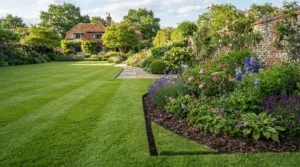
2. Ambassador Stainless Steel Lawn Edger — crisp lines with a cranked handle
The standout is how clean the cut is. This is a stainless blade on a sturdy ash-wood shaft, 87cm long and weighing 0.85kg. The cranked handle is a thoughtful design choice, because it positions your hands better for the downward push that edging demands.
There’s plenty of space at the top of the blade for your foot, which matters more than it sounds. Where that space is cramped, you end up pushing with your hands and arms instead of your body weight, and straight lines turn into ragged ones. On paper, the Ambassador Stainless Steel Lawn Edger is the tool for anyone who wants a lawn edger for clean borders without a steep learning curve.
The reviewer’s concerns are practical. The 87cm shaft is on the short side for taller gardeners, so compare it against tools you already own. The wooden handle has no padding and may be tough on hands over long sessions, the T-bar offers modest shock absorption, and some buyers suggest the join between wood and metal could be better reinforced. As with the Spear & Jackson, the blade may need sharpening out of the box. Review data on this model is limited, so I’d treat these as indicative.
Pros:
- ✅ Foot ledges make blade drive effortless
- ✅ Creates neat, crisp lines easily
- ✅ Sturdy ash shaft handles heavy work
Cons:
- ❌ Shaft may be short for tall users
- ❌ Unpadded wooden handle tires hands
Price range: budget tier, comfortably under £30; check current price. A good pick if you’re under about 6ft.
3. Spear & Jackson Lawn Edging Knife — stainless, weatherproof and featherlight
At just 0.76kg, this is the lightest tool in the round-up. The mirror-polished stainless steel resists rust and also stops soil sticking to the blade, which helps both longevity and cutting smoothness. At 101cm, the shaft sits near waist height for many people, which makes for a comfortable, upright posture.
Why does the stainless finish matter beyond rust? Soil that clings to a blade increases drag, and drag makes lines drift. A polished surface slides through clay more freely, and the UK review credits this edger with creating neat edges even in tough clay. That’s useful for much of Britain, where clay-heavy gardens are common.
The trade-offs are clear. The reviewer notes it’s less suited to heavy root work or hard, dry ground, and some buyers have observed the metal-to-wood join could be more secure. The wooden handle has no padding, so gloves are worth wearing on longer sessions. I couldn’t confirm a large independent review pool, so I’d weigh the lightness and rust resistance as the genuine, spec-backed advantages.
Pros:
- ✅ Mirror stainless resists rust and soil build-up
- ✅ Well balanced and very lightweight
- ✅ Wooden handle grips well when wet
Cons:
- ❌ Not tough enough for dense roots
- ❌ Wood-to-metal join could be stronger
Price range: budget tier, typically under £30; check current price. Strong value for clay gardens.
4. Wolf Garten Lawn Edger — modular head, pick your own shaft
The clever idea is modularity. The head fits Wolf Garten’s Multi Change shaft system, so you buy the blade and choose the shaft length separately. With the manufacturer’s aluminium D-grip shaft attached, the published specs give 1.59kg and 121.5cm overall.
The practical payoff is posture. If you’ve ever bent over a too-short edger for an hour, you know why shaft length matters. A longer shaft keeps your back straighter and your body weight more directly over the blade, both of which help produce a straight cut. The half-moon blade is described as self-sharpening and low-maintenance, which suits gardeners who don’t want to learn sharpening.
The caveats are honest ones. The head is sold without a shaft, so the real cost is head plus shaft, and that makes it pricier for a single tool. The foot rests are narrow, and the UK review notes it isn’t ideal for heavy soil or serious roots. If you already own other Multi Change tools, though, the maths flips: one shaft, many heads, less shed clutter. Independent owner reviews were thin, so I’m leaning on the spec sheet here.
Pros:
- ✅ Choose a shaft length that suits you
- ✅ Self-sharpening blade needs little upkeep
- ✅ Saves storage space across multiple tools
Cons:
- ❌ Head and shaft cost more together
- ❌ Narrow foot rests, weaker in heavy soil
Price range: head plus shaft in the mid-£30s to £50s; check current price. Best for taller gardeners.
5. Radius Garden Root Slayer — serrated teeth for root-choked borders
The headline feature is the root-cutting teeth along the blade, paired with a sharpened cutting edge. It weighs 2.18kg with a 99.7cm shaft and a round handle, which the maker says gives far more grip than a traditional D-handle.
Here’s the analytical point most buyers miss: roots are what ruin straight lines. A plain blade deflects off a root, kinks sideways, and your carefully strung line wobbles. The Radius Garden Root Slayer cuts through medium roots instead of bouncing off them, so it’s genuinely a lawn edging tool for straight lines in borders beside shrubs and trees. The technique is to lift the tool vertically and bring it down with force.
It’s heavier than the others, and the reviewer notes some users find it heavy compared with similar tools. Thicker roots need repeated strikes, and gardeners over 6ft may find the handle short. It’s a manual tool, so effort is required. The published review also credits the blade with staying sharp for a long time. Independent reviews were limited, so take that as one source.
Pros:
- ✅ Serrated teeth slice through medium roots
- ✅ Round handle improves grip from awkward angles
- ✅ Blade holds its edge for a long time
Cons:
- ❌ Noticeably heavier than rival manual tools
- ❌ Handle may feel short for tall gardeners
Price range: mid-tier, roughly £35-£60; check current price. Good value if roots are your problem.

6. Flymo Contour XT — quick-switch trimmer with edging wheel
The feature that earns its place here is the in-line edging wheel. Twist the head, press the edging button, and the machine rides the wheel along the border. It’s a 300W corded unit with a 25cm cutting width, a 1.5mm dual auto-feed line, a 12m cable, a plant guard and a two-year guarantee. Retailer listings give weights from about 2.1kg to 2.8kg, so check the box.
The guide wheel is the clever part. Most of the weight sits over it, so the machine steers itself along the line you set instead of relying on your wrists. The B&Q listing gives a noise level of 81dB(A), which is moderate for a mains trimmer. For small to medium lawns where you want a quick tidy after mowing, it replaces a lot of kneeling with long-arm shears.
What it won’t do is recut a new edge in turf. It’s a line trimmer, so it trims grass at the edge rather than slicing a vertical trench. A published buyer comment I found praised the edging wheel and the ease of switching modes, but that’s a single comment, not a verified pool. For a fresh, deep edge you’d still want a manual blade first.
Pros:
- ✅ Edging wheel keeps the line straight
- ✅ Easy switch between trimming and edging
- ✅ Light, with a plant guard included
Cons:
- ❌ Trims grass but cannot cut a trench
- ❌ Cable limits reach on bigger plots
Price range: around £50-£70; check current price. The best value powered option.
7. Ryobi RY18EGA-0 — wheeled cordless edger with depth control
The standout is the combination of a 22cm serrated blade, front and rear guide wheels and a four-position depth setting from 6.3mm to 38mm. It’s part of Ryobi’s 18V ONE+ battery family, so if you already own the batteries it’s a bare-tool purchase. The tool alone weighs about 3.3kg, and Ryobi quotes up to 46 minutes of edging on a 5.0Ah battery, which is a manufacturer figure.
The depth range is the most useful spec. Shallow settings let you skim a border that’s already been cut, while the deepest suits recutting overgrown turf. The two-wheel design is the main reason this belongs on a straight-line list: the wheels hold the blade level and on the line, so your job shifts from steering to walking. It’s built for edges beside pavements, patios and flower beds.
The practical caution is that it’s sold as a bare tool in many listings, so check whether a battery and charger are included. I couldn’t verify a pool of independent UK owner reviews, so the analysis rests on the spec sheet and Ryobi’s description. At 3.3kg bare, it’s heavier than any manual blade here.
Pros:
- ✅ Front and rear guide wheels hold the line
- ✅ Four depth settings up to 38mm
- ✅ Shares batteries across the ONE+ range
Cons:
- ❌ Often sold without battery or charger
- ❌ Heaviest tool here at 3.3kg bare
Price range: around £120-£160 for the bare tool; check current price. Best for long edges.
Top 7 Side by Side: Specs, Price Ranges and Verdicts
| Tool | Approx. price range | Key spec | Best For |
|---|---|---|---|
| Spear & Jackson Carbon Lawn Edging Knife | Low-to-mid £20s | 0.92kg, 92cm | Best for soft-soil straight runs |
| Ambassador Stainless Steel Lawn Edger | Under £30 | 0.85kg, 87cm | Best for crisp borders, shorter users |
| Spear & Jackson Lawn Edging Knife | Under £30 | 0.76kg, 101cm | Best for clay and wet weather |
| Wolf Garten Lawn Edger | Mid-£30s-£50s with shaft | 1.59kg, 121.5cm | Best for tall gardeners |
| Radius Garden Root Slayer | £35-£60 | 2.18kg, root teeth | Best for roots |
| Flymo Contour XT | £50-£70 | 25cm cut, 300W | Best for quick trims |
| Ryobi RY18EGA-0 | £120-£160 bare | 22cm blade, 6.3-38mm depth | Best for long edges |
Looking at the table, the two Spear & Jackson blades and the Ambassador Stainless Steel Lawn Edger cluster at the budget end, so the choice between them comes down to shaft length and soil type rather than cost. The Flymo Contour XT gives the cheapest route to a powered, wheel-guided edge. The Ryobi RY18EGA-0 costs several times more but is the only tool here with adjustable depth, so it only makes sense if you have a lot of border to cover.
✨ Don’t Miss These Picks!
🔍 Take your lawn edges to the next level with these carefully selected tools. Click on any highlighted product name to check current pricing and availability. A sharp, well-chosen blade will help you create crisp, professional borders you’ll be proud of!
Edging Technique: How to Cut Dead-Straight Lines
The best lawn edging tool for straight lines in the world still wanders without the right edging technique, so here’s a repeatable routine.
- Mow first. Short grass makes the edge easy to see and cut.
- Set a guide. The RHS advises tying string between two canes or pegs for straight edges. A straight plank also works well, and the RHS suggests using a board with a half-moon turf iron in spring.
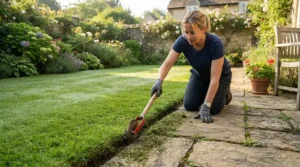
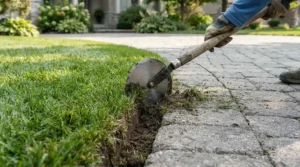
- Cut beside the guide. Stand on the lawn side, position the blade just outside the line and drive it straight down with your foot, then lift out slivers of turf.
- Overlap each cut. Place each bite so the blade slightly overlaps the last, which keeps the wall continuous instead of scalloped.
- Clear the soil. The RHS recommends removing excess soil with a spade or drawing it away with a hoe.
- Check from a distance. Stand back and sight along the line, as errors show from further away.
A few extra tips. Move the plank forward as you work instead of cutting freehand. Keep the blade vertical, because a tilted blade undercuts the turf and the edge collapses. Aim for a clean vertical face on the lawn side with a gentle drop on the bed side, which helps hold mulch in place. For maintenance, the RHS suggests trimming with edging shears after each mow, and its lawn-edge maintenance guide says redefining annually makes trimming easier.
Real-World Scenarios: Matching a Lawn Edging Tool to Your Garden
Specs only get you so far, so here are three realistic profiles.
The small terraced garden. Imagine a 6m by 4m rectangle with one straight border. The tool should be light, cheap and easy to store. The Spear & Jackson Lawn Edging Knife or the Spear & Jackson Carbon Lawn Edging Knife is the sensible answer, because at under 1kg it’s easy to handle and costs little. Edge once or twice a year, and you’re done in twenty minutes.
The new-build estate lawn with a long driveway edge. Picture a 25m run of lawn beside a block-paved drive. Doing this by hand every few weeks gets tedious, and the Ryobi RY18EGA-0 earns its price here. The guide wheels keep the line steady along a long straight run, and the depth settings let you skim between full recuts. If you already own ONE+ batteries, the case is stronger still.
The mature garden with shrub borders. Think old rhododendrons and a lot of roots near the surface. A plain blade bounces off roots and wobbles, so the Radius Garden Root Slayer is the more logical tool. Pair it with a lighter blade for finishing passes, so you use the heavier tool only where roots demand it.
Notice how none of these gardens needs the most expensive tool. The right match depends on edge length, soil, roots and surface, far more than budget.
How to Choose a Lawn Edging Tool for Straight Lines
Follow these steps in order:
- Measure your edge. Under about 30m of total edge suggests manual, while long straight runs justify power.
- Identify the adjoining surface. Soft borders suit scoop or half-moon blades, while hard surfaces suit rectangular or wheeled tools.
- Check your soil. Clay rewards polished stainless blades, and root-heavy soil rewards serrated teeth.
- Match shaft length to height. If you’re tall, consider the Wolf Garten Lawn Edger because you can choose a longer shaft.
- Consider weight. Anything over about 2kg gets tiring in long sessions, so be realistic.
- Decide on power. Corded needs a socket nearby, and cordless needs battery planning.
- Think about maintenance. Self-sharpening or stainless blades need less attention.
The reasoning behind this order is that edge length and surface cut out most of the wrong choices immediately, and the rest is ergonomics. People often start with brand or price, which is the reverse of a sensible process.
Guide Wheels and Why They Matter for a Lawn Edger for Clean Borders
If you want a lawn edger for clean borders without relying on a steady hand, guide wheels are the feature to prioritise. A wheel runs along the hard edge or along the line you’ve cut, which means the tool follows the geometry of the border instead of your wrist.
Both powered tools here use guide wheels differently. The Ryobi RY18EGA-0 has front and rear guide wheels that keep the blade level and on line, and Ryobi describes them as helping the edger stay on its intended path. The Flymo Contour XT uses a single in-line edging wheel that tilts into position, with most of the weight sitting over the wheel.
Guide wheels have limits. They need something to follow, such as a hard edge or an existing cut line, so on a fresh, unmarked lawn you still need a string line. On uneven ground a wheel can ride up and shift the cut. For truly new edges, cut the first line manually, then use a wheeled tool to maintain it.
Blade Sharpness: The Overlooked Key to Straight Edges
Blade sharpness decides whether a tool slices or tears. A dull blade drags, pulls turf sideways and leaves a ragged face, which looks like wobble even when your line was perfect.
Two of the manual tools here carry the same caveat: published reviews say the Spear & Jackson Carbon Lawn Edging Knife and the Ambassador Stainless Steel Lawn Edger may need sharpening on arrival. That’s worth checking before first use. The Wolf Garten Lawn Edger is described as self-sharpening, and the Radius Garden Root Slayer is credited with holding its edge.
A simple sharpening routine: clean off soil, secure the blade, and run a file along the bevel at its existing angle, following the RHS’s tool sharpening guidance if you want a reference. Wipe with an oily rag afterwards to protect the steel, and keep the blade dry in storage. For powered tools, replace worn blades instead of sharpening them, and always disconnect the power or remove the battery first.
Lawn Edging Tool for Driveways: What Works Next to Tarmac and Block Paving
A lawn edging tool for driveways faces conditions a garden border doesn’t. The adjoining surface is hard, so blades dull faster and an over-deep cut risks clipping the paving.
For manual work, the guidance from the published review is that plain rectangular blades suit lawns that sit flush with a hard surface. A flat edge also gives you a clean, vertical face against the paving. For powered work, the Ryobi RY18EGA-0 is designed to produce clean edges along pavements and patios, and its depth range of 6.3mm to 38mm lets you set a shallower cut near hard surfaces.
If your lawn sits slightly above the drive, a trimmer-style tool such as the Flymo Contour XT can tidy overhanging grass by running its wheel along the kerb. Keep the cutting line off the surface to avoid fraying the line quickly. Wear eye protection for any powered tool near gravel or hard surfaces, because debris flicks out faster than you’d expect.
Manual vs Powered: Lawn Edging Tool vs Alternatives
| Factor | Manual blade | Trimmer/edger | Wheeled cordless edger | Best For |
|---|---|---|---|---|
| Example | Spear & Jackson Carbon Lawn Edging Knife | Flymo Contour XT | Ryobi RY18EGA-0 | |
| Cuts a new trench | Yes | No | Yes | Spear & Jackson Carbon Lawn Edging Knife for fresh edges |
| Effort | High | Low | Low-moderate | Ryobi RY18EGA-0 for long runs |
| Running cost | Almost none | Line, electricity | Battery | Flymo Contour XT for quick tidying |
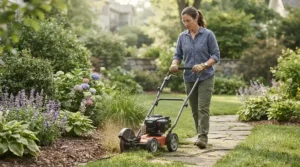
Manual blades are the only real route to a deep, crisp trench for little money, and that’s why they dominate this guide. A trimmer such as the Flymo Contour XT is a maintenance tool, ideal between recuts but not a replacement for one. The Ryobi RY18EGA-0 sits between the two, cutting an actual edge but with powered effort.
The sensible strategy for many UK gardeners is a hybrid: recut once a year with a manual blade, then use a trimmer for upkeep. That matches RHS advice, which suggests redefining edges annually and trimming regularly through the growing season.
Common Mistakes When Buying a Lawn Edging Tool
- Buying for brand, not for edge length. A powered machine for a 6m border is overkill.
- Ignoring shaft length. Short shafts cause back strain and wobbly cuts, so check height compatibility.
- Assuming a trimmer replaces a blade. Trimmers tidy grass but don’t cut a trench.
- Skipping the string line. No tool compensates for freehand cutting.
- Forgetting soil type. Dry, hard ground defeats the lighter blades here.
- Overlooking what’s in the box. The Wolf Garten Lawn Edger needs a separate shaft, and the Ryobi RY18EGA-0 is often a bare tool.
The common thread is that people shop by price and gloss over the workflow. A £20 tool used correctly beats a £150 machine used badly.
Long-Term Cost and Maintenance
Over five years, the economics favour manual tools heavily. A budget blade like the Spear & Jackson Lawn Edging Knife costs little to buy and almost nothing to run. Maintenance amounts to wiping it dry, filing the edge occasionally and oiling the steel.
Powered tools shift the cost to consumables and energy. The Flymo Contour XT needs replacement line over time, and the Ryobi RY18EGA-0 depends on batteries, so the real cost rises if you don’t already own the ONE+ system. Battery cells also age, so budget for an eventual replacement.
A fair value judgement: if you edge twice a year, a manual tool wins on total cost. If you edge fortnightly across a long driveway run, the time saved by a powered tool can justify the outlay. For comparison testing across the wider market, the Which? grass trimmer and lawn edger tests are a useful independent reference, though full results sit behind membership.
Problem and Solution Guide: Fixing Wobbly, Ragged Edges
Problem: the line wanders. Solution: use a string line or plank, and stand on the lawn side so you can see the guide. Move the guide forward instead of cutting freehand.
Problem: the blade bounces off roots. Solution: switch to the Radius Garden Root Slayer, or lift the tool vertically and strike down firmly to sever them.
Problem: turf tears instead of slicing. Solution: check blade sharpness. A file along the bevel usually transforms the cut, and it’s the first thing to check on a new Ambassador Stainless Steel Lawn Edger.
Problem: the edge collapses after a few weeks. Solution: cut a clean vertical face with a gentle drop on the bed side, as the RHS advises, and avoid tilting the blade.
Problem: sore hands and back. Solution: pick a lighter tool or a longer shaft, and wear gloves. The Wolf Garten Lawn Edger suits taller users thanks to its shaft choice.
Most edging complaints trace back to three causes: no guide, a dull blade or the wrong tool for the soil. Fix those and the results improve fast. The RHS also notes in its March lawn advice that creating a 7.5cm gutter around the lawn helps prevent grass spreading into borders.
FAQ
❓ How deep should a lawn edging tool for straight lines cut?
❓ What's the best time of year to use a lawn edger for clean borders?
❓ Is a trimmer-style edger good enough instead of a half-moon blade?
❓ How often should I sharpen my lawn edging tool?
❓ Which lawn edging tool for driveways is best for hard surfaces?
Conclusion
The best lawn edging tool for straight lines is the one that matches your edge length, soil and surface, and then gets used with a string line and a sharp blade. For most small and medium UK gardens, a manual half-moon is the most cost-effective choice: the Spear & Jackson Carbon Lawn Edging Knife for soft soil, the Ambassador Stainless Steel Lawn Edger for tidy borders, or the Spear & Jackson Lawn Edging Knife for clay and wet weather. Tall gardeners should consider the Wolf Garten Lawn Edger, and root-heavy borders suit the Radius Garden Root Slayer.
If you have long runs, particularly beside a drive, a wheeled powered tool starts to earn its keep. The Flymo Contour XT is the budget way to keep edges tidy between recuts, while the Ryobi RY18EGA-0 is the pick for actually cutting and maintaining long edges with controlled depth.
Whatever you choose, remember the order of importance: guide line first, blade sharpness second, tool third. Get those right and even an inexpensive blade will give you the clean, straight border your mowing deserves.
✨ Ready to sharpen up your lawn?
🌿 Click any highlighted product name above to check current pricing and availability. A crisp, straight border is only a weekend away, and your neighbours will be asking what you did!
Recommended for You
- Manual Vs Electric Lawn Edger: 7 Proven Picks For UK Lawns (2026)
- Lawn Edgers Under £50: 7 Proven Picks, No Regrets (2026)
- Brush Cutter For Brambles: 7 Best Picks For UK Gardens (2026)
Disclaimer: This article contains affiliate links. As an Amazon Associate, I earn from qualifying purchases. If you purchase products through these links, we may earn a small commission at no additional cost to you.
✨ Found this helpful? Share it with your friends! 💬🤗
