

In This Article
Every British garden has That Corner. It’s the patch behind the shed where the nettles hold committee meetings, the brambles are annexing the fence, and the grass has graduated from “long” to “structural.” Walk up with a nylon-line strimmer and the fight is short and sad. The line snaps, the stems laugh, and you retreat for a cup of tea.
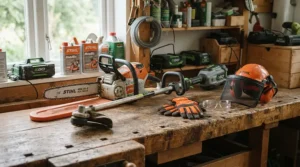
That’s the heart of the brush cutter vs strimmer question. The two look like cousins, with a long shaft, a spinning business end and (if you’re sensible) a harness. But they’re built for different jobs. A strimmer is a finishing tool. In fact “Strimmer” started life as a trade name, as Wikipedia’s entry on the string trimmer explains. A brush cutter is a clearing tool. Choose wrong and you’ll either haul around weight and fuel you never needed, or spend a weekend feeding line into a head that was never going to win.
This guide sorts it out. You’ll get a quick comparison and seven real, UK-available machines analysed spec by spec. Then come plain-English sections on blade attachments, tool versatility, scrub clearance and safety, plus step-by-step help for choosing and using your machine. Treat it as a brush cutter review with opinions, grounded in manufacturer data and published UK reviews rather than invented “I tested it” anecdotes. If you’re hunting for the best brush cutter for overgrown gardens, jump to the product section. If you’re still weighing the two tools, read on, because it could save you a fair few quid.
Quick Comparison: Seven Machines at a Glance
| Product | Power Source | Weight (approx.) | Standout Trait | Best For |
|---|---|---|---|---|
| ParkerBrand 52cc Petrol Garden Brush Cutter | 52cc 2-stroke petrol | 10.7kg | Blade and line head both supplied | ParkerBrand 52cc suits dense brambles and big jobs |
| BU-KO 52cc Multi-Function Gardening Tool | 52cc petrol multi-tool | 9.8kg | Hedge, saw and pole attachments | BU-KO 52cc suits tool versatility on a budget |
| Ryobi 25.4cc 2-in-1 Petrol Full Crank Brush Cutter | 25.4cc 2-stroke petrol | 8kg | Lighter split-shaft design | Ryobi 25.4cc suits long grass and light brambles |
| Einhell 4-Stroke Petrol Brush Cutter | 31cc 4-stroke petrol | 9kg | No fuel mixing | Einhell 4-Stroke suits occasional users |
| STIHL FS 55 R | 27.2cc 2-MIX petrol | around 4.4-4.7kg | Compact loop handle | STIHL FS 55 R suits mixed trimming and light scrub |
| Makita DUR369AZ | Twin 18V (36V) cordless | 5.2kg bare, 5.9-6.5kg with batteries | Brushless and fume-free | Makita DUR369AZ suits quiet, tidy clearing |
| STIHL FS 94 C-E | 24.1cc 2-MIX petrol | 4.9kg | Anti-vibration, ErgoStart | STIHL FS 94 C-E suits long, frequent sessions |
Looking at the table above, the two 52cc machines are the muscle, but at 10.7kg and 9.8kg you pay for that muscle in sweat. The STIHL FS 55 R and STIHL FS 94 C-E are the featherweights, and the Makita DUR369AZ is the only one that lets you skip petrol altogether. Weights are quoted differently by different makers (some dry, some with batteries or fuel), so treat them as a guide rather than gospel.
💬 Just one click — help others make better buying decisions too!😊
Top 7 Brush Cutters for Every Budget: Expert Analysis
A quick note on method. Specs below come from manufacturer data sheets and UK retailer listings. Review themes come from published UK reviews, chiefly DIY Garden’s August 2026 update, rather than from my own use of these machines. I haven’t verified Amazon star counts, so I won’t quote any. Where I couldn’t confirm a current price, I say so.
1. ParkerBrand 52cc Petrol Garden Brush Cutter — brute force for dense brambles
The headline here is raw grunt. A 52cc two-stroke engine spins the cutting head at around 7,500rpm, which makes ivy, nettles and bramble look like a to-do list rather than an obstacle.
Here’s why 52cc matters in practice: torque doesn’t fall away the moment the head meets a woody stem, which is where 25cc machines tend to bog down. The box includes a brush-cutter blade and an auto-release line head, so you can switch between clear-it-all mode and tidy-up mode. The harness is padded and adjustable, and the handle position moves for different heights. On a 10.7kg machine that isn’t a nicety. It’s survival kit.
My read, based on the spec comparison, is that this machine is for a genuinely neglected plot where the line head does most of the work and the blade is your insurance policy. It would be overkill for lawn edges and punishing for anyone with a dodgy back.
Published UK review themes are positive on power, easy first-time starting and clear assembly instructions. They flag the weight, the thirst for fuel at high revs, and a slightly crude finish compared with premium brands.
Pros:
- ✅ Chews through brambles, nettles and ivy
- ✅ Padded, adjustable harness included
- ✅ Blade and line head both supplied
Cons:
- ❌ Heavy at 10.7kg once fuelled
- ❌ Drinks fuel when run at high revs
Price: I couldn’t confirm a reliable current UK price, but DIY Garden positions it as a value pick, so check current price before buying.

2. BU-KO 52cc Multi-Function Gardening Tool — one engine, a shed full of attachments
Think of this as the Swiss Army knife of petrol clearing. A 52cc engine sits at the back, and a pile of heads turns it into a brush cutter, hedge trimmer or long-reach pruner.
The spec list is where it earns its keep. You get a four-line trimmer head, a three-tooth blade, a 40-tooth blade, a long-reach chainsaw attachment and a hedge trimmer. A 1m extension pole stretches total reach to roughly 2.5 metres. In real life that means one machine can flatten bramble, cut grass and tidy the top of a tall hedge without a ladder. Reviewers also note the engine works well just above idle, so you aren’t flogging it for every stem.
Here’s what to weigh. It’s the strongest tool versatility play in this round-up, but versatility has a price. At 9.8kg, with attachments to swap, you’ll be doing more spannering than with a single-head machine. The saw attachment also demands proper chainsaw-grade protective kit and respect.
Reviewers praise the sheer range of included accessories and the cutting power, with some customers reportedly dropping small trees using the saw head. The recurring complaints are murky instructions, grease not being included, and little spare line in the box.
Pros:
- ✅ Huge range of included attachments
- ✅ Extension pole gives roughly 2.5m reach
- ✅ Engine copes without constant full revs
Cons:
- ❌ Instructions are hard to follow
- ❌ Grease and spare line not supplied
Price: I couldn’t verify a stable current figure, but reviewers frame it as strong value for the kit included, so check current price.
3. Ryobi 25.4cc 2-in-1 Petrol Full Crank Brush Cutter — the lighter all-rounder
If the 52cc machines feel like bringing a tractor to a tea party, this is the sensible middle path. It has a 25.4cc full-crank engine in an 8kg package.
The split shaft means attachments can be fitted, and the box includes a Tri-Arc+ hardened metal blade plus a Reel-Easy line head. Reviewers quote a 46cm cutting width, and the machine reportedly handles grass around 70cm tall plus brambles. Lower weight matters more than it sounds. It’s the difference between finishing a patch and abandoning it halfway for the kettle.
Based on the specs, I’d point this at gardeners with a modest-to-medium jungle who value comfort over maximum power. Anything woodier than brambles will test it.
Published reviews like the easy pull-start, the manageable weight and the relatively quiet running for a petrol machine. Complaints are heavy vibration, vague assembly instructions, and a head that doesn’t angle, so taller users stoop. Swapping between blade and line head needs a small screwdriver.
Pros:
- ✅ Lighter than most petrol rivals at 8kg
- ✅ Starts reliably, even after standing
- ✅ Handles brambles and long, tough grass
Cons:
- ❌ Vibrates noticeably during longer sessions
- ❌ No head angle adjustment, no fuel-mixing bottle
Price: no verified current figure at the time of research. It’s pitched as a value option, so check current price.
4. Einhell 4-Stroke Petrol Brush Cutter — no fuel mixing, no fuss
Two-stroke mixing is the chore that puts casual gardeners off petrol machines, and this one skips it. A 31cc four-stroke engine runs on straight petrol, with oil in a separate compartment.
The blade head spins at 7,000rpm and the nylon head at 6,000rpm. Weight is 9kg, which is light for a four-stroke. The split shaft makes it easy to stow in a car boot or a crowded shed, and the second handle adjusts for precision work. What the spec sheet doesn’t say loudly is the cutting width: just 25.5cm per pass, so big areas take longer.
My analysis is that this is the “I’ll use it six times a year” machine. You trade width and refinement for convenience. Reviewers also advise budgeting for a better harness, because the bundled one is awkward to balance.
Published themes: easy assembly despite unclear instructions, plenty of power for the price, and a first start that takes some effort before it settles down. Vibration is the most common complaint.
Pros:
- ✅ Four-stroke, so no pre-mixing fuel
- ✅ Strong power for its price bracket
- ✅ Split shaft stores and travels easily
Cons:
- ❌ Noticeable vibration needs regular rests
- ❌ Harness is weak and narrow cutting width
Price: couldn’t confirm a current figure. Reviewers describe it as notably cheaper than other four-strokes, so check current price.
5. STIHL FS 55 R — compact entry-level petrol with a loop handle
This is the brand’s friendly front door into petrol clearing. It has a 27.2cc 2-MIX engine producing 0.75kW (about 1hp) in a package of roughly 4.4-4.7kg, depending on how weight is counted.
The loop handle favours tight spaces: thinning between shrubs, working round obstacles, cutting along fences. A 420mm cutting circle and the AutoCut C 26-2 head handle general grass duty, and retailers confirm a 2-tooth blade is available separately for heavier work. Electronic ignition supports reliable starting.
Here’s the catch the spec sheet whispers. This model has no anti-vibration system, and its listed handle vibration is 8.5 m/s² with the plastic tool. I’ll unpack why that matters in the safety section. For a homeowner doing an hour here and there, it’s a reasonable trade for the low price. For longer sessions, it’s a reason to step up.
I couldn’t find aggregated customer review data I could verify. The judgement here leans on specs and retailer descriptions, which consistently pitch it as a lightweight starter petrol machine.
Pros:
- ✅ Very light and easy to manoeuvre
- ✅ Loop handle suits tight garden spaces
- ✅ Electronic ignition supports dependable starting
Cons:
- ❌ No anti-vibration system fitted
- ❌ Blade is sold separately
Price: roughly the £240-£330 range across UK retailers, which is solid value for a premium-brand entry model. Check current price.

6. Makita DUR369AZ — the cordless alternative that thinks it’s petrol
This one swaps fumes and pull-cords for two 18V batteries. Together they deliver 36V to a brushless motor, with 3-speed control and Automatic Torque Drive that adjusts output to the load.
The practical details matter. It’s a bare unit at around 5.2kg, rising to 5.9-6.5kg with batteries, so batteries and charger are extra. Cutting width is 430mm with the line head and 255mm with blades, including 2-, 3- and 4-tooth metal options and a plastic blade. Blade rotation is counter-clockwise like petrol machines, and active-feedback technology cuts the motor if the cutting tool is suddenly stopped, which helps with kickback.
My analysis: this is the machine for people who value a quiet evening more than maximum runtime. One hands-on test of the twin-18V design reported around 30-45 minutes on moderate brush with two 5.0Ah batteries, so you’ll plan clearing in bursts. A US roundup also rated a Makita 36V LXT cutter best overall, though that’s a regional variant, so treat it as indirect support.
Pros:
- ✅ Brushless motor, no fuel or fumes
- ✅ Counter-clockwise rotation feels familiar
- ✅ Works with existing 18V Makita batteries
Cons:
- ❌ Bare unit, so batteries and charger extra
- ❌ Runtime limits long, heavy clearing days
Price: bare-unit listings I found ran from the mid-£600s to around £700, and a full kit costs more. Check current price.
7. STIHL FS 94 C-E — the lightest pro-grade bike-handle machine
This is the grown-up’s choice. A 24.1cc 2-MIX engine produces 0.9kW (1.2hp) in a 4.9kg frame, which is an unusually generous power-to-weight ratio.
What justifies the price is the supporting cast. ErgoStart makes pulling the cord easier, ECOSPEED lets you trim engine speed on the handle to save fuel, and the anti-vibration system is the real prize. Listed handle vibration is 4.7 m/s² on the left and 4 m/s² on the right, with sound pressure of 93 dB(A). A 540cc tank, a 420mm cutting circle, a bike handle and a harness complete the package.
Here’s my analysis. If you’ll use a machine for long stretches, such as an acre of rough ground or regular verge work, then comfort is capacity. You can simply work longer. For a once-a-year blitz it’s more machine than you need.
Verifiable aggregated reviews were thin, so this verdict rests on spec data and the manufacturer’s own positioning for professional landscaping.
Pros:
- ✅ Excellent power-to-weight for its class
- ✅ Anti-vibration system reduces hand fatigue
- ✅ ErgoStart and ECOSPEED aid starting and economy
Cons:
- ❌ Premium price for occasional users
- ❌ Two-stroke fuel mixing still required
Price: roughly the £490-£590 range, depending on retailer and bundle. Check current price.
Side-by-Side Specs and Value
| Product | Engine / Power | Cutting Tools Included | Price Range | Best For |
|---|---|---|---|---|
| ParkerBrand 52cc | 52cc 2-stroke | Blade + auto-release line head | Not verified, check current price | Heavy brambles |
| BU-KO 52cc | 52cc petrol | Line head, 3-tooth and 40-tooth blades, saw, hedge trimmer | Not verified, check current price | Versatility |
| Ryobi 25.4cc | 25.4cc 2-stroke | Tri-Arc+ blade + Reel-Easy head | Not verified, check current price | Lighter all-round use |
| Einhell 4-Stroke | 31cc 4-stroke | Blade head + nylon head | Not verified, check current price | No-mix convenience |
| STIHL FS 55 R | 27.2cc, 0.75kW | AutoCut C 26-2 head | £240-£330 range | Tight spaces |
| Makita DUR369AZ | 36V brushless | Line head (blades vary by kit) | Mid-£600s to around £700 bare | Quiet clearing |
| STIHL FS 94 C-E | 24.1cc, 0.9kW | AutoCut C 26-2 head | £490-£590 range | Frequent heavy use |
Read across and a pattern emerges. Power per kilogram, rather than raw cc, is what separates comfortable machines from exhausting ones. The STIHL FS 94 C-E and Makita DUR369AZ cost the most but spare your arms, while the ParkerBrand 52cc and BU-KO 52cc give you more clearing grunt per pound spent. Budget buyers should confirm current pricing on the four machines I couldn’t verify, because the ranking can shift quickly.
✨ Ready to tackle That Corner?
🔍 Click any highlighted product name above to check current pricing and availability, then match the machine to your jungle rather than your wishlist.
What Is Brush Cutter vs Strimmer? The Short Answer
A strimmer, or string trimmer, uses a spinning nylon line to cut grass and soft weeds, and it’s light and easy to control. A brush cutter has a more powerful engine or motor, a sturdier shaft and, crucially, metal or plastic blades for brambles, nettles and small woody stems. The names overlap, but the cutting tool decides the job.
Here’s the wrinkle that confuses everyone. In UK shops, “brushcutter,” “bush cutter,” “clearing saw” and “blade strimmer” often describe the same family of machine. Many strimmers accept blade attachments too. The real separators are power, shaft strength and what you bolt on the end.
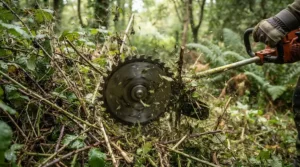
A line head excels at fine, precise work: edging, trimming around trees, tidying beneath fences. It sheds speed and bite on thick stems. A blade brings far more cutting force but throws debris harder and demands more respect. That’s why serious clearance machines come with harnesses, guards and heavier frames.
So when someone asks which wins in the brush cutter vs strimmer debate, the honest answer is “whichever matches the stems you’re facing.” Fine grass and lawn edges favour the strimmer. Nettle forests, bramble banks and neglected plots favour the brush cutter. Everything in between, such as long grass, mixed weeds and the odd woody stalk, is where blade attachments and a sensible engine size decide the outcome.
How to Choose Between a Brush Cutter vs Strimmer: 7 Steps
- Identify what you’re cutting. Soft grass and edges point to a strimmer. Brambles, nettles, ivy and small saplings point to a brush cutter. Everything else is judgement.
- Estimate the area. Under a few hundred square metres of occasional clearing suits a lighter machine or cordless model. Larger jobs favour petrol.
- Match engine size to growth. DIY Garden suggests around 52cc for very overgrown plots and 25-35cc where brambles are occasional.
- Check weight honestly. Around 8kg counts as light for petrol, and over 10kg once fuelled is tiring. A harness helps but doesn’t remove weight.
- Pick your power source. Two-stroke is lighter but needs mixed fuel. Four-stroke avoids mixing. Cordless removes fumes but caps runtime.
- Look for blade attachments. The best brush cutter for overgrown gardens should accept both line and blade heads, and check spindle thread compatibility too.
- Read the vibration data. Lower figures mean less fatigue and lower long-term risk, and manufacturers must publish them.
If you can’t decide between two machines, the hire shop is a legitimate third option. For a one-off clearance, hiring beats buying every time.
Brush Cutter vs Strimmer: Head-to-Head Analysis
National Tool Hire notes that brush cutters tend to have more powerful motors and are aimed at dense vegetation, while strimmers suit precise work like borders and slopes. That matches what the specs show, and the table below turns it into a decision tool.
| Factor | Line Strimmer | Brush Cutter | Hand Tools (Loppers, Sickle) |
|---|---|---|---|
| Thick stems and brambles | Struggles | Excellent with the right blade | Slow but precise |
| Fine edging | Excellent | Possible, but heavier | Not practical |
| Weight and fatigue | Light | Moderate to heavy | Low |
| Running cost | Low | Moderate | Almost none |
| Debris throw | Moderate | Higher with blades | Minimal |
| Best For | Weekly tidying | Neglected ground | Tiny jobs |
The table shows why many households end up owning both. The strimmer takes the routine work and the brush cutter handles the rescue missions. If you want just one, pick based on your worst vegetation rather than your average, because a brush cutter with a line head can mimic a strimmer far more convincingly than the reverse. The trade-off is weight, so a heavier machine used constantly can cost you comfort.
My practical rule: if your garden has more than a patch of woody growth, buy the brush cutter. If it’s mostly lawn edges and light weeds, a good strimmer is enough, and you’ll thank yourself for the lower weight.
Blade Attachments Explained: What to Fit and When
Blades turn a trimmer into a clearing tool, but the wrong one makes life harder. Fewer teeth bite into larger stems, so a three-tooth blade suits woody shrubs and brambles. More teeth cut finer growth cleanly and resist grass wrapping, though they blunt faster and are harder to sharpen. Makita’s accessory range shows the spread, from 2-, 3-, 4- and 8-tooth metal blades to plastic blade sets for grass and light bushes.
Line heads still have a job. Use one around tree bases, rocks and fence posts, where a metal blade would bounce, dull or cause damage. Never use a metal blade near paving or stones. It can kick and send fragments flying.
Before buying any attachment, check compatibility. Manufacturer data lists spindle threads, and some Makita models use an M10×1.25 left-hand spindle, so a random blade won’t necessarily fit. Always fit the manufacturer’s guard, and keep the blade sharp. A dull blade tears and stalls, while a sharp one slices cleanly and puts less strain on you and the engine.
Rotation direction matters too. Counter-clockwise rotation, like the Makita DUR369AZ uses, throws clippings away from the operator. The BU-KO 52cc bundles two blade types and a trimmer head, which makes it a cheap way to experiment with blade attachments before you commit to a specific favourite.
Scrub Clearance: Taming Brambles, Nettles and Saplings
Scrub clearance rewards patience over aggression. Start at the top of the growth and work down in layers, because shaving the canopy first stops stems from wrapping the head. Sweep the cutter in a smooth arc from left to right, letting the blade do the cutting rather than forcing it.
Know your limits. DIY Garden says petrol machines can cut branches up to roughly 15mm in diameter, and anything thicker is a job for a saw or loppers. The BU-KO 52cc carries a long-reach chainsaw attachment that reviewers say handles stems around 10cm thick, but sawing demands proper training and protective kit.
Match machine to task. The ParkerBrand 52cc and BU-KO 52cc are built for heavy scrub clearance, while the Ryobi 25.4cc and Einhell 4-Stroke suit lighter growth. Cordless models like the Makita DUR369AZ manage thinner brambles and are better done in short bursts.
Expect regrowth. Brambles and nettles respond to cutting by sprouting again, so schedule a follow-up pass in a few weeks. Rake the cuttings promptly, because bramble tips can root where they land. Treat stumps or cover cleared ground with a membrane if you want the area to stay clear.
Tool Versatility: One Machine, Many Jobs
Tool versatility is the quiet superpower of this category. A split-shaft design, like the Ryobi 25.4cc, accepts different heads without needing a second engine. The BU-KO 52cc pushes the idea furthest with its hedge trimmer, pole and saw attachments.
Battery platforms add another kind of versatility. The Makita DUR369AZ runs on two 18V batteries that also power other tools in the same range, so a household already invested in that system gets a cheaper way into the category. That matters because batteries are the pricey part of cordless tools.
Versatility has a cost, though. Every attachment adds weight, complexity and an extra thing to maintain or lose. A dedicated machine like the STIHL FS 94 C-E may do fewer jobs but does them with less fatigue and fewer fiddly changes.
Use this test: list the jobs you’d genuinely do in a year. If it’s three or more (say grass, brambles and hedge tops), a versatile machine makes sense. If it’s one big clear-out and some tidying, buy for the clear-out and hire the rest. The best purchase is the one you’ll actually pick up, so pick the setup that gets you outside rather than the longest accessory list.
Safety, Vibration and the Law
The HSE warns that repeated or prolonged use of vibrating tools, including brush cutters, can lead to hand-arm vibration syndrome, with warning signs such as tingling, numbness and fingers turning white in the cold. That’s why vibration data deserves a place on your shortlist.
Here’s a rough worked example for workplace-style exposure. The HSE exposure action value is 2.5 m/s² over a day and the limit is 5 m/s². Using the listed 8.5 m/s² for the STIHL FS 55 R (with a plastic tool), you’d reach the action value after about 40 minutes of trigger time. For the STIHL FS 94 C-E, using its higher listed 4.7 m/s², it’s roughly two and a quarter hours. Test conditions differ between models, so treat this as an illustration, not a guarantee. Domestic users rarely get near these levels, but the contrast shows how much an anti-vibration system matters.
Wear eye protection, ear defenders (sound pressure of 93-95 dB(A) is loud), sturdy boots, gloves and long trousers. Use the harness, keep bystanders well back, and check for UKCA or CE marking on any machine you buy.

Long-Term Cost and Maintenance
Purchase price is only the opening bid. Two-stroke machines need correctly mixed fuel (STIHL lists a 50:1 petrol-oil mix for the STIHL FS 55 R), which means buying oil and a mixing bottle. Four-strokes like the Einhell 4-Stroke avoid mixing but still need oil checks and changes.
| Product | Upfront Range | Running Costs | Value Verdict | Best For |
|---|---|---|---|---|
| STIHL FS 55 R | £240-£330 | Petrol, oil, line | Strong value for light use | Small gardens |
| STIHL FS 94 C-E | £490-£590 | Petrol, oil, line | Pays back through comfort | Frequent use |
| Makita DUR369AZ | Mid-£600s to £700 bare | Electricity, batteries | Best if you own batteries | Quiet clearing |
| ParkerBrand 52cc | Check current price | Petrol, oil, blades | Value for heavy jobs | Occasional big clearance |
Read this as total cost of ownership. Cordless looks expensive upfront, but you skip fuel, oil and carburettor faff. The manufacturer also claims the stratified-charge engine in the STIHL FS 94 C-E uses up to 20% less fuel than conventional two-strokes, which adds up over many hours. For occasional users, though, a cheaper petrol machine wins on simple arithmetic.
Maintenance basics: wipe down after use, oil the blade lightly to prevent rust, sharpen with a whetstone, and check the air filter and spark plug each season. Look after the machine and it will outlast most warranties.
Common Mistakes When Buying a Brush Cutter or Strimmer
Buying too much machine. A 52cc monster for edging is like using a sledgehammer on a drawing pin. Match power to the job.
Ignoring fuelled weight. A listed 8kg can feel like 9.5kg after fuel and harness. Check weights on the same basis.
Forgetting the extras. The Makita DUR369AZ is sold bare, so budget for batteries and a charger. Several petrol machines also need oil, a mixing bottle or a better harness (the Einhell 4-Stroke harness draws criticism).
Skipping the harness. Harnesses spread load and keep the machine under control. Use one every time.
Overlooking attachment compatibility. Blades and heads must fit your spindle and guard.
Not checking vibration data. Look at the numbers on the spec sheet before you commit.
Cutting at the wrong time of year. Nesting season restricts clearance, which I’ll cover shortly.
Practical Usage Guide: Setup, First Use and a 30-Day Maintenance Plan
Before you start. Check for nesting birds. Gloucester City Council advises avoiding non-urgent cutting between 1 March and 31 August because wild birds, their young, eggs and active nests are protected by law. For big scrub jobs, September to February is the safer window.
Assembly and fuelling. Read the manual, fit the guard first, and make sure every fastening is tight. For two-stroke models, mix fuel in a clean bottle. For four-strokes, add oil before the first start.
Harness fit. Adjust the straps so the machine hangs level, with the clip in the centre of your chest.
First-use technique. Warm up the engine, then sweep in a smooth left-to-right arc. Work top-down on thick growth and let the blade do the cutting.
Week one. Check fasteners and blade sharpness after each session.
Week two. Clean the air filter and inspect the line head.
Week four. Review the spark plug and fuel system, and sharpen the blade.
The common first-month errors are overfilling the tank, over-revving through everything, and storing the machine without cleaning it. Avoid those and you’ll be ahead of most new owners.
Real-World Scenarios: Matching a Machine to Your Garden
The allotment taker-on. You’ve inherited a third of an acre of bramble and couch grass, you’ll use the machine heavily for two months, and your budget is modest. The ParkerBrand 52cc or BU-KO 52cc is the logical pick, with the BU-KO 52cc winning if you also want hedge or pruning attachments. Plan the work in sections to manage the weight.
The terraced-house gardener. Your plot is small, but there’s a nettle thicket behind the shed and the edges need regular trimming. You value a quiet machine and easy storage. The Makita DUR369AZ suits you if you already own 18V batteries, and the STIHL FS 55 R is the cheaper petrol alternative.
The semi-rural owner. You’ve got hedge banks, a paddock edge and a few hundred metres of verge to cut every fortnight in season. You need comfort over hours of use. The STIHL FS 94 C-E earns its premium here through lower vibration and weight.
Problem → Solution Guide: Five Common Headaches
Grass keeps wrapping round the head. Switch to a blade with more teeth, or cut in shorter layers from the top down. Clear the head regularly, and use reverse rotation if your machine has it, like the Makita DUR369AZ.
The line head won’t cut thick stems. That’s the limit of line. Fit a metal or plastic blade suited to the growth, or step up to a machine such as the ParkerBrand 52cc.
Hard starting on a petrol machine. Check fuel freshness and mixing ratio, prime the bulb, and set the choke properly. Easier-starting designs like the STIHL FS 94 C-E with ErgoStart reduce the struggle.
Arm and back fatigue. Check harness fit, take breaks and consider a lighter machine. The Ryobi 25.4cc is a gentler option than the 52cc models.
Numb or tingling hands. Stop, warm your hands and take longer breaks. If it persists, seek medical advice, and consider a machine with an anti-vibration system.
FAQ
❓ Can I use a brush cutter instead of a strimmer for lawn edges?
❓ Is a brush cutter vs strimmer upgrade worth it for a small garden?
❓ How thick a stem can a petrol brush cutter handle?
❓ Can I fit blade attachments to any strimmer?
❓ What's the best brush cutter for overgrown gardens if I'm a beginner?
Conclusion
The brush cutter vs strimmer decision comes down to one question: what are you actually cutting? For soft grass and edges, a strimmer is lighter, cheaper and easier. For brambles, nettles and neglected ground, a brush cutter is the only tool that won’t waste your weekend.
Among the seven machines here, the ParkerBrand 52cc and BU-KO 52cc are the heavy-clearance picks, with the BU-KO 52cc adding real versatility. The Ryobi 25.4cc and Einhell 4-Stroke suit lighter work and easier ownership. The STIHL FS 55 R is the compact budget-premium entry, the Makita DUR369AZ is the quiet cordless route, and the STIHL FS 94 C-E is the comfort-first choice for regular use. Prices and availability change, so check current price before you commit.
Whatever you choose, respect the vibration data, wear proper protection and avoid nesting season for big jobs. Match the machine to your worst vegetation, not your average, and That Corner won’t stand a chance.
✨ Ready to reclaim your garden? 🌿
Pick the machine that matches your plot, click a highlighted product name to check current pricing and availability, and enjoy the satisfying whirr of progress! 🚀
Recommended for You
- Brush Cutters Under £250: 7 Best Picks For UK Gardens (2026)
- Petrol Strimmer For Professional Use: 7 Tested Picks (2026)
- Petrol Strimmer For Thick Grass: 7 Beastly Picks For 2026
Disclaimer: This article contains affiliate links. As an Amazon Associate, I earn from qualifying purchases. If you purchase products through these links, we may earn a small commission at no additional cost to you.
✨ Found this helpful? Share it with your friends! 💬🤗
