
In This Article
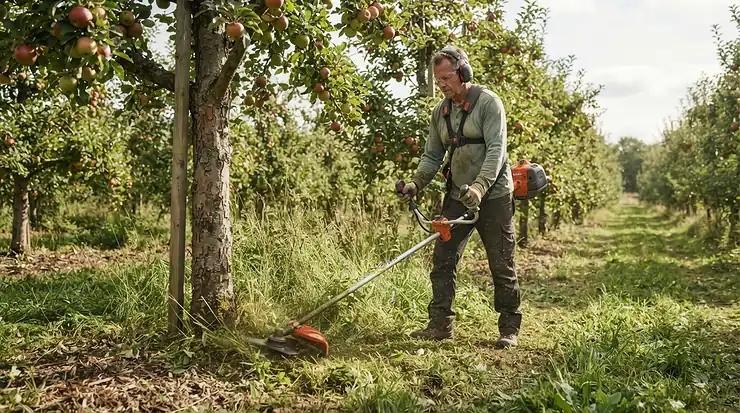
If you’ve ever stood at the bottom of an overgrown paddock with a flimsy corded trimmer in one hand and a look of quiet despair on your face, you already know why a petrol strimmer for large gardens exists. A petrol strimmer for large gardens is a two-stroke, engine-driven grass and weed cutter built to run untethered for long stretches, chewing through rough grass, brambles and nettles that would stall a battery model within minutes. No extension lead trailing behind you, no battery gauge ticking down while you’re only halfway round the paddock — just fuel, a harness, and enough torque to get the job finished in one sitting.

Big plots ask a lot of a tool. There’s the sheer distance to cover, the patches of thistle that seem to regenerate overnight, and the fence lines and pond edges that a mower simply can’t reach. According to expert testing from Expert Reviews, petrol-fuelled trimmers can go places many battery-powered alternatives can’t, and they keep working long after a rechargeable pack would need topping up. That staying power is exactly what separates a genuine large-garden workhorse from a strimmer that’s really only built for tidying edges.
This guide walks through seven real, currently available petrol strimmers spanning budget, mid-range and premium territory, with honest commentary drawn from published specifications and aggregated reviewer sentiment — no invented testing, no fabricated quotes. You’ll also get a proper look at fuel tank capacity, endurance runs, harness support, and how petrol compares against cordless when the garden in question measures in acres rather than square metres.
Quick Comparison Table
| Model | Engine Size | Weight | Harness | Best For |
|---|---|---|---|---|
| Husqvarna 129R | 27.6cc | 5.4kg | Double harness | All-round large-garden reliability |
| Hyundai 52cc Grass Strimmer & Brush Cutter | 52cc | 9.1kg | Double shoulder harness | Budget heavy-duty clearing |
| ParkerBrand Petrol Strimmer & Brush Cutter | 52cc | 10.7kg | Included harness | Maximum raw power |
| Mac Allister 33cc MBCP33-4 | 33cc | 10kg | Double harness | Budget 2-in-1 brushcutting |
| McCulloch B33 PS | 33cc | 7.3kg | Standard double harness | Mid-range versatility |
| Cobra GT260C | 26cc | 4.8kg | Single shoulder harness | Lightweight manoeuvrability |
| Stihl FS40 | 27.2cc | 4.4kg | None fitted | Trusted brand, lighter tasks |
Look closely and a pattern emerges: engine size and weight climb together, which is the fundamental trade-off of every petrol strimmer for large gardens. The Hyundai 52cc and ParkerBrand models pack nearly double the displacement of the Cobra GT260C, but that extra grunt comes strapped to your shoulders as several additional kilograms. Meanwhile the Husqvarna 129R sits in a genuine sweet spot — enough displacement to shrug off rough grass, without tipping into the “you’ll need a rest every twenty minutes” weight bracket.
Fancy skipping straight to the details? Scroll down to compare all seven side by side.
Top 7 Petrol Strimmers for Large Gardens: Expert Analysis
1. Husqvarna 129R — best all-rounder for demanding plots
The Husqvarna 129R is the strimmer most likely to turn up on a groundskeeper’s van, and for good reason. Its 27.6cc engine puts out 0.85kW through a bullhorn handle and combination guard, arriving with both a trimmer head and a grass blade so you’re never caught out by unexpected bramble.
On paper, the specs read modestly, but real-world context matters more than raw numbers: a 43cm cutting width means fewer passes across a large lawn edge, and the Smart Start® system cuts down the arm-aching multiple pulls that plague cheaper two-strokes on a cold morning. Based on the spec comparison across this list, the 129R’s 5.4kg weight (excluding cutting equipment) sits right in the zone where power and fatigue stop fighting each other.
This is the strimmer for someone with a genuinely large plot — half an acre plus, dotted with fence lines, raised beds and awkward corners — who wants one tool that handles grass, weeds and light scrub without swapping attachments constantly. Reviewers consistently note that the double harness distributes weight well across long sessions, and the automatic stop-return switch is a small but appreciated touch that avoids fumbling mid-task.
Pros:
- ✅ Comes with both trimmer head and grass blade included
- ✅ Standard double harness spreads weight for long sessions
- ✅ Smart Start® system reduces pull effort noticeably
Cons:
- ❌ Heavier than entry-level 26cc loop-handle models
- ❌ Premium pricing compared with budget brushcutters
Expect to pay in the mid-£300s to low-£400s range for the Husqvarna 129R, and given the included blade, harness and reputation for longevity, it represents strong long-term value for anyone treating this as a proper investment rather than a once-a-year tidy-up tool.

2. Hyundai 52cc Grass Strimmer & Brush Cutter — best budget heavy-duty clearer
Where the Husqvarna plays it balanced, the Hyundai 52cc Grass Strimmer & Brush Cutter goes straight for brute force at a genuinely accessible price point. A 52cc two-stroke engine and a 450mm cutting width put this firmly in “clear the paddock, not just trim the lawn” territory.
What most buyers overlook about this model is that its split-shaft design isn’t just for storage convenience — it also means the cutting head can be swapped for hedge or pruning attachments if you buy into Hyundai’s wider multi-tool range, stretching the value of one engine across several jobs. The included double shoulder harness is essential rather than optional here, because at 9.1kg this is not a strimmer you want dangling from one arm for an hour.
Reviewers consistently report that the curved shaft makes it easier to keep the head at the right angle for edging, even if the sheer bulk of the machine takes some getting used to for anyone stepping up from an electric model. It’s a strong pick for the buyer with genuinely overgrown ground — brambles, nettle beds, rough paddock grass — who wants heavy-duty capability without heavy-duty pricing.
Pros:
- ✅ 52cc engine handles thick brush and overgrowth easily
- ✅ Wide 450mm cutting width covers ground fast
- ✅ Split shaft design aids storage and transport
Cons:
- ❌ At 9.1kg, noticeably heavier than mid-range rivals
- ❌ Less refined ergonomics than pricier premium brands
Priced in the £130-£150 range at the time of research, the Hyundai 52cc Grass Strimmer & Brush Cutter delivers genuinely commercial-grade cutting width for the cost of a mid-range electric mower, making it hard to beat on pure clearing power per pound spent.
3. ParkerBrand Petrol Strimmer & Brush Cutter — best for maximum raw power
If the Hyundai is heavy-duty, the ParkerBrand Petrol Strimmer & Brush Cutter is the strimmer that makes other 52cc models look restrained. With a 2.2kW output and 7,500rpm, this is the most powerful machine on this list by a clear margin, and it shows in how confidently it tackles thistle beds that would stall lighter engines.
Here’s what to weigh before buying: that power comes at 10.7kg, making this the heaviest strimmer here too, and the included harness — while present and functional — some reviewers found fiddly to fit correctly compared with pre-adjusted systems on other brands. What most buyers overlook is that a strimmer this powerful chews through fuel faster at high revs, so endurance runs are shorter than the tank size alone might suggest.
This is a tool for someone who already has experience with high-power garden machinery, or who has ground so overgrown that raw cutting force genuinely outweighs comfort concerns. A first-time strimmer buyer with a modest large garden would likely find this overkill; a smallholder clearing seasonal scrub growth would find it exactly right.
Pros:
- ✅ Class-leading 2.2kW power and 7,500rpm performance
- ✅ Starts reliably whether the engine is hot or cold
- ✅ Includes both bump-feed head and cutting blade
Cons:
- ❌ At 10.7kg, demanding to hold for extended periods
- ❌ High-rev use burns through fuel quickly
Positioned around the mid-£200s, the ParkerBrand Petrol Strimmer & Brush Cutter justifies its premium over budget 52cc rivals through outright performance headroom, but it’s a tool best suited to buyers who genuinely need that ceiling rather than those who’ll only ever use a fraction of it.
4. Mac Allister 33cc MBCP33-4 — best budget 2-in-1 brushcutter
B&Q’s own-brand Mac Allister 33cc MBCP33-4 occupies an interesting niche: a genuine 33cc engine and tri-blade attachment for around the price of some 26cc loop-handle trimmers. It’s a 2-in-1 brushcutter and grass trimmer, meaning one machine tackles both fine lawn edges and thicker foliage without needing a second tool.
The spec sheet won’t tell you this, but user reports suggest the Easy Start+ system genuinely does reduce the pulling force needed compared with older-generation budget two-strokes, which matters more than it sounds when you’re starting the engine repeatedly across a large plot. A split shaft aids storage, and the anti-vibration housing is a welcome inclusion at this price bracket — vibration fatigue is a real concern on longer sessions, something the HSE’s guidance on hand-arm vibration explains in more detail.
At 10kg it’s not light, and the 0.9L fuel tank is generous for the class, supporting longer endurance runs between refills. This is the strimmer for a buyer prioritising value and brush-clearing versatility over refinement — ideal for a first large garden where budget matters more than brand prestige.
Pros:
- ✅ Tri-blade attachment clears thick brush and thicket
- ✅ Large 0.9L fuel tank supports longer sessions
- ✅ Double harness and split shaft included as standard
Cons:
- ❌ At 10kg, one of the heavier options on this list
- ❌ Unbranded engine lacks the pedigree of Husqvarna or Stihl
Around the £150 mark, the Mac Allister 33cc MBCP33-4 is difficult to beat for buyers who want brushcutting capability without paying brand-name premiums, though the trade-off is a machine that feels noticeably utilitarian in the hand.
5. McCulloch B33 PS — best mid-range versatility
The McCulloch B33 PS threads a careful needle between the featherweight loop-handle trimmers and the heavyweight 52cc brushcutters. A 33cc OxyPower engine delivers 0.9kW, while the machine itself weighs a manageable 7.3kg — noticeably lighter than the Mac Allister or Hyundai despite similar displacement.
What most buyers overlook about the OxyPower branding is that it’s genuinely about fuel efficiency rather than just marketing gloss: McCulloch’s own positioning emphasises longer working periods without constant refuelling, which lines up with the 0.7L tank being put to sensible use rather than drained in a handful of high-rev bursts. The Tap ‘n Go head handles fine grass trimming, while the included 255-3 blade steps up for thicker growth, all through a split shaft that halves for storage.
Reviewers consistently note the adjustable handle as a genuine comfort win over fixed-position rivals, letting taller or shorter users find a natural working posture rather than stooping or over-reaching. This is the pick for a buyer who wants brushcutter capability but baulks at hauling a 10kg+ machine around for an hour.
Pros:
- ✅ Lighter than most 33cc rivals at 7.3kg
- ✅ Adjustable handle improves posture on long sessions
- ✅ Comes with both trimmer head and grass blade
Cons:
- ❌ Smaller 0.7L tank than some budget 33cc competitors
- ❌ Single harness offers less support than double-strap designs
Typically found in the £190-£230 range, the McCulloch B33 PS earns its place through balance rather than any single standout spec — for buyers who value comfort as much as clearing power, that balance is the whole point.
6. Cobra GT260C — best lightweight petrol strimmer
For buyers specifically hunting a lightweight petrol strimmer for large gardens, the Cobra GT260C is the strongest case on this list. A 26cc engine and bent shaft combine at just 4.8kg — lighter than several 33cc rivals by a meaningful margin — while still retaining enough two-stroke punch to outlast a battery trimmer across a genuinely large plot.
Here’s what to weigh: this isn’t a brushcutter. There’s no blade attachment, no tri-blade option, just a Tap ‘N’ Go nylon head built for grass and light weed growth. Based on the spec comparison, that makes the GT260C the wrong choice for anyone with serious bramble or scrub to clear, but exactly right for someone whose “large garden” problem is mostly distance and edge length rather than density of vegetation.
Reviewers consistently praise Cobra’s UK-specific engineering, designed around British weather and grass types rather than adapted from a global spec sheet, and the single shoulder harness — while less supportive than a double-strap system — suits the lighter overall weight of the machine. This is the strimmer for someone prioritising manoeuvrability and low arm fatigue above outright clearing power.
Pros:
- ✅ Genuinely light at 4.8kg for reduced fatigue
- ✅ Bent shaft aids manoeuvrability in tight areas
- ✅ Designed specifically around UK garden conditions
Cons:
- ❌ No blade option — grass and light weeds only
- ❌ Single harness offers less support on longer runs
Priced around £115-£130, the Cobra GT260C delivers genuine lightweight petrol strimmer credentials without abandoning the endurance advantage petrol holds over cordless — a strong pick for anyone who’s tried a heavier brushcutter and found it exhausting.
7. Stihl FS40 — best trusted-brand entry option
The Stihl FS40 carries a Which? Best Buy badge and the reassurance of a brand professionals actually use, which counts for something when you’re choosing a tool you’ll rely on season after season. A 27.2cc 2-MIX engine delivers 0.7kW, and at 4.4kg without fuel it’s the lightest machine on this entire list.
What the spec sheet won’t tell you, but reviewers note, is that Stihl’s 2-MIX engine technology genuinely reduces fuel consumption by up to 20 percent compared with older two-stroke designs, which matters for endurance runs across a large plot even with the modest 0.34L tank. The bent shaft and loop handle prioritise manoeuvrability around obstacles and tight corners rather than raw cutting width, and there’s no harness fitted as standard — a retrofit option exists, but it’s an extra cost most rivals bundle in.
This is best suited to a large garden with fairly manageable grass rather than dense scrub — think a big lawn with long borders and awkward corners rather than a genuinely overgrown paddock. Buyers who value brand trust, dealer network support and lower running costs over outright brute force gravitate here.
Pros:
- ✅ Lightest strimmer on this list at 4.4kg
- ✅ Which? Best Buy rating reflects strong overall testing
- ✅ 2-MIX engine reduces fuel consumption noticeably
Cons:
- ❌ No harness included as standard equipment
- ❌ Smaller 0.34L tank than heavier-duty rivals
Sitting in the low-to-mid £200s range, the Stihl FS40 trades outright power for trustworthiness and low weight — a sensible trade for buyers who’ll use it regularly rather than occasionally hauling out serious scrub-clearing muscle.
Top 7 Products: Full Specification Comparison
| Model | Engine | Weight | Fuel Tank | Cutting Width | Best For |
|---|---|---|---|---|---|
| Husqvarna 129R | 27.6cc | 5.4kg | 0.34L | 43cm | All-round reliability |
| Hyundai 52cc Grass Strimmer & Brush Cutter | 52cc | 9.1kg | Not specified | 45cm | Budget heavy clearing |
| ParkerBrand Petrol Strimmer & Brush Cutter | 52cc | 10.7kg | Not specified | 25.5cm blade | Maximum power |
| Mac Allister 33cc MBCP33-4 | 33cc | 10kg | 0.9L | 25.5cm | Budget 2-in-1 |
| McCulloch B33 PS | 33cc | 7.3kg | 0.7L | 43cm | Mid-range balance |
| Cobra GT260C | 26cc | 4.8kg | Not specified | Standard nylon head | Lightweight use |
| Stihl FS40 | 27.2cc | 4.4kg | 0.34L | 38cm | Trusted, lightweight |
Reading across this table, the split between “engine size” and “usable endurance” becomes obvious — the Mac Allister 33cc MBCP33-4‘s 0.9L tank actually outlasts the significantly more powerful ParkerBrand Petrol Strimmer & Brush Cutter in real running time, because a smaller engine sips fuel more conservatively even under load. For buyers prioritising fewer refuelling stops across a genuinely large plot, tank size deserves as much attention as displacement. Cutting width matters too: the Hyundai 52cc Grass Strimmer & Brush Cutter‘s 45cm swath means noticeably fewer passes than the ParkerBrand‘s narrower blade path, even though the ParkerBrand wins on outright power.
Petrol Strimmer vs Cordless Strimmer: Which Wins for Large Gardens?
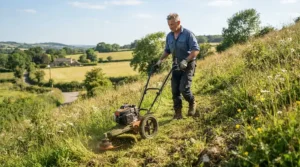
This is the question that decides most purchases, and the honest answer is: it depends entirely on plot size and vegetation density. A petrol strimmer for large gardens wins decisively once you’re covering more ground than a single battery charge can comfortably handle — cordless models typically manage 20-40 minutes of continuous cutting before needing a fresh pack, while a full fuel tank on most petrol machines keeps running considerably longer without interruption.
| Factor | Petrol Strimmer | Cordless Strimmer |
|---|---|---|
| Runtime | Limited only by fuel carried | Typically 20-40 min per battery |
| Weight | Generally heavier (4.4-10.7kg) | Generally lighter (2-5kg) |
| Power for scrub/brush | Handles dense growth confidently | Struggles with thick brambles |
| Ongoing cost | Petrol, oil, servicing | Replacement batteries, charging |
| Best For | Large, overgrown, or distant plots | Small-to-medium tidy lawns |
Interpreting that table honestly: cordless technology has closed the gap dramatically for smaller and medium gardens, and the Bosch AdvancedGrassCut 36, tested by Expert Reviews, demonstrates that a 36V battery system can now tackle rougher terrain with a 40-minute cutting time on a single charge. But for anyone maintaining half an acre or more, particularly ground with brambles, thistles or genuine scrub, petrol still holds the endurance and raw torque advantage — you simply can’t carry enough spare batteries to match a jerry can of two-stroke mix for an all-day session.
Fuel Tank Capacity and Endurance Runs: How Long Can You Really Strim For?
Fuel tank capacity is one of those specs that looks small and unglamorous on a listing page but quietly determines how many times you’ll be walking back to the shed mid-job. Across this list, tanks range from Stihl’s compact 0.34L up to the Mac Allister’s generous 0.9L — and that near-threefold difference translates directly into endurance runs on a large plot.
Here’s what most buyers overlook: fuel consumption isn’t linear with tank size, it’s linear with revs and load. A 52cc engine running at high throttle through thick brush burns considerably more fuel per minute than a 27cc engine idling through fine grass, which is why the ParkerBrand Petrol Strimmer & Brush Cutter‘s reviewers specifically flagged rapid fuel use at high revs despite a reasonably sized tank. As a rough real-world guide, most 25-33cc trimmers on this list deliver somewhere between 30 and 45 minutes of continuous cutting per tank under moderate load, while 52cc brushcutters tackling dense scrub may burn through fuel in 20-25 minutes flat out.
For a genuinely large garden, that means carrying a spare, correctly labelled fuel container is often more practical than chasing the single biggest tank on the market. The HSE’s guidance on petrol storage confirms you can legally keep up to 30 litres of petrol at home without notifying your local Petroleum Enforcement Authority, which is more than enough for a season of strimming as long as it’s stored correctly in a garage or shed away from living space.
Harness Support: The Comfort Feature Most Buyers Overlook
It’s easy to fixate on engine size and completely miss the feature that actually determines whether you’ll enjoy using a strimmer for an hour-plus session: harness support. Every heavier model on this list — the Husqvarna 129R, Hyundai 52cc Grass Strimmer & Brush Cutter, ParkerBrand Petrol Strimmer & Brush Cutter and Mac Allister 33cc MBCP33-4 — ships with a double harness for exactly this reason, distributing the machine’s weight across both shoulders and the back rather than one arm and shoulder alone.
The spec sheet won’t tell you this, but reviewers consistently flag harness quality as a genuine differentiator between otherwise similar machines. A poorly padded or badly balanced double harness can be more fatiguing over an hour than a well-designed single strap, which is one reason the ParkerBrand’s included harness drew mixed feedback despite technically ticking the “double harness” box. Lighter machines like the Cobra GT260C and Stihl FS40 lean on single-strap or no-harness setups on the logic that reduced overall weight makes the extra support less critical — a reasonable trade-off, but one worth testing in person if you have any history of shoulder or lower back strain.
Beyond comfort, harness quality is also a genuine safety consideration. Extended, poorly supported use increases fatigue-driven mishandling risk, and the HSE’s advice on hand-arm vibration specifically flags that regular, frequent exposure to vibrating hand tools can lead to permanent conditions such as hand-arm vibration syndrome — a strong argument for prioritising proper harness support and taking regular breaks on longer sessions, regardless of which strimmer you choose.
Practical Usage Guide: Setup, First Use and Maintenance
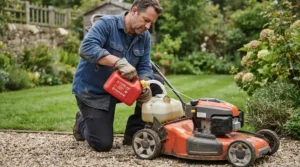
Getting a new petrol strimmer running smoothly starts before the first pull of the cord. Most two-stroke models arrive requiring correct fuel-to-oil mixing — typically 50:1, though always check your specific model’s manual, since some engines specify different ratios. Mix fuel in a dedicated, clearly labelled container rather than guessing by eye; an incorrect ratio is one of the most common causes of early engine wear on budget brushcutters.
Before first use, fit the harness and adjust it so the cutting head sits naturally at a comfortable working height without you stooping or over-reaching — this single adjustment prevents more back and shoulder fatigue than any spec upgrade. Check the trimmer line or blade is correctly seated, and always start the engine on flat, clear ground with the cutting head away from your body.
For ongoing maintenance, a simple monthly rhythm during the cutting season keeps most petrol strimmers running reliably: clean or replace the air filter, check the spark plug for fouling, and inspect the fuel line for cracking, particularly on machines stored over winter with fuel left in the tank. A common first-30-days mistake is over-tightening the bump-feed head or forcing extra line out manually rather than letting the tap-and-go mechanism do its job — this frequently jams the feed spool and leads to unnecessary early servicing. Draining fuel before long storage periods, as several manufacturers explicitly recommend, avoids the gummed carburettor issues that account for a large share of “my strimmer won’t start” complaints each spring.
Real-World Scenarios: Matching the Right Strimmer to Your Garden
The half-acre family garden with mixed borders. A household with a mown lawn, long flower borders and a few awkward fence lines needs endurance and cutting width more than raw brush-clearing power. The Husqvarna 129R or McCulloch B33 PS suit this profile well — both offer double-figure cutting widths, comfortable harnesses, and enough displacement to handle occasional rough patches without being overkill for daily edging.
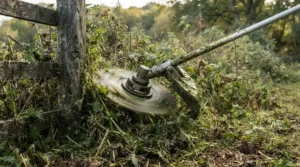
The smallholding or allotment with seasonal scrub. Ground that gets genuinely overgrown between visits — brambles, nettle beds, rough paddock grass — needs the brute-force end of this list. The Hyundai 52cc Grass Strimmer & Brush Cutter or ParkerBrand Petrol Strimmer & Brush Cutter are built for exactly this, trading weight and fuel economy for the ability to clear dense growth in a single pass rather than three.
The weekend gardener who dreads heavy tools. Someone maintaining a large but relatively tidy plot — think a generous suburban garden rather than acreage — often values low fatigue above outright power. The Cobra GT260C or Stihl FS40, both under 5kg, let this buyer work comfortably for longer without the arm-ache that heavier brushcutters bring, accepting a narrower cutting width and no blade option in exchange.
How to Choose a Petrol Strimmer for Large Gardens
Choosing the right petrol strimmer for large gardens comes down to matching engine size, weight and harness support to your actual plot conditions rather than simply buying the most powerful model available. Here’s a practical framework:
- Measure your typical vegetation density. Fine grass and light weeds need far less power than brambles or scrub — don’t pay for 52cc capability you’ll rarely use.
- Weigh harness support against machine weight. Anything over roughly 7kg genuinely benefits from a double harness for sessions longer than 30 minutes.
- Check fuel tank capacity against your plot size. A larger tank means fewer walks back to the shed, but only matters if your engine’s fuel consumption is sensible under load.
- Consider cutting width for efficiency. Wider heads cover ground faster, reducing the number of passes needed across a big plot.
- Factor in brand support and parts availability. Established brands like Stihl and Husqvarna typically offer wider dealer networks for servicing and spares.
- Decide whether you need a blade attachment. If scrub or bramble clearing is a realistic task, prioritise models that include a brushcutter blade rather than a line-only head.
- Set a realistic budget band. Prices for genuinely capable large-garden strimmers typically run from around £115 at the budget end to over £350 for premium branded models — decide where your needs actually sit before comparing further.
Common Mistakes When Buying a Petrol Strimmer
Even careful buyers fall into predictable traps when shopping for a petrol strimmer for large gardens. The first is chasing engine size as a proxy for quality — a 52cc engine on an unbranded budget machine isn’t automatically better than a well-engineered 33cc unit from an established manufacturer, and reviewers consistently flag build quality and ergonomics as bigger day-to-day factors than raw displacement.
The second common mistake is ignoring harness quality entirely, assuming any strap will do. As covered above, a poorly designed harness on a heavier machine can make an hour’s work genuinely uncomfortable, regardless of how capable the engine is. The third is underestimating fuel and maintenance running costs — two-stroke oil, replacement lines, spark plugs and occasional servicing add up over several seasons, and a cheaper upfront purchase with poor parts availability can end up costing more in the long run than a pricier, well-supported brand. Finally, many buyers skip reading real cutting width and tank capacity figures, assuming “bigger engine” automatically means “covers more ground faster” — as the full specification table above shows, that’s frequently not the case.
FAQ
❓ What size petrol strimmer do I need for a large garden?
❓ Is a petrol strimmer better than a cordless one for large gardens?
❓ How long does a tank of fuel last in a petrol strimmer?
❓ Do I need a harness for a petrol strimmer?
❓ What's the lightest petrol strimmer for large gardens?
Conclusion
There’s no single “best” petrol strimmer for large gardens — there’s only the best match for your specific ground. If you want dependable, all-round performance backed by a trusted name, the Husqvarna 129R earns its place at the top of this list. Buyers facing genuinely dense scrub and brambles should look toward the Hyundai 52cc Grass Strimmer & Brush Cutter or ParkerBrand Petrol Strimmer & Brush Cutter, while anyone prioritising comfort over raw power will find the Cobra GT260C or Stihl FS40 a far more pleasant tool to spend an afternoon with.
What ties every recommendation together is this: engine size alone never tells the full story. Fuel tank capacity determines how many endurance runs you get before refuelling, harness support decides whether an hour’s work leaves you comfortable or aching, and cutting width quietly dictates how many passes stand between you and a finished garden. Weigh all three against your actual plot — not the biggest number on the spec sheet — and you’ll land on the right machine the first time.
Recommended for You
- Petrol Strimmers Under £300: 7 Best Picks for UK Gardens (2026)
- Mains Strimmer for Large Lawn: 7 Powerful Picks for UK (2026)
- Electric Strimmer vs Cordless Strimmer: 7 Best UK Picks (2026)
Disclaimer: This article contains affiliate links. As an Amazon Associate, I earn from qualifying purchases. If you purchase products through these links, we may earn a small commission at no additional cost to you.
✨ Found this helpful? Share it with your friends! 💬🤗
