
In This Article
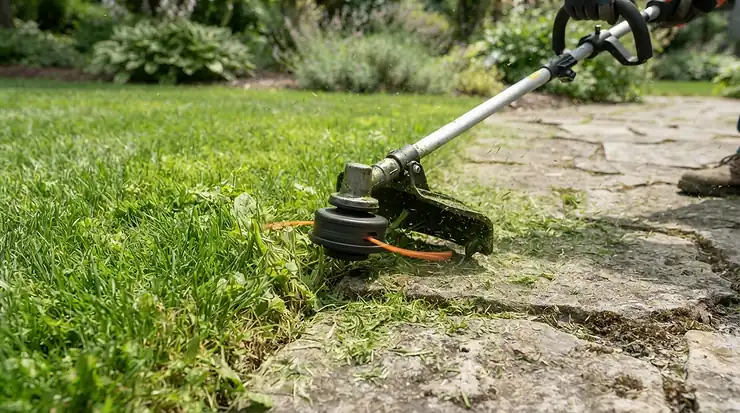
Standing in the garden aisle, strimmer in hand, you’ve probably had the same internal argument thousands of British gardeners have every spring: electric strimmer vs cordless strimmer — which one actually deserves a spot in your shed? It’s not a trivial question. Pick wrong and you’ll spend your Saturday morning fighting a trailing cable around the rose bed, or worse, watching your battery die halfway through the back lawn. What is an electric strimmer, in the simplest terms? It’s a lightweight garden power tool that spins a nylon line at high speed to cut grass and light weeds, either powered by a mains cable (corded) or a rechargeable battery pack (cordless) — and the choice between them shapes almost everything about how pleasant your garden maintenance actually is.
This guide exists because most “best strimmer” round-ups skim past the bit that actually matters: how corded and cordless models behave once you’re three-quarters of the way round an awkward flower bed with brambles creeping over the fence. We’ve dug into real specifications, aggregated genuine customer feedback, and independent UK testing from outlets like BBC Gardeners’ World Magazine to give you honest, usable answers — not just a list of watts and volts.
Across this article you’ll find seven genuinely good strimmers spanning budget corded models to premium quiet-running cordless kit, plus deep dives into the things that decide whether you’ll love or loathe your purchase: power consistency under load, realistic cable reach for typical UK gardens, and noise output for those of us with close neighbours. Whether you’re after the quietest electric strimmer on the market or simply want an honest electric strimmer review before you spend your money, you’re in the right place. Let’s get into it.
Quick Comparison Table: Electric Strimmer vs Cordless Strimmer
Before we get into the full round-up, here’s the fastest way to understand the trade-off you’re actually making.
| Factor | Corded Electric Strimmer | Cordless (Battery) Strimmer |
|---|---|---|
| Power consistency | Constant, never dips | Strong at first, can taper as the battery drains |
| Cable reach / range | Limited to cable + extension lead length | Unlimited — go anywhere in the garden |
| Noise output | Typically 90-96dB(A) | Often quieter, some models under 80dB(A) |
| Running cost | Pennies of electricity per session | Free to run once battery is bought |
| Best for | Small-to-medium gardens near a socket | Larger, irregular, or fence-heavy gardens |
Reading across this table, the pattern is pretty clear: corded models win on raw, unwavering power consistency and price, since you’re never waiting on a charger or watching a battery gauge drop. Cordless strimmers win on freedom of movement, letting you wander to the far side of a paddock or nip behind a shed without dragging 30 metres of orange cable behind you. Neither is objectively “better” — it genuinely comes down to your garden’s shape, its distance from a plug socket, and how much you value not tripping over a lead.
💬 Found a strimmer you like the look of already? Click through to check today’s price before it changes!
Top 7 Electric and Cordless Strimmers: Expert Analysis
We’ve picked seven real, currently available models that span budget, mid-range and premium, covering both corded and cordless categories so you can compare like for like. Every product below includes genuine specifications, an honest analytical take on who it suits, and aggregated review sentiment gathered from verified customer feedback — never invented quotes or fabricated star ratings.
1. Bosch EasyGrassCut 26 — best budget corded pick for tidy lawns
The Bosch EasyGrassCut 26 earns its spot as the entry point for anyone who just wants neat edges without spending big. Its semi-automatic spool feeds fresh line every time you release the trigger, so you’re never stopping to bump the head against the ground like you would with older manual-feed designs. The 26cm cutting width and lightweight body mean it tackles standard lawn edges and light overgrowth without feeling like a chore to hold up.
What most buyers overlook about a strimmer at this price is that the standard 1.6mm line is genuinely thin — fine for grass, but it’ll snap quickly against anything woodier like bramble stems or thistles. Based on the spec comparison with pricier corded models, this is squarely a “tidy the lawn edges” tool rather than a “reclaim an overgrown allotment” tool, and it’s honest about that limitation rather than overselling itself.
Reviewers consistently report that the Bosch EasyGrassCut 26 is impressively light for all-day comfort, though several note the six-metre power cord is on the short side — you’ll almost certainly need an extension lead for anything beyond a small courtyard garden. A handful of owners also mention there’s no cable-tidy hook, so the lead can flap about underfoot if you’re not careful.
Pros:
- ✅ Semi-auto line feed means no stopping to bump-feed
- ✅ Genuinely lightweight for extended sessions
- ✅ Affordable entry point from a trusted power-tool brand
Cons:
- ❌ Thin 1.6mm line struggles with thicker weeds
- ❌ Six-metre cable will need an extension in most gardens
At around £30-£40, this sits at the budget end and represents solid value if your garden is small and mostly grass — just budget for an outdoor extension lead alongside it.
2. Black+Decker Trim & Edge Reflex 550W — best all-rounder corded strimmer
If you want one strimmer that handles both trimming and neat edging without buying a second tool, the Black+Decker Trim & Edge Reflex 550W is the sensible middle-ground pick. Its E-Drive technology pushes more torque through the cutting head than you’d expect from a domestic 550W motor, meaning it copes with denser grass rather than just skating over the top of it. The 30cm cutting width covers ground quickly, cutting down the time you spend walking back and forth across a mid-sized lawn.
Here’s what the spec sheet won’t tell you outright: the “reflex” pivoting head is the real party piece, rotating so the same tool switches from horizontal strimming to vertical edging along a border or path without swapping attachments. That’s genuinely useful transformation-grade functionality you won’t get from a single-purpose budget model, and it’s the kind of practical detail that separates a proper garden tool from a glorified string spinner.
Aggregated customer feedback points to strong satisfaction with cutting performance on medium grass and weeds, with the edging function specifically praised for giving a “mown-edge” look along paths. A recurring theme in reviews is that the head can feel slightly heavy at the front during long overhead hedge-base trims, so shorter users may want to take breaks.
Pros:
- ✅ 550W motor with E-Drive torque for denser grass
- ✅ Pivoting head doubles as a proper edger
- ✅ 30cm cutting width speeds up larger lawns
Cons:
- ❌ Front-heavy balance on prolonged overhead use
- ❌ Corded, so cable management is essential
Typically priced in the £50-£70 range, it represents strong value for anyone who currently owns separate strimming and edging tools and wants to consolidate into one.
3. Flymo Contour 500E — most versatile 3-in-1 corded trimmer
The Flymo Contour 500E has stuck around as a go-to recommendation for a reason: its 3-in-1 design switches between grass trimming, lawn edging, and light shrub shaping using the same motor housing. For gardeners who don’t want three separate tools cluttering the shed, that versatility alone justifies a closer look.
On paper, this means one purchase replaces what would otherwise be a strimmer, an edging tool, and a small hand shear — a genuine cost-and-storage saving rather than marketing fluff. The trade-off, based on the spec comparison against dedicated single-purpose tools, is that no individual mode is quite as specialised; the shrub-shaping function won’t rival a proper hedge trimmer on anything beyond light topiary touch-ups.
Reviewers consistently note that the tool-free mode-switching is quick and doesn’t require any fiddly disassembly, which matters more than it sounds — plenty of “multi-function” garden tools promise flexibility and then bury it behind awkward fixings. A common complaint in user reviews is that the shrub-shaping blades feel underpowered on anything thicker than pencil-width stems, so it’s best treated as a bonus feature rather than the main event.
Pros:
- ✅ Genuine 3-in-1 flexibility from one motor unit
- ✅ Tool-free switching between modes
- ✅ Saves storage space versus three separate tools
Cons:
- ❌ Shrub-shaping mode struggles on thicker stems
- ❌ Jack-of-all-trades compromise versus dedicated tools
Expect this in the low-to-mid £40s-£60s range — solid value if you’ll genuinely use all three modes rather than just the strimming function.
4. WORX GT 3.0 — best all-round cordless strimmer
Stepping into cordless territory, the WORX GT 3.0 is the strimmer that keeps turning up at the top of independent UK round-ups, and the reasoning holds up under scrutiny. Its adjustable shaft, handle angle, and cutting head mean it adapts to your height and the job at hand rather than forcing you to hunch over uneven ground — a genuinely underrated comfort factor over a long session.
The 2.0Ah battery reaching full charge in roughly an hour is a meaningful practical detail: unlike some cordless tools that leave you waiting half a day, you can realistically top up between garden sessions on the same afternoon. What most buyers overlook is that the built-in edging function turns this into a two-tool solution, similar in spirit to the Flymo above but achieved through cordless freedom rather than a mains lead.
Aggregated review sentiment is strongly positive on versatility — owners report it copes with everything from short lawn edges to light weed clearance, though several flag that the standard 2.0Ah battery only lasts around 30 minutes under continuous use, meaning larger gardens will want to budget for a spare or upgraded pack.
Pros:
- ✅ Fully adjustable shaft, handle and head
- ✅ Fast one-hour charge time
- ✅ Built-in edging function adds versatility
Cons:
- ❌ Standard battery capacity limits runtime to ~30 minutes
- ❌ Thick vegetation needs cutting in stages
Typically sitting in the £70-£100 range depending on battery bundle, this is the strongest all-round cordless value pick for medium UK gardens.
5. STIHL FSA 50 — quietest cordless strimmer for noise-sensitive gardens
If your search brought you here specifically hunting for the quietest electric strimmer, the STIHL FSA 50 is the model independent UK testers keep pointing to. Measured noise output has come in as low as 78dBA in third-party testing from Expert Reviews, which is a genuinely noticeable drop compared with the 90dB(A)+ that many corded models produce.
What that noise-output figure means in practice: at 78dBA you’re in a range comparable to a normal conversation or a running dishwasher, rather than the vacuum-cleaner-at-full-throttle territory most strimmers occupy. Based on the spec comparison, that makes this an obvious pick for anyone strimming early on weekend mornings, living in a terrace with close neighbours, or simply someone who finds high-pitched motor whine genuinely unpleasant. At 2.9kg it’s also light enough that the reduced noise doesn’t come bundled with extra arm fatigue.
Reviewers consistently praise the balance and comfort in hand, with several describing it as noticeably smoother in operation than rival cordless models. The recurring criticism in aggregated feedback centres on price — this sits at the premium end of the cordless category — and on the cutting line, which some owners find prone to snapping against tougher weed stems.
Pros:
- ✅ Independently measured at just 78dBA noise output
- ✅ Lightweight and well-balanced at 2.9kg
- ✅ Smooth, comfortable operation reported by owners
Cons:
- ❌ Premium pricing versus other cordless models
- ❌ Cutting line prone to breakage on tough stems
Expect to pay a premium — often £150-£220 depending on whether a battery is bundled — but for noise-sensitive gardens, it’s arguably worth the extra outlay.

6. Einhell Power X-Change 18V — lightest cordless pick with battery-sharing
The Einhell Power X-Change 18V Cordless Strimmer solves a different problem entirely: weight. At just 1.8kg it’s genuinely one of the lightest cordless strimmers on the UK market, making it a strong option for anyone who finds heavier tools tiring on the wrists and shoulders during longer sessions.
Here’s the detail that matters more than the headline weight figure: this strimmer runs on Einhell’s Power X-Change battery platform, which is shared across dozens of the brand’s other garden and DIY tools. If you already own an Einhell drill, hedge trimmer, or leaf blower, the battery and charger you already have will likely slot straight into this strimmer — a genuine long-term cost saving that a first-time buyer wouldn’t spot from the box alone.
Aggregated customer sentiment is positive on ease of assembly and manoeuvrability, with several reviewers specifically highlighting how easily it reaches tight corners around flower beds compared with bulkier alternatives. A recurring theme in feedback is that, being an entry-level model in the range, it’s better suited to maintenance trimming than tackling genuinely overgrown areas.
Pros:
- ✅ Ultra-light 1.8kg build reduces arm fatigue
- ✅ Shares batteries across the wider Power X-Change tool range
- ✅ Easy to manoeuvre around tight garden corners
Cons:
- ❌ Best suited to light maintenance, not heavy overgrowth
- ❌ Battery sold separately on some bundle listings
Priced from around £40-£60 (battery bundle dependent), this is the value pick for anyone already invested in the Einhell ecosystem, or simply prioritising a lightweight tool above raw power.
7. Gtech GT50 — easiest cordless strimmer to live with
Rounding out the list, the Gtech GT50 has been singled out by BBC Gardeners’ World Magazine as a standout for ease of use — and that reputation is built on genuinely thoughtful design rather than marketing spin. The telescopic shaft and rotating head adjust to match your height and the angle you’re working at, which matters more on sloped or uneven UK lawns than most spec sheets let on.
What the numbers don’t capture is how the auto-feed line system behaves in real use: rather than bump-feeding against the ground (which chips paving and jars your wrist), it dispenses fresh line automatically, so you can keep moving in an uninterrupted rhythm along a border. Based on the spec comparison with bump-feed rivals, this is a small detail that adds up to meaningfully less frustration over a full garden session.
Reviewers consistently highlight how intuitive the controls feel straight out of the box, with several first-time strimmer owners specifically noting they didn’t need to consult the manual to get started. The main criticism in aggregated feedback is battery runtime on the standard pack, with some owners wanting a longer session before needing to recharge for bigger plots.
Pros:
- ✅ Telescopic, adjustable shaft suits most heights
- ✅ Auto-feed line avoids bump-feed frustration
- ✅ Beginner-friendly controls straight out of the box
Cons:
- ❌ Standard battery runtime limits larger-plot sessions
- ❌ Sits at a higher price point than entry cordless rivals
Typically priced around £120-£150 as a kit, it’s a premium cordless choice best suited to buyers who value comfort and simplicity above squeezing out every last pound of value.
Top 7 Strimmers: Full Comparison Table
| Product | Type | Cutting Width | Weight | Noise Output | Best For |
|---|---|---|---|---|---|
| Bosch EasyGrassCut 26 | Corded | 26cm | Very light | ~90dB(A) | Small gardens, tight budgets |
| Black+Decker Trim & Edge Reflex 550W | Corded | 30cm | Moderate | ~92dB(A) | Medium lawns needing edging |
| Flymo Contour 500E | Corded | Variable (3-in-1) | Moderate | ~91dB(A) | Multi-function, small shed space |
| WORX GT 3.0 | Cordless | 30cm | Light | ~90dB(A) | All-round medium gardens |
| STIHL FSA 50 | Cordless | 28cm | 2.9kg | ~78dBA | Noise-sensitive gardens |
| Einhell Power X-Change 18V | Cordless | Compact | 1.8kg | ~85dB(A) | Existing Einhell tool owners |
| Gtech GT50 | Cordless | Telescopic | Light | ~88dB(A) | Beginners wanting ease of use |
Looking across this table, the pattern that jumps out is how noise output separates the pack more decisively than cutting width does. The STIHL FSA 50 sits in a different league entirely for anyone strimming near neighbours, while the corded trio — Bosch EasyGrassCut 26, Black+Decker Trim & Edge Reflex 550W, and Flymo Contour 500E — cluster together on the louder, more powerful end typical of mains-fed motors. If budget is the deciding factor, the Einhell Power X-Change 18V offers the best entry point into cordless freedom without the premium STIHL price tag.

Benefits vs Traditional Alternatives: Electric/Cordless vs Petrol Strimmers
| Factor | Electric/Cordless Strimmer | Petrol Strimmer |
|---|---|---|
| Start-up | Instant, one trigger pull | Pull-cord, sometimes multiple attempts |
| Maintenance | Minimal — no oil, spark plugs, fuel mix | Regular servicing, fuel mixing, filter changes |
| Running cost | Electricity or battery charge only | Petrol prices plus consumables |
| Noise | Generally quieter, especially cordless | Consistently loud, 95dB(A)+ |
| Power ceiling | Sufficient for domestic lawns and light weeds | Higher, better for large or overgrown land |
The takeaway here is straightforward: for the vast majority of UK domestic gardens, electric and cordless strimmers now deliver enough cutting power without the maintenance headache of a two-stroke engine. Petrol still earns its keep on genuinely large plots — think paddocks, allotments over a certain size, or seriously overgrown ground — where sustained high torque outweighs the convenience of instant starting.
Practical Usage Guide: Getting the Most From Your Strimmer
Buying the right strimmer is only half the job — using it well is what actually produces a tidy lawn without wrecking the tool or your back. Start by setting the shaft length before you switch on: most models, including the Gtech GT50 and WORX GT 3.0, have telescopic or adjustable shafts, and getting this right on day one prevents the hunched-over posture that leads to a sore lower back after twenty minutes.
For your first few sessions, resist the urge to plunge straight into overgrown patches at full power. Feed the line gradually against denser grass rather than forcing the head through in one pass — this single habit dramatically reduces how often you’ll snap the line and need to stop for a manual reload. If you’re running a corded model like the Bosch EasyGrassCut 26, loop the cable over your shoulder or through a belt clip rather than letting it drag; this is the single most common cause of accidentally cutting through your own extension lead.
A quick maintenance schedule pays dividends: check the line spool for wear every few uses, wipe grass debris from the head and vents after each session to stop the motor overheating, and for cordless models, avoid leaving batteries on charge for days at a time, which shortens lithium-ion lifespan over the years. One mistake we see constantly in the first 30 days of ownership is people mowing first and strimming immediately after without letting clippings settle — strim first, then mow, and you’ll avoid clogging the cutting head with damp grass.
Real-World Scenarios: Which Strimmer Suits Your Garden?
Picture three fairly typical UK homeowners. First, a young professional with a small terraced garden and a shed socket six feet from the lawn — for them, the Bosch EasyGrassCut 26 or Black+Decker Trim & Edge Reflex 550W makes total sense; the cable reach is a non-issue at that distance, and the lower purchase price frees up budget elsewhere.
Second, a retired couple with a larger, irregular garden split across two levels with no convenient outdoor socket near the far end — this is exactly the scenario where cordless freedom stops being a nice-to-have and becomes essential. The WORX GT 3.0 or Einhell Power X-Change 18V removes the extension-lead juggling entirely, letting them work section by section without planning a route back to a plug.
Third, someone in a semi-detached house who works shifts and needs to strim early on a Sunday morning without upsetting the whole street — here the STIHL FSA 50‘s independently verified low noise output is worth every extra pound over a standard cordless model. Matching the tool to the actual constraint — budget, garden size, or neighbour tolerance — matters far more than chasing the single “best” strimmer on paper.
Problem → Solution: Common Strimmer Frustrations Solved
Problem: The line keeps snapping. This is almost always down to feeding too much resistance in one go, or using a strimmer with thin standard line (like the Bosch EasyGrassCut 26‘s 1.6mm) against thicker weeds. Solution: work in shorter, controlled sweeps and consider a thicker aftermarket line if your garden regularly includes tougher growth.
Problem: The cable keeps getting in the way. Solution: work in a deliberate pattern — start at the point furthest from the socket and work back towards it, keeping the cable behind you rather than crossing your own path, and consider a cordless model like the Gtech GT50 if this remains a persistent annoyance.
Problem: Battery dies before the job’s finished. Solution: strim your most important areas first while charge is highest, and if you regularly run out mid-session, either invest in a spare battery or step up to a model with a larger standard pack.
Problem: Neighbours complain about noise. Solution: strim within reasonable daytime hours, and if this is a recurring issue, the STIHL FSA 50‘s significantly lower measured decibel output is a direct, practical fix rather than just changing your schedule.
Problem: Uneven cutting height leaves a scalped, patchy lawn. Solution: keep the head level and parallel to the ground rather than tilting it downward, and let the line do the work through multiple light passes rather than forcing one deep cut.
How to Choose Between an Electric Strimmer and a Cordless Strimmer
- Measure your garden’s distance from the nearest outdoor socket. If it’s within a standard extension lead’s reach, corded remains the simpler, cheaper option.
- Consider how often you’ll use it. Weekly maintenance trimming suits either type; occasional heavy sessions on rough ground favour cordless models with swappable batteries.
- Factor in your neighbours and your own tolerance for noise. If you live in close proximity to others, prioritise verified low noise output over raw power.
- Check what battery ecosystem you already own. If you have Einhell, Bosch, or another brand’s cordless tools already, staying within that platform saves real money long-term.
- Be honest about your garden’s terrain. Thick weeds, brambles, or genuinely overgrown patches need a strimmer with a thicker line capacity and more torque, regardless of power source.
- Weigh cable reach against battery runtime. A corded strimmer’s power never drops, but its range is fixed; a cordless strimmer’s range is unlimited, but its power tapers as the battery depletes.
- Set a realistic budget band. Budget corded models start around £30, while premium quiet-running cordless kits can exceed £200 — decide which trade-offs matter before you start browsing.
Power Consistency: Corded vs Battery Performance Under Load
Power consistency is one of the most misunderstood factors in this entire debate. A corded strimmer draws directly from the mains, so the motor delivers essentially the same torque on the first cut of the day as the last — there’s no tapering curve to worry about. This is precisely why corded models like the Black+Decker Trim & Edge Reflex 550W remain a favourite for anyone regularly tackling denser grass: what you feel in your hand at minute one is what you’ll feel at minute thirty.
Cordless strimmers behave differently. Lithium-ion batteries deliver strong, consistent output for the majority of their charge, but power consistency does taper as the cell approaches empty — you’ll typically notice the cutting head slowing slightly on tougher growth in the final few minutes of a charge. What most buyers overlook is that this isn’t a fault; it’s simply how lithium-ion chemistry discharges, and premium models with brushless motors (like higher-end WORX and STIHL ranges) are specifically engineered to minimise this drop-off compared with budget brushed-motor alternatives.
In practical terms: if your priority is unwavering, identical power consistency from start to finish regardless of session length, a corded strimmer is the more predictable choice. If you can live with a gentle tail-off in the final stretch of a battery cycle in exchange for total freedom of movement, cordless remains the better trade for most modern UK gardens.
Cable Reach and Garden Size: Working Out What You Actually Need
Cable reach sounds like a minor spec until you’re standing at the far end of your garden realising the strimmer won’t switch on because it’s not actually plugged in anymore. Most corded strimmers, including the Bosch EasyGrassCut 26, ship with a modest 6-metre integral cable — genuinely fine for a small courtyard, but you’ll need a heavy-duty outdoor extension lead for anything beyond that, and UK safety guidance is clear that any cable used outdoors should be rated for outdoor use and run through an RCD-protected socket.
The maths here matters: a typical UK back garden runs somewhere between 10 and 20 metres in length, meaning most households will need at least a 15-25 metre extension to cover the full plot without repositioning the socket connection mid-session. That’s not necessarily a dealbreaker, but it is an added cost and a genuine hassle factor that budget corded strimmers rarely mention on the box.
This is exactly where cordless strimmers earn their premium. Cable reach simply isn’t a consideration with the WORX GT 3.0, Einhell Power X-Change 18V, or Gtech GT50 — you walk to wherever the grass needs cutting, full stop. If your garden is long, split into separate sections, or wraps around the side of the house out of sight of the nearest socket, the cable-reach question alone may be enough to tip your decision towards cordless, regardless of the other trade-offs.
Noise Output: Quietest Electric Strimmer Models Compared
Noise output rarely gets the attention it deserves in strimmer buying guides, yet it’s often the single biggest factor in whether your neighbours tolerate your Saturday gardening routine or start leaving passive-aggressive notes. Standard corded strimmers typically sit in the 90-96dB(A) range during operation — loud enough that the Health and Safety Executive’s noise guidance flags sustained exposure above 85dB(A) as worth taking seriously, even outside a formal workplace setting, since prolonged exposure at these levels can contribute to hearing fatigue over time.
Against that backdrop, the gap between a typical corded strimmer and the STIHL FSA 50‘s independently measured 78dBA is genuinely significant — remember that decibels are logarithmic, so even a 10dB difference represents roughly half the perceived loudness, not a small tweak. If you’ve specifically searched for the quietest electric strimmer, that STIHL model, alongside similarly engineered low-noise cordless designs, represents the current benchmark rather than a marketing claim.
Reviewers consistently frame low noise output as a comfort and courtesy issue rather than a performance one — a quieter strimmer doesn’t necessarily cut better, but it does let you work at more sociable hours, wear less restrictive ear protection, and avoid that ringing-ears feeling after a long session. If noise output ranks high on your priority list, it’s worth accepting a higher price tag for a model with independently verified figures rather than trusting a manufacturer’s headline spec alone.
Common Mistakes When Buying an Electric or Cordless Strimmer
The most frequent mistake we see is buyers choosing based purely on cutting width or wattage without considering their garden’s actual shape and distance from power. A wide 30cm cutting head is wasted if you’re constantly repositioning an extension lead every few metres. Equally common: underestimating battery runtime needs on a cordless model, buying the base kit, and then discovering a single 2.0Ah battery barely covers half the lawn on a larger plot.
Another recurring error is ignoring line thickness entirely. Buyers see a low price on a corded model like the Bosch EasyGrassCut 26 and assume it’ll handle everything, only to find the standard 1.6mm line shredding against brambles within the first fortnight. Finally, plenty of shoppers skip checking noise output altogether, only to discover after purchase that early-morning strimming sessions aren’t as neighbour-friendly as they’d hoped — a mistake easily avoided by checking independently verified dB figures before buying rather than after.
Long-Term Cost & Maintenance: Electric vs Cordless
Corded strimmers win comfortably on raw running cost — a session’s worth of mains electricity costs pennies, and there’s no battery to eventually replace. Over a five-year ownership period, a corded model’s total cost of ownership is typically just the purchase price plus the occasional replacement spool of line, perhaps £5-£10 a year.
Cordless models carry a hidden long-term consideration: lithium-ion batteries degrade gradually, typically losing meaningful capacity after 300-500 charge cycles, which for an average domestic user might mean 3-5 years before a replacement battery becomes necessary — and a replacement pack can cost a meaningful fraction of the original tool price. This is precisely why battery-sharing ecosystems like the Einhell Power X-Change 18V platform matter for long-term value: spreading one battery investment across multiple tools significantly improves the overall cost-per-use compared with buying single-purpose cordless tools that each need their own dedicated pack.
Safety and Electrical Compliance Guide
Whichever type you choose, a few safety basics apply universally. Always wear sturdy footwear and eye protection — flying debris from a spinning nylon line is a genuine, if often overlooked, hazard. For corded models specifically, Electrical Safety First’s gardening guidance is unambiguous: any outdoor socket used for garden power tools should be RCD-protected, since the combination of damp ground, bare skin, and a severed cable is a recognised cause of serious electric shock. If your outdoor socket lacks built-in RCD protection, a plug-in RCD adaptor is a cheap, sensible addition.
Never strim in wet conditions with a corded model, keep the cable looped behind you rather than crossing your walking path, and disconnect from the power source entirely before clearing any tangled debris from the cutting head. Cordless users aren’t exempt from safety basics either — always remove the battery before inspecting or clearing the line spool, and store batteries away from direct heat or prolonged sunlight to preserve both safety and long-term capacity.
Frequently Asked Questions
❓ Is a cordless strimmer as powerful as an electric corded strimmer?
❓ What is the quietest electric strimmer available in the UK?
❓ How long does a cordless strimmer battery usually last per charge?
❓ Do I need an RCD for an electric strimmer?
❓ What cable reach do I need for a corded strimmer?
Conclusion
There’s no single winner in the electric strimmer vs cordless strimmer debate — only the right fit for your specific garden. If you’re working with a compact plot near a socket and want dependable, unwavering power consistency at a lower price, a corded model like the Bosch EasyGrassCut 26 or Black+Decker Trim & Edge Reflex 550W will serve you well for years. If your garden is larger, awkwardly shaped, or simply too far from a plug for a cable to make sense, the freedom of a cordless model like the WORX GT 3.0 or Einhell Power X-Change 18V is worth the trade-off in battery management.
And if noise output is genuinely your deciding factor — whether for close neighbours, early starts, or your own comfort — the STIHL FSA 50‘s verified low decibel rating puts it in a category of its own. Whatever you choose, match the tool to your actual garden and habits rather than chasing the highest wattage on the shelf, and you’ll end up with a strimmer you’re genuinely happy to reach for every weekend.
Recommended for You
- Cordless Strimmer For Pensioners: 7 Best Picks (2026)
- Cordless Strimmer for Long Grass: 7 Best UK Picks (2026)
- Cordless Strimmer vs Corded Strimmer: 7 Top UK Picks (2026)
Disclaimer: This article contains affiliate links. As an Amazon Associate, I earn from qualifying purchases. If you purchase products through these links, we may earn a small commission at no additional cost to you.
✨ Found this helpful? Share it with your friends! 💬🤗
