
In This Article
Stand in any UK garden centre car park on a Saturday morning and you’ll spot the divide instantly: one shed owner is hauling out a clattering old cylinder mower with a satisfied grin, while their neighbour is untangling forty metres of orange extension cable before they’ve cut a single blade of grass. That’s the push mower vs electric mower argument in miniature, and it’s a genuinely useful one to have before you spend your money.
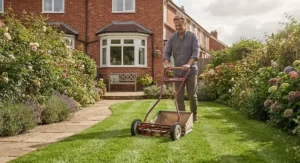
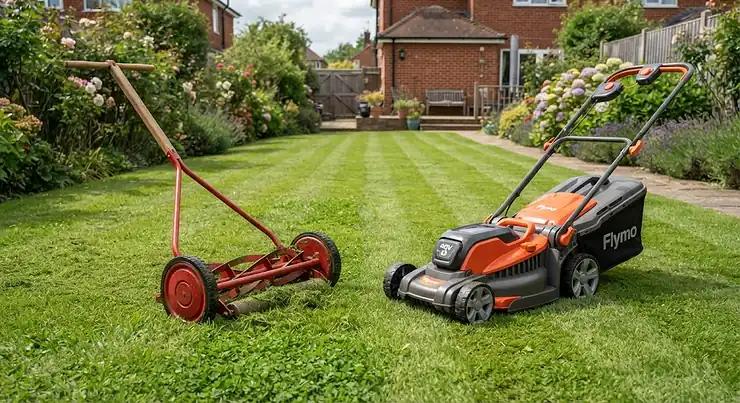
A push mower — also called a manual or reel mower — cuts grass using a spinning cylinder of blades powered entirely by your own legs. An electric mower, whether corded or battery-powered, uses a motor to spin a rotary blade or hover deck. Both sit firmly in the “environmentally responsible” camp compared with petrol, but they solve very different problems for very different gardens.
This guide walks through seven real, currently available models — from budget cylinder mowers under £60 to premium cordless electrics — and digs into the physical effort, running costs, and practical trade-offs that Amazon listings rarely spell out. According to the Royal Horticultural Society’s mowing guidance, grass should generally be kept at around 2.5cm in summer and 4cm through spring and autumn, and which mower gets you there comfortably depends heavily on your lawn size, your fitness, and how much you actually enjoy the process. Let’s get into it.
Quick Comparison: Push Mower vs Electric Mower at a Glance
Before diving into individual products, here’s the headline comparison that most buyers actually want to see first.
| Factor | Push (Manual) Mower | Electric Mower |
|---|---|---|
| Typical price | £50-£150 | £90-£350+ |
| Best lawn size | Up to 150m² | 100m²-600m²+ |
| Physical effort | Moderate-high, steady | Low-moderate |
| Running cost | Effectively £0 | £3-£8 per year |
| Noise level | Very quiet (mechanical whirr) | Moderate (motor hum) |
| Emissions | Zero, no power needed | Zero at point of use |
| Best For | Small, flat lawns; fitness-conscious owners | Medium-large or uneven lawns; time-pressed owners |
The gap that jumps out immediately is effort versus convenience. A push mower asks more of your body but costs almost nothing to run and needs no power source at all, which matters if your lawn is nowhere near a plug socket. An electric mower trades a bit of environmental purity — it still draws mains or battery power — for a dramatically easier ride on anything beyond a pocket-handkerchief lawn. Neither is “better” in absolute terms; it’s a straight trade of your energy against the machine’s.
💬 Already got a favourite in mind? Scroll down to the full product breakdown and pick yours below!🤗
Top 7 Push & Electric Mowers: Expert Analysis
We’ve deliberately mixed manual and electric options here, covering budget, mid-range and premium tiers, so you can compare like-for-like rather than guessing.
1. Webb WEH30 Sidewheel Push Mower — BBC Gardeners’ World budget best buy
The Webb WEH30 opens our list because it’s genuinely the mower most UK first-timers end up buying, and there’s a good reason for that. Its five-blade cylinder and side-wheel drive give a clean cut without a rear roller getting in the way of manoeuvrability, which matters more than it sounds on a lawn with tight borders or flower beds.
The 30cm cutting width sits at the narrower end, and the four adjustable cutting heights let you dial in anything from a close spring tidy-up to a longer summer cut, with a 17-litre collection box that empties easily without needing to be lugged far. Weighing well under 10kg, it’s the kind of mower you can lift one-handed into a shed.
Based on the spec comparison against pricier cylinder mowers, the Webb WEH30 punches well above its price bracket for anyone with a lawn under around 100m². Reviewers consistently note that the blades stay sharp far longer than expected for a budget model, and the three-year guarantee gives real peace of mind rather than the token one-year cover you’d expect at this price.
Pros:
- ✅ Genuinely low price for a well-reviewed, award-recognised mower
- ✅ Lightweight enough for anyone to lift and store easily
- ✅ Three-year guarantee well above budget-tier norms
Cons:
- ❌ 30cm width means more passes on larger lawns
- ❌ No rear roller, so no classic striped finish
Priced in the £50-£70 range, the Webb WEH30 represents about as much genuine value as manual mowing gets — it’s hard to argue with a three-year guarantee at this cost.
2. Fiskars StaySharp Max Reel Mower — maintenance-free cutting cylinder
The Fiskars StaySharp Max stands out because of what it doesn’t need: sharpening. Fiskars built the cylinder so the blades never actually touch the fixed bar, cutting instead through a shearing action that stays effective for years without a trip to the garden centre.
With a 46cm cutting width — noticeably wider than most reel mowers on this list — the Fiskars StaySharp Max covers ground faster despite being human-powered, and its adjustable height range accommodates everything from a tight ornamental lawn to slightly shaggier grass that’s got away from you over a busy fortnight.
What most buyers overlook about this model is that the “contactless” cutting system isn’t just a maintenance gimmick; it also means noticeably less resistance when pushing, since the blades aren’t dragging against metal. Aggregated review sentiment across major UK retailers consistently flags the StaySharp system as the standout feature, with owners reporting years of use without a single sharpening session.
Pros:
- ✅ Never needs blade sharpening thanks to contactless design
- ✅ Wide 46cm cut covers ground faster than narrower rivals
- ✅ Durable steel cylinder built for years of use
Cons:
- ❌ Heavier to push than the narrower Webb model
- ❌ No grass collection box included on most versions
Sitting in the £100-£150 range, the Fiskars StaySharp Max is the pick for anyone who wants reel-mower simplicity without the recurring sharpening chore that puts many buyers off manual mowers entirely.
3. Bosch AHM 38 G Manual Lawn Mower — best all-round premium push mower
The Bosch AHM 38 G earns its premium billing through sheer build quality — Bosch describes it explicitly as petrol-free and electric-free, a mower built from the ground up as an eco-conscious choice rather than a budget compromise.
At 6.7kg and a 38cm cutting width, this is a genuinely well-balanced machine: wide enough to make real progress on a mid-size lawn, yet light enough that pushing it doesn’t become a chore halfway through. The height adjustment spans 15-50mm, comfortably covering the RHS-recommended cutting ranges for most of the mowing season.
Here’s what the spec sheet won’t tell you, but owner reports suggest: the smoothness of the push action on the Bosch AHM 38 G is noticeably better than cheaper cylinder mowers, largely down to higher-quality bearings in the wheel hubs. That translates into less arm and shoulder fatigue over a 20-minute mow, which is exactly the kind of detail that turns a mower from “tolerable” into “actually pleasant to use.”
Pros:
- ✅ Smooth push action reduces fatigue on longer sessions
- ✅ Height range suits nearly the whole UK mowing season
- ✅ Strong brand reliability and widely available spare parts
Cons:
- ❌ Costs noticeably more than basic cylinder mowers
- ❌ Assembly instructions can be light on English detail
At around £90-£130, the Bosch AHM 38 G justifies its premium-manual positioning through comfort and longevity rather than flashy extras — a sensible upgrade if you’ve outgrown a bargain-bin cylinder mower.
4. Bosch Rotak 32R Corded Electric Mower — best budget electric for small lawns
The Bosch Rotak 32R is the default recommendation for anyone with a small UK garden and a nearby power socket, and it earns that reputation through unfussy competence rather than any single standout feature.
Its 1200W motor and 32cm cutting width are modest on paper, but Bosch’s ProSilence motor technology means it runs noticeably quieter than budget rivals — a genuine consideration if you’ve got close neighbours or want to mow without disturbing a napping toddler. The 31-litre grass box and six height settings (20-60mm) cover everything a small-to-medium lawn actually needs.
Based on the spec comparison with corded rivals, the Bosch Rotak 32R at roughly 9kg is among the lightest electrics on the market, which matters more than buyers expect when you’re lifting it in and out of a shed every week. Reviewers consistently highlight the build quality as punching above the price point, a hallmark of the Rotak range generally.
Pros:
- ✅ ProSilence motor is noticeably quieter than rivals
- ✅ Lightweight at roughly 9kg, easy to store
- ✅ Six height settings suit most lawn conditions
Cons:
- ❌ 32cm width means more time on lawns over 150m²
- ❌ Cable management still required throughout mowing
Priced around £90-£110, the Bosch Rotak 32R is the electric mower that undercuts almost everything else decent on the market — a genuinely hard combination to beat for small gardens.
5. Flymo EasiGlide 360 Hover Mower — best for slopes and uneven ground
The Flymo EasiGlide 360 solves a problem wheeled mowers simply can’t: genuinely uneven or sloped lawns. Rather than rolling on wheels, it floats on a cushion of air, letting it glide sideways and around obstacles that would otherwise mean awkward three-point turns.
Weighing around 8kg with a 10-metre integrated cable, the Flymo EasiGlide 360 is light enough to lift and angle over raised borders or tree roots without strain. Reviewers consistently report that it handles longer, slightly overgrown grass better than its size suggests, which is unusual for a hover-style mower typically associated with fine, regularly-cut lawns.
What most buyers overlook about hover mowers generally is that the flat, wheel-free underside actually reduces scalping risk on bumpy ground — there’s no fixed-height wheel base to catch on a dip and gouge the turf. On a lawn with genuine contour changes, that’s a meaningful practical advantage over both cylinder and wheeled rotary designs.
Pros:
- ✅ Handles slopes and uneven ground other mowers struggle with
- ✅ Very light at roughly 8kg for easy manoeuvring
- ✅ Folds flat for compact, wall-mountable storage
Cons:
- ❌ 10m cable may need an extension on larger plots
- ❌ Less precise edge-cutting than wheeled rotary mowers
At around £100-£130, the Flymo EasiGlide 360 solves a specific problem — difficult terrain — better than any other mower on this list, making it worth the modest premium over a basic corded rotary.

6. Flymo EasiStore 380R Corded Electric Mower — best for medium lawns and tight storage
The Flymo EasiStore 380R targets a genuinely common UK problem: a decent-sized lawn paired with a small shed. Its upright storage design lets the whole mower stand vertically against a wall, folding down to a fraction of its working footprint.
With a 1600W motor and a 38cm cutting width, the Flymo EasiStore 380R covers noticeably more ground per pass than the narrower Bosch Rotak 32R, making it a sensible step up for lawns in the 150-300m² range. The double-lever handle adjustment is a small but genuinely useful comfort feature during assembly and height changes.
On paper this means faster mowing sessions for anyone currently using a narrower machine, and aggregated review sentiment backs that up — owners consistently praise the clean, striped finish it leaves, which is unusual for a mower not marketed primarily on stripe quality. The three-year warranty also puts it ahead of many rivals at a similar price point.
Pros:
- ✅ Upright storage saves real shed and garage space
- ✅ Wider 38cm cut suits medium-sized lawns well
- ✅ Three-year warranty beats many corded rivals
Cons:
- ❌ Bulkier to manoeuvre than the lighter EasiGlide
- ❌ Corded design still limits reach on larger plots
Sitting in the £120-£160 range, the Flymo EasiStore 380R earns its place through that rare combination of a wider cut and genuinely useful storage design — a strong pick for anyone short on shed space.
7. Bosch Rotak 36 LI Cordless Electric Mower — best premium cordless for cable-free freedom
The Bosch Rotak 36 LI rounds out the list as the premium pick for anyone who has decided the cable itself is the problem, not the mowing. Its 36V lithium battery removes the tether entirely, letting you mow the whole garden — including areas well away from any socket — in one uninterrupted pass.
The 37cm cutting width sits comfortably between the narrower budget electrics and the wider corded options, while the height adjustment range extends from 20mm up to around 70mm, giving genuine flexibility for anyone letting part of their lawn grow longer for wildlife-friendly patches. Battery runtime typically covers a medium UK garden on a single charge.
Here’s what most buyers overlook about cordless mowers at this tier: the battery itself is the expensive component, which is exactly why cordless models cost noticeably more than an equivalent corded machine. Reviewers consistently rate the cut quality and build as being on par with Bosch’s corded range, meaning you’re paying specifically for the freedom of movement rather than any drop in performance.
Pros:
- ✅ No cable means uninterrupted mowing anywhere in the garden
- ✅ Wide height range suits both tidy and wildlife-friendly lawns
- ✅ Battery shared across compatible Bosch garden tools
Cons:
- ❌ Noticeably pricier than corded equivalents
- ❌ Runtime limits single-charge coverage on large lawns
Expect to pay in the £250-£350 range for the Bosch Rotak 36 LI, a genuine investment that makes sense once cable-wrangling has become the single most annoying part of your mowing routine.
Practical Usage Guide: Setting Up and Maintaining Your New Mower
Whichever machine you’ve chosen, the first thirty days set the pattern for how well it performs long-term. For push mowers, the single most common first-timer mistake is trying to cut overgrown grass in one pass — cylinder mowers are designed for regular maintenance mowing, not reclaiming a jungle, so if your lawn has got away from you, do a first pass on the highest setting before dropping height gradually over subsequent cuts.
For electric mowers, cable management deserves more attention than most buyers give it. Loop the cable over your shoulder or use a cable-holding clip on the handle, and always mow away from the socket in overlapping stripes so you’re never crossing back over the lead. On the maintenance side, both Webb WEH30-style cylinder mowers and rotary electrics like the Bosch Rotak 32R benefit from a quick blade check every few cuts — tighten any loose bolts, clear grass build-up from the underside, and for corded electrics specifically, inspect the cable for nicks each time you coil it away, since a damaged lead is a genuine safety issue rather than a cosmetic one.
Real-World Scenarios: Which Mower Actually Suits Your Garden?
Picture three fairly typical UK households. First, a retired couple with a neat 60m² lawn and a fondness for pottering — for them, the Webb WEH30 or Bosch AHM 38 G makes far more sense than an electric, since the lawn is small enough that effort is minimal and the quiet, unhurried pace of push mowing suits a leisurely Saturday morning routine.
Second, a young family with a 250m² garden, two working parents, and about forty minutes free on a Sunday — here the Flymo EasiStore 380R or Bosch Rotak 32R wins decisively, because time pressure outweighs the modest running cost of an electric motor, and the wider cut gets the job done before the kids start asking for lunch.
Third, a renter with a small, awkwardly sloped courtyard lawn and nowhere convenient to plug in near the far corner — the Flymo EasiGlide 360‘s hover design and generous cable length solve both the terrain problem and the access problem in one machine, something neither a heavy push mower nor a narrow corded rotary manages as elegantly.
Problem → Solution: Fixing the Most Common Mowing Headaches
Uneven or scalped patches usually mean the cutting height is set too low for the season — the RHS one-third rule applies regardless of mower type, so raise the deck and mow more frequently rather than scalping in one aggressive pass. A push mower that suddenly feels harder to push almost always means the blades need a quick clean of built-up grass and sap rather than an actual mechanical fault; a five-minute wipe-down after each cut prevents this entirely.
Corded electric mowers that keep tripping the RCD are often flagging a genuinely damaged cable rather than a nuisance fault, so treat repeated trips as a signal to inspect the lead before continuing, not something to reset and ignore. And if a cylinder mower like the Fiskars StaySharp Max starts leaving occasional missed strips of grass, it’s almost always a height-adjustment or ground-contact issue rather than a blunt blade, since the StaySharp system is specifically designed to avoid that failure mode.
How to Choose Between a Push Mower and an Electric Mower
- Measure your lawn first. Anything under roughly 100m² is comfortable push-mower territory; beyond 200-300m², an electric starts saving real time and effort.
- Be honest about frequency. If you mow weekly without fail, a push mower’s lighter maintenance load stays manageable; if mowing gets skipped and grass grows long, an electric handles the catch-up cut far more easily.
- Check your power access. No outdoor socket within reasonable extension-lead distance rules out corded electrics immediately, leaving push mowers or cordless battery models.
- Consider your terrain. Slopes and uneven ground favour lightweight hover electrics or push mowers over heavier wheeled rotary machines.
- Factor in your own fitness and preference. Some people genuinely enjoy the rhythm of push mowing as a form of gentle exercise; others find it a chore best automated away.
- Weigh noise sensitivity. Push mowers are near-silent; even quiet electrics like the Bosch Rotak 32R produce audible motor noise that matters if you mow early or have close neighbours.
- Set a realistic budget. Factor not just purchase price but the modest ongoing electricity cost of an electric versus the essentially free running cost of a push mower.
Manual Lawn Mower vs Electric: The Real-World Performance Difference
On paper, the manual lawn mower vs electric debate looks close, but the lived experience diverges sharply depending on lawn condition. A well-maintained push mower like the Fiskars StaySharp Max, used weekly on dry grass, produces a genuinely excellent fine cut — cylinder mowers are, after all, still the choice of most professional cricket and bowling greens for exactly this reason. Push it through damp or overgrown grass, though, and performance drops off fast; the blades simply can’t power through resistance the way a motor can.
Electric mowers flip that equation. A Bosch Rotak 32R or Flymo EasiStore 380R shrugs off slightly longer or damper grass without much drama, because motor torque compensates for conditions that would stall a human-powered cylinder. The trade-off is that electrics rarely match a sharp cylinder mower’s precision on a genuinely fine, weed-free lawn — rotary blades cut by impact rather than shear, leaving a marginally less crisp edge on close inspection. For most UK gardens this difference is invisible; for anyone chasing a genuinely showpiece lawn, it’s worth knowing.
Manual Reel Mower Advantages Most Buyers Overlook
Beyond the obvious zero running cost, manual reel mower advantages extend into territory most buyers don’t consider until they’ve owned one. The shearing cut action is genuinely gentler on grass blades than a rotary’s impact cut, which several UK lawn-care specialists link to healthier, denser growth over a full season, since a cleaner cut heals faster and loses less moisture through the wound.
There’s also a durability angle: with no motor, battery, or cable to fail, a well-built cylinder mower like the Bosch AHM 38 G can realistically outlast several generations of electric mowers, whose batteries and motors are wear items with finite lifespans. And for smaller or shadier plots where grass grows slowly anyway, a push mower’s lower top speed simply isn’t a practical limitation — you’d finish in roughly the same time regardless of mower type.
Is a Push Mower Worth It in 2026?
Short answer: for the right lawn, absolutely. A push mower is worth it if your garden is small to medium, reasonably flat, and mowed regularly enough that grass never gets seriously overgrown. Under those conditions, models like the Webb WEH30 deliver a lawn-care result indistinguishable from an electric at a fraction of the lifetime cost, with none of the cable hassle or motor maintenance.
Where a push mower stops being worth it is on larger plots, tough or wiry grass types, or for anyone whose knees, back, or general fitness make sustained pushing genuinely uncomfortable rather than mildly effortful. In those cases, the modest running cost of an electric buys back time and physical comfort that’s worth considerably more than the price difference — and there’s no shame in making that trade.
Eco-Friendly and Zero Emissions: The Environmental Case
Both categories qualify as an eco friendly lawn mower choice compared with petrol alternatives, but the details differ. A push mower is about as close to zero emissions as gardening equipment gets — no power draw of any kind, no battery to manufacture and eventually dispose of, and no motor noise disturbing local wildlife. That makes it the clear environmental winner for anyone prioritising the smallest possible footprint.
Electric mowers are still overwhelmingly cleaner than petrol equivalents — no direct exhaust emissions and dramatically lower noise pollution — but they’re not entirely emissions-free once you account for the electricity generation behind the socket, and cordless models like the Bosch Rotak 36 LI carry the additional manufacturing footprint of a lithium battery. For most environmentally-minded UK gardeners, either option represents a genuinely responsible upgrade from petrol; the choice between them comes down more to practicality than a meaningful emissions gap.
Physical Effort Requirement: The Workout You’re Signing Up For
It’s easy to underestimate how much of a workout push mowing actually is. According to NHS physical activity guidelines, adults aged 19 to 64 should aim for at least 150 minutes of moderate intensity activity a week, and a 20-30 minute push-mowing session comfortably counts toward that target — it engages your legs, core, and arms in a genuinely sustained way that a stroll behind an electric mower simply doesn’t.
For someone reasonably fit, that’s a welcome bonus: free exercise woven into a task you were doing anyway. For anyone managing joint pain, reduced mobility, or simply limited time and energy, though, that same physical effort requirement becomes the deciding factor against a push mower. An electric mower’s job is essentially to walk it forward and steer, cutting the physical demand down to a fraction of what a cylinder mower asks of you — worth weighing honestly rather than optimistically before you buy.
Long-Term Cost & Maintenance: Low Maintenance Cost Compared
Push mowers win outright on running costs — there’s no electricity bill, no battery replacement, and blade sharpening on a model like the Fiskars StaySharp Max is rarely even needed thanks to its contactless design. Realistic five-year cost for a decent cylinder mower is close to nothing beyond the original purchase price.
| Cost Factor | Push Mower | Corded Electric | Cordless Electric |
|---|---|---|---|
| Annual running cost | ~£0 | £3-£8 | £0 (mains-charged) |
| Blade sharpening | Rarely-occasionally | N/A (rotary blade replace) | N/A (rotary blade replace) |
| Battery replacement | None | None | £60-£100 every 3-5 years |
| Typical lifespan | 10-15+ years | 7-10 years | 5-8 years |
| Best For | Lowest lifetime cost | Balanced running cost | Convenience at a price |
Reading the table, the low maintenance cost story is nuanced rather than one-sided: corded electrics like the Bosch Rotak 32R cost only a few pounds a year to run, genuinely trivial in the context of most household budgets, while cordless models like the Bosch Rotak 36 LI carry the one real ongoing cost in this comparison — an eventual battery replacement. Over a full decade of ownership, a push mower still comes out cheapest, but the gap to a corded electric is small enough that convenience often reasonably wins the argument.
Common Mistakes When Buying a Push or Electric Mower
The single biggest mistake is buying based on price alone without measuring the lawn first — a narrow 30cm push mower on a 300m² lawn turns a ten-minute job into an hour of frustration. Close behind is underestimating cable reach on corded electrics; always measure the actual distance to your furthest lawn corner, then add a few metres, rather than guessing.
Buyers also frequently overlook storage space, picking a wide rotary mower that then won’t fit the shed, when a folding or upright-storage model like the Flymo EasiStore 380R would have solved the problem entirely. And with push mowers specifically, a common regret is buying too narrow a cutting width to save money upfront, not realising that a wider model like the Fiskars StaySharp Max would have roughly halved total mowing time for barely more outlay.
Safety, Regulations & Compliance for Electric Mowers
Corded electric mowers bring a genuine electrical safety dimension that push mowers simply don’t have. The RHS advises adding an RCD (residual current device) to your main switchboard or the specific outdoor socket used for garden equipment, since it will cut power automatically if the cable is accidentally damaged mid-mow — a realistic scenario with any corded machine, including the Bosch Rotak 32R or Flymo EasiGlide 360.
Beyond the RCD itself, sensible practice includes never mowing wet grass with a corded machine, using only outdoor-rated extension leads, and inspecting the cable for nicks or wear before every use. Cordless models like the Bosch Rotak 36 LI sidestep the cable-cutting risk entirely, which is a genuine safety advantage worth weighing alongside their higher price. For a fuller rundown of best practice, Electrical Safety First’s garden safety guidance is worth a read before your first mow. Push mowers carry no electrical risk at all, though basic precautions — sturdy footwear and keeping hands well clear of the cutting cylinder while adjusting height — still apply.
✨ Ready to Cut the Right Way?
🔍 Whichever category suits your garden best, checking current pricing and availability takes seconds. Click through on any highlighted model above to compare today’s options and get your lawn sorted before the grass gets away from you!
Frequently Asked Questions
❓ Is a push mower better than an electric mower for a small lawn?
❓ Do electric mowers cut as well as manual reel mowers?
❓ How much does it cost to run an electric lawn mower in the UK?
❓ Are push mowers good exercise?
❓ What size garden needs an electric mower instead of a push mower?
Conclusion
There’s no single winner in the push mower vs electric mower debate — only the right match for your specific lawn. If your garden is small, flat, and you don’t mind (or actively enjoy) a bit of physical effort, models like the Webb WEH30 or Bosch AHM 38 G deliver genuine value with essentially zero running cost and a satisfyingly simple mechanical design that rarely goes wrong.
If your lawn is larger, sloped, or your free time is the scarcer resource, an electric mower earns its higher price tag through sheer convenience — the Bosch Rotak 32R and Flymo EasiStore 380R cover mid-size gardens comfortably, the Flymo EasiGlide 360 handles difficult terrain few other mowers manage gracefully, and the Bosch Rotak 36 LI removes the cable headache entirely for anyone prepared to pay for that freedom. Whichever direction you lean, every option here beats a petrol mower on noise, emissions, and long-term simplicity — you genuinely can’t go far wrong.
Recommended for You
- Push Lawn Mower Guide: 7 Best Manual Models
- Hover Mower vs Rotary Mower: 7 Ultimate Picks for UK Gardens 2026
- Hover Mower for Slopes: 7 Top Picks That Actually Work (2026)
Disclaimer: This article contains affiliate links. As an Amazon Associate, I earn from qualifying purchases. If you purchase products through these links, we may earn a small commission at no additional cost to you.
✨ Found this helpful? Share it with your friends! 💬🤗
