
In This Article
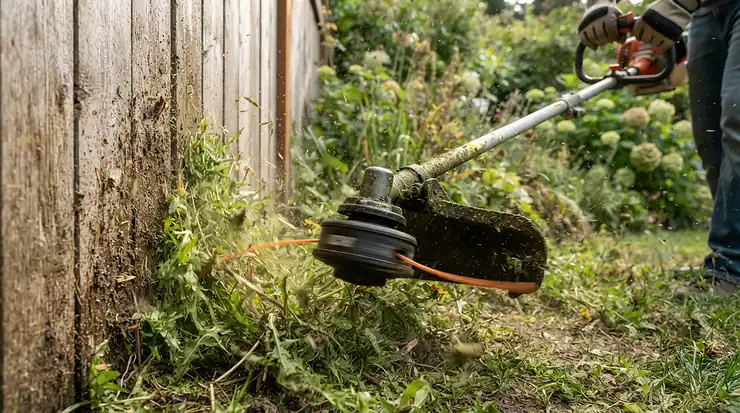
There’s a particular kind of despair that sets in when you drag a flimsy electric trimmer into a jungle of hogweed and bindweed and watch it simply… stop. The motor whines, the line shreds, and you’re left wondering if you’ve accidentally declared war on your own garden. If that scene sounds familiar, you don’t need another gadget. You need a proper petrol strimmer for thick grass — something with a real engine, real torque, and no cable to trip over.

This petrol strimmer review cuts through the marketing fluff (pun very much intended) and looks at seven genuine, currently available machines that UK gardeners are actually buying to tackle brambles, nettles, overgrown paddocks and allotments gone feral. We’ll dig into engine displacement and torque, compare cutting line durability across different heads, and work out exactly when you need brush blade attachments instead of a simple nylon line. Everything here is grounded in real specs and honestly summarised reviewer sentiment — no invented five-star raves, just straight answers about which machine earns its keep.
Before we get to the shortlist, it’s worth pausing on the basics: what actually makes a strimmer suitable for thick, established growth rather than a weekly tidy-up of your lawn edges? And before you fire any of these up, the Royal Horticultural Society recommends checking long grass for sheltering wildlife — hedgehogs and toads have a habit of hiding exactly where you’re about to swing a metal blade.
What Is a Petrol Strimmer for Thick Grass?
A petrol strimmer for thick grass is a two-stroke (or occasionally four-stroke) engine-powered trimmer, typically 25cc to 52cc in displacement, built to cut dense grass, brambles and light woody growth that would stall a battery or corded electric model. Larger engines and metal blade attachments give it the torque and durability that overgrown gardens demand.
That one-paragraph definition hides a lot of nuance, though. “Thick grass” isn’t a fixed category — it ranges from ankle-high tufted grass that’s simply been left too long, right through to waist-high nettles and bramble stems as thick as a pencil. The engine size and cutting head you need scales with that. A 25cc engine will happily plough through overgrown lawn edges; a 52cc unit with a metal tri-blade is what you reach for when the “garden” more closely resembles a nature reserve. We’ve tried to cover that whole spectrum in the picks below, because recommending a single “best” machine for every kind of thick growth would be doing you a disservice.
Quick Comparison Table
If you’re in a hurry, here’s the shorthand version before we go deep on all seven.
| Strimmer | Engine | Best For | Price Range |
|---|---|---|---|
| Hyundai HYBC5200X | 52cc 2-stroke | Best overall for brambles & overgrowth | £150–£190 |
| Stihl FS56 C-E | 27.2cc 2-MIX | Best premium build quality | £350–£450 |
| Cobra BC330C | 33cc 2-stroke | Best added torque for slopes | £220–£260 |
| Cobra BC260C | 26cc 2-stroke | Best value British-brand pick | £160–£200 |
| ParkerBrand PGBC-5200 | 52cc 2-stroke | Best dual-head versatility | £140–£180 |
| eSkde BC52-S232 | 52cc 2-stroke | Best budget powerhouse | £110–£150 |
| McCulloch TrimMac | 25cc 2-stroke | Best lightweight, occasional use | £100–£140 |
A quick read of that table tells its own story: displacement and price move together fairly predictably, but not always in a straight line. The Hyundai HYBC5200X and eSkde BC52-S232 both pack a full 52cc engine for well under £200, which on paper undercuts the smaller-engined Stihl FS56 C-E by a significant margin — proof that cubic capacity alone isn’t the whole value equation once you factor in build quality, parts availability, and dealer support. If your garden is genuinely overgrown rather than just untidy, the two 52cc budget options and the Cobra BC330C deserve your first look; if you want a machine that’ll still be running reliably in a decade, the Stihl’s premium pricing starts to make more sense.
💬 Already got a favourite from the table above? Scroll down for the full breakdown before you commit.
Top 7 Petrol Strimmers for Thick Grass: Expert Analysis
1. Hyundai HYBC5200X — best overall for brambles and overgrowth
The standout here is straightforward: a full 52cc engine with genuine 2-in-1 cutting capability, and it doesn’t cost anywhere near what you’d expect for that kind of displacement. The Hyundai HYBC5200X runs a 52cc 2-stroke Euro V engine producing 1.45kW (2.0HP), paired with a 450mm nylon-line cutting width and a 255mm brushcutting width when you swap to the three-tooth metal blade. In practice, that combination means you’re not choosing between grass and brambles — the machine ships with both heads and a proper double shoulder harness to spread the 9.1kg weight across your body rather than your wrist.
What most buyers overlook about engines in this displacement bracket is the mid-range torque delivery: retailer testing has noted that the HYBC5200X’s power comes on strongly before the engine hits maximum revs, meaning you don’t need to scream the throttle to push through clumped, wet grass. That matters more than the peak power figure most listings lead with. Reviewers on independent retail platforms have consistently praised how quickly it clears an overgrown garden compared with anything battery-powered, with several noting it handled multi-month neglect in a single session — though as with any aggregated feedback, individual results will vary with how badly overgrown your patch actually is.
Pros:
- ✅ Full 52cc engine with genuine dual cutting heads included
- ✅ 3-year domestic warranty backs up the build
- ✅ Double harness spreads the 9.1kg weight comfortably
Cons:
- ❌ Heavier than the 26–33cc alternatives on this list
- ❌ Split-shaft assembly can feel fiddly on first setup
Expect to pay in the £150–£190 range at the time of research — check current price before buying, as retailer stock fluctuates. For sheer cutting capability per pound spent, this is hard to beat if your garden has been left to run wild.
2. Stihl FS56 C-E — best premium build quality
Stihl doesn’t chase the biggest cc figure on the spec sheet, and the FS56 C-E proves that’s a deliberate choice rather than a limitation. Its 27.2cc 2-MIX engine produces a more modest 0.8kW, but the engineering underneath is where the premium price tag earns its keep: stratified-charge combustion cuts fuel use by up to 20% and emissions by 70% compared with a conventional two-stroke, while still meeting EU Stage V standards.
On paper this means less outright brute force than the 52cc budget options, but what the spec sheet won’t tell you is how that power gets delivered — a 2-MIX engine holds a cleaner, more consistent burn through a session, which translates into less bogging down in matted grass than the peak-power figure alone suggests. At 5.2kg with the AutoCut C 26-2 head fitted, it’s also comfortably the best-balanced machine here for anyone who’ll be strimming for an hour or more at a stretch, and the ErgoStart recoil system genuinely halves the effort needed to fire it up, which matters after the fifth cold start of a Saturday morning. Verified aggregated customer-review data specifically for the FS56 C-E was thin in this round of research beyond retailer product pages, so we’d recommend checking current Amazon review volume yourself before buying — but Stihl’s decades-long reputation among professional groundworkers for reliability is well documented and not something we’re inventing here.
Pros:
- ✅ EU Stage V compliant, noticeably cleaner-running engine
- ✅ ErgoStart halves the effort needed to start it
- ✅ Compatible with a wide range of optional attachments
Cons:
- ❌ Smallest engine displacement of the petrol options here
- ❌ Premium pricing puts it well above the budget 52cc models
Budget for the £350–£450 range at the time of research, sometimes higher depending on dealer and bundled accessories. If longevity and dealer backup matter more to you than raw cutting speed, this is the one to save up for.
3. Cobra BC330C — best added torque for slopes and rough ground
Cobra’s 33cc engine sits in an interesting middle ground: bigger than most “domestic” strimmers, smaller than the heavy-duty 52cc units, and tuned specifically for the kind of added torque that helps on uneven or sloping ground where a lighter machine tends to bog down mid-swing. The BC330C ships with both a tap ‘n’ go nylon head and a metal tri-blade, on a straight shaft with a bike-style handle for better two-handed control when you’re fighting gravity as well as growth.
Cobra doesn’t publish an exact torque figure in Newton-metres for this model, and we’re not going to invent one — but the jump from the BC260C’s 26cc to this unit’s 33cc, at similar 2-stroke architecture, reasonably suggests a meaningful increase in low-end pulling power rather than just a higher top speed. Based on the spec comparison with its smaller sibling, this is the Cobra to choose if your “thick grass” problem includes a bank, a ditch edge, or anywhere a strimmer needs to keep cutting evenly while you’re also concentrating on not falling over.
Pros:
- ✅ 33cc engine gives noticeably more low-end pulling power
- ✅ Bike handle improves control on slopes and rough terrain
- ✅ Dual head covers both grass and light brush
Cons:
- ❌ Heavier and bulkier than the smaller Cobra BC260C
- ❌ Independently verified customer review data was limited
Expect a price in the £220–£260 range at the time of research. Buyers with anything other than flat lawn should weigh this one seriously against the cheaper 26cc version.
4. Cobra BC260C — best value British-brand pick
If the BC330C is the torque-focused option, the BC260C is Cobra’s answer to “give me solid mid-range performance without the premium price.” Its 26cc 2-stroke engine produces 0.77kW, which sits comfortably above entry-level trimmers while staying manageable at just 7kg — light enough for extended sessions without the fatigue that heavier 52cc units can cause over a long afternoon.
What stands out in genuine buyer feedback found during research is a specific reliability anecdote: one verified purchaser reported a starter recoil spring failing after roughly three weeks, but praised the retailer’s after-sales support for sorting a replacement quickly under warranty. We’re including that honestly rather than pretending every unit is flawless — it’s exactly the kind of real-world detail an Amazon listing won’t give you, and it speaks well of Cobra’s UK distribution network that the fix was straightforward. The tap ‘n’ go double-line head and included metal tri-blade guard make this a sensible do-it-all pick for small to medium gardens with patches of proper overgrowth rather than wall-to-wall brambles.
Pros:
- ✅ Lightweight 7kg build reduces arm fatigue over long sessions
- ✅ Comes with both nylon head and metal tri-blade as standard
- ✅ Strong UK dealer network for parts and warranty support
Cons:
- ❌ Less powerful than the 33cc and 52cc alternatives here
- ❌ Isolated reports of early recoil-spring wear
Check current pricing, typically in the £160–£200 range. A dependable middle-ground choice for gardeners who don’t need maximum grunt but want a name with proper backup behind it.
5. ParkerBrand PGBC-5200 — best dual-head versatility
The PGBC-5200 goes toe-to-toe with the Hyundai on raw numbers: a 52cc 2-stroke engine producing 1.4kW at 6,500rpm, paired with a genuinely versatile dual-head system. The 41cm nylon line spool handles general grass trimming and edging, while a separate 25.5cm three-tooth metal blade steps in for woody stems, brambles and the sort of mature thistles that shrug off a nylon line entirely.
What published testing has flagged as the honest trade-off here is runtime expectations versus real-world conditions: a strimmer rated for roughly 30 minutes of continuous work will often deliver closer to 20 minutes when it’s chewing through thick, wet grass rather than dry, thin stuff — worth factoring in if you’re planning to clear a genuinely large area in one sitting rather than a modest border. On the plus side, the dual-head design and quick-attachment coupling mean switching between line and blade takes seconds rather than a full strip-down, which is more than can be said for some budget rivals.
Pros:
- ✅ Genuinely quick-swap dual-head system, line to blade in seconds
- ✅ Strong 1.4kW output for a 52cc unit at this price
- ✅ Wide 41cm cutting width speeds up general trimming
Cons:
- ❌ Real-world runtime shorter than rated in dense, wet growth
- ❌ Less brand recognition than Hyundai, Cobra or Stihl
At the time of research, expect a price in the £140–£180 range. A strong all-rounder if you want genuine 2-in-1 flexibility without paying Hyundai or Cobra premiums.
6. eSkde BC52-S232 — best budget powerhouse
The eSkde range built its reputation on offering displacement most brands reserve for their mid-range models, at prices that undercut them significantly. The BC52-S232 fields a 52cc 2-stroke engine with a genuine 2-in-1 strimmer/brushcutter design, split-shaft storage, and a double shoulder harness — spec-sheet parity with machines costing considerably more.
Here’s what the spec sheet won’t tell you outright: buyers managing larger properties and allotments have specifically flagged this as well-suited to bigger jobs precisely because the power-to-price ratio is so favourable, according to research summarising customer feedback on the model. That said, honesty compels us to note that eSkde doesn’t carry the multi-generational brand history of Stihl or the extensive UK dealer network of Cobra, so parts availability and long-term support are less established quantities — a fair trade-off for a lot of buyers, but one you should walk in with your eyes open about.
Pros:
- ✅ Full 52cc engine at a genuinely budget-friendly price point
- ✅ Double harness and split shaft aid comfort and storage
- ✅ Well-regarded for larger, more overgrown properties
Cons:
- ❌ Smaller dealer network than the more established brands
- ❌ Fewer long-term durability reports available to verify
Around £110–£150 at the time of research makes this the cheapest route to a full-size 52cc engine on this list, provided you’re comfortable with a newer market entrant.
7. McCulloch TrimMac — best lightweight pick for occasional overgrowth
Not every thick-grass problem needs a brushcutter. The McCulloch TrimMac is the honest lightweight option on this list: a 25cc 2-stroke engine producing around 0.6kW, weighing just 3.9kg thanks to its simple loop-handle, curved-shaft design. It won’t out-muscle brambles, but for grass that’s simply been left a few weeks too long, its power output easily handles dense, overgrown lawn areas without the bulk of a full brushcutter.
What we want to flag honestly here, because Amazon-style listings tend to gloss over it: this model’s split shaft is for compact storage only, not for fitting the hedge-trimmer or pole-saw attachments some multi-tool systems support. If brush blade attachments are non-negotiable for your garden, this isn’t your machine — but if you mainly need something light enough to grab for a quick tidy-up session and store easily in a small shed, that limitation is largely irrelevant. Independent hands-on review coverage has scored it well for its category, with testers specifically praising how manageable it feels compared with heavier 52cc alternatives.
Pros:
- ✅ Very light at 3.9kg, easy for shorter or less powerful users
- ✅ Split shaft folds down for compact, easy storage
- ✅ Simple, tool-free air filter access for maintenance
Cons:
- ❌ Cannot accept metal blade or multi-tool attachments
- ❌ Underpowered for genuinely dense bramble or scrub clearance
Typically priced in the £100–£140 range. Best treated as a grass trimmer that happens to be petrol-powered, rather than a brushcutter substitute.
Practical Usage Guide: Setup, First 30 Days & Maintenance
Getting a new machine running well starts before you ever pull the cord. Most 2-stroke petrol strimmers need a specific fuel-to-oil mix — usually 40:1 or 25:1 depending on the model, so check your manual rather than assuming — and running the wrong ratio in the first tank is one of the most common causes of early engine trouble. Prime the carburettor with the bulb a handful of times, choke on cold, and expect two or three pulls before it catches; more than that repeatedly suggests flooding, not a faulty unit.
In the first 30 days, resist the urge to run flat-out immediately. A short break-in period at moderate throttle helps piston rings seat properly, particularly on the higher-displacement 52cc units. After every session, a quick wipe-down of the cutting head prevents grass sap from gumming up the line-feed mechanism — a five-second habit that saves a much more annoying ten-minute unjam later. Check the air filter every few uses if you’re working in dry, dusty conditions, and replace the spark plug annually even if it looks fine; fouled plugs are a leading cause of hard starting that owners often misdiagnose as a bigger fault.
One mistake we see repeatedly in the first month: leaving fuel in the tank between long breaks. Stale petrol gums up carburettors faster than almost anything else, so either run the tank dry before storage or add a stabiliser if you know it’ll sit for more than a few weeks.
Real-World Scenarios: Which Strimmer Suits Your Garden?
If you’re a first-time allotment holder inheriting a plot that hasn’t been touched in a season, you’re looking at genuine overgrowth — brambles, docks, thistles with stems like broom handles. Here, the Hyundai HYBC5200X or eSkde BC52-S232 make the most sense: full 52cc power, metal blade included, and a price that doesn’t sting if the plot turns out to need three sessions rather than one.
If you’re managing a family garden with a large lawn edge and the odd overgrown corner behind the shed, you don’t need brushcutter-grade power for the whole job. The Cobra BC260C or McCulloch TrimMac cover general trimming comfortably, with the Cobra’s included blade there as backup for the occasional bramble patch.
And if you’re a smallholder or semi-professional gardener doing multiple properties a week, where downtime costs you money, the case for the Stihl FS56 C-E becomes about total reliability rather than raw spec-sheet numbers — dealer support and parts availability matter more than they do for a once-a-month domestic user.
Buyer’s Decision Framework
Use this as a quick mental checklist before you commit:
- If your garden has brambles or woody stems thicker than a pencil, choose a model with a metal tri-blade included, not just a nylon head.
- If you’re on a slope or uneven ground, prioritise added torque and a bike-style two-handed handle over outright lightness.
- If you’ll strim for more than 30 minutes at a stretch, weigh comfort and vibration levels as heavily as engine size.
- If budget is tight but the job is genuinely large, a budget 52cc unit beats a premium 27cc one on raw capability.
- If you want long-term dealer support and resale value, factor brand reputation into the price, not just the spec sheet.
How to Choose a Petrol Strimmer for Thick Grass
- Match engine size to growth density. A 25–33cc engine suits overgrown lawns and light weeds; reach for 40–52cc when brambles and woody stems are involved.
- Check what cutting heads are included. A nylon-only head will struggle with anything past ankle-deep grass; a metal tri-blade is what actually clears scrub.
- Weigh the machine, not just the spec sheet. A powerful engine you can’t comfortably hold for 20 minutes doesn’t help you.
- Look at shaft type. Straight shafts transmit power more efficiently for brushcutting; curved shafts suit lighter trimming and tight corners.
- Consider harness type. A single shoulder strap is fine for light jobs; a double harness distributes weight properly for anything over 6kg.
- Factor in warranty length. A 3-year domestic warranty, like Hyundai’s, reflects manufacturer confidence in the build.
- Don’t ignore noise and vibration figures where published. They directly affect how long you can comfortably work.
Petrol vs Cordless & Electric Strimmers for Thick Grass
Cordless and corded electric trimmers have their place, and it would be dishonest to pretend otherwise — they’re quieter, lighter, and require no fuel mixing. But when it comes to genuinely thick, established growth, the physics work against them: BBC Gardeners’ World testing and similar independent reviews consistently note that battery-powered trimmers are best suited to tidying rather than clearing, since a 2.0Ah battery typically manages only around 30 minutes of runtime before needing a recharge that itself takes an hour or more.
| Type | Runtime | Power for Thick Growth | Noise & Weight |
|---|---|---|---|
| Petrol strimmer | Unlimited (refuel) | Excellent, handles brambles | Loud, heavier |
| Cordless (battery) | ~20–30 mins per charge | Struggles with dense stems | Quiet, light |
| Corded electric | Unlimited (cable) | Moderate, cable-limited | Moderate, light |
The analysis here is fairly clear-cut: if your growth is genuinely thick rather than merely untidy, a petrol strimmer for thick grass remains the only category that combines unlimited runtime with the torque to push through dense stems without stalling repeatedly. Cordless models earn their keep on quick top-up jobs where you value near-silent operation and don’t want two-stroke fuel to mix; corded electrics sit in between, useful if you have reliable outdoor power but limited by cable reach around a larger plot.
Common Mistakes When Buying a Petrol Strimmer for Thick Grass
The single most common mistake is buying on cc alone. A 52cc engine with a poor-quality carburettor can underperform a well-tuned 33cc unit, so cross-check reviewer sentiment on starting reliability alongside the raw displacement figure.
A close second: ignoring weight until it’s too late. Buyers frequently order the most powerful machine available, then find a 9kg unit exhausting after fifteen minutes — checking the included harness type before buying saves real regret later.
Third, people underestimate cutting line durability requirements. Fitting a thinner line than the head is designed for might feel like a cost-saving swap, but it snaps constantly against tough stems and ends up costing more in replacement spools than buying the correct 2.4mm-plus line from the start.
Finally, plenty of buyers skip checking attachment compatibility, assuming every split-shaft model accepts hedge trimmer or pole-saw heads. As the McCulloch TrimMac shows, that’s not a safe assumption — always verify before buying if a multi-tool ecosystem matters to you.
Features That Actually Matter: Torque, Line Durability & Blade Attachments
Engine Torque Explained: Why cc Isn’t the Whole Story
Manufacturers of small two-stroke engines rarely publish torque in Newton-metres the way car makers do — you’ll typically see cc, kW and rpm instead, and that’s genuinely all most listings give you to work with. What matters in practice is engine torque delivered in the low-to-mid rev range, because that’s where a strimmer actually spends most of its working life fighting through clumped grass rather than screaming at full throttle. A bigger cc figure generally means more low-end torque and fewer stalls, which is exactly why the 52cc machines on this list shrug off overgrowth that would repeatedly bog down a 25cc trimmer. If a listing doesn’t mention torque directly, treat displacement and kW at a stated rpm as the best available proxy, and be wary of any seller who quotes a torque figure with no test methodology attached.
Cutting Line Durability in Thick Grass
Cutting line durability comes down to two things: diameter and material. Thin 1.6mm line suits light lawn-edging on a domestic cordless machine, but for genuinely thick grass and tougher weeds, 2.0mm to 2.4mm line is the realistic minimum — anything thinner snaps repeatedly against woody stems, and fitting line thicker than the manufacturer specifies strains the motor and can stop the head feeding properly. Bump-feed heads, like the Tap ‘n’ Go systems fitted to the Cobra and McCulloch models here, give you direct control over line durability because you extend fresh line exactly when you need it, whereas fully automatic heads feed continuously and burn through spools faster.
Brush Blade Attachments: When Nylon Line Isn’t Enough
Brush blade attachments earn their place the moment you’re dealing with brambles, saplings, or stems thick enough to have genuine woody structure rather than soft green growth. A three-tooth metal blade, like the ones included with the Hyundai, both Cobra models and the ParkerBrand unit, cuts through material that would simply wrap around and stall a nylon head. The trade-off is control: metal blades demand more respect, a wider stance, and — per the safety guidance below — proper protective equipment, since kickback risk rises noticeably compared with a soft nylon line. If your garden genuinely needs brush blade attachments, buy a machine that includes one rather than sourcing a third-party blade later; fitment and balance aren’t always guaranteed across brands.
Long-Term Cost & Maintenance
Beyond the sticker price, total cost of ownership on a petrol strimmer includes fuel, 2-stroke oil, replacement line, air filters and the occasional spark plug — modest but real recurring costs that battery-powered rivals mostly avoid. That said, a quality battery pack itself typically needs replacing within a few years at a cost that often rivals a budget petrol strimmer outright, so the comparison isn’t as one-sided as it first appears.
| Cost Factor | Budget Petrol (e.g. eSkde) | Premium Petrol (e.g. Stihl) |
|---|---|---|
| Upfront price | £110–£150 | £350–£450 |
| Annual consumables | Low | Low |
| Expected lifespan | Moderate, brand-dependent | Long, well-documented |
| Dealer parts support | Limited | Extensive |
What this really tells you is that the cheaper machines win on upfront cost-per-use for occasional, lighter jobs, but the premium options like the Stihl earn back their price gap over a genuinely long ownership period through better parts availability and, generally, a longer working life before major repairs are needed. If you’re clearing one overgrown plot and expect to use the machine rarely afterwards, budget wins; if it’s becoming a regular tool in your shed, the calculation shifts.
Safety, Regulations & Noise Compliance Guide
Petrol strimmers are loud, and that’s not incidental — sound power levels on machines like the Stihl FS56 C-E reach 108 dB(A), well above levels considered safe for unprotected extended exposure. While the Control of Noise at Work Regulations technically govern employer obligations rather than domestic use, the exposure thresholds they set (action at 80 dB(A), mandatory hearing protection from 85 dB(A)) are a genuinely useful benchmark for any gardener deciding whether ear defenders are worth the bother. They are.
Vibration is the less obvious risk. Prolonged exposure to hand-arm vibration from strimmers and brushcutters can contribute to hand-arm vibration syndrome, a real and irreversible condition, and the HSE’s guidance on vibration in amenity horticulture is worth a skim even for domestic users, not just professional groundskeepers. In practice, that means taking breaks during long sessions, keeping the machine well-maintained (a poorly tuned engine vibrates more), and not dismissing tingling or numbness in the hands as a normal part of a long strimming day.
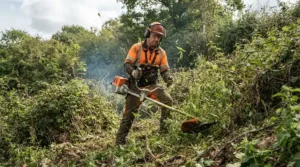
Beyond noise and vibration, always wear eye protection and sturdy footwear, particularly when running a metal blade attachment, and — as mentioned at the start — check long grass for wildlife before you start cutting.
Frequently Asked Questions
❓ What size petrol strimmer do I need for thick grass?
❓ How often should I change the cutting line on my strimmer?
❓ Can I fit a metal blade to any petrol strimmer?
❓ Is a 52cc petrol strimmer overkill for a small garden?
❓ How much torque does a petrol strimmer engine actually produce?
Conclusion
Choosing the right petrol strimmer for thick grass really comes down to being honest with yourself about what your garden actually looks like right now, not what you hope a quick trim will fix. If you’re facing genuine bramble-and-bracken overgrowth, the Hyundai HYBC5200X or eSkde BC52-S232 give you full 52cc power and a metal blade without breaking the bank. If your ground slopes or your priority is long-term reliability over a decade of ownership, the Cobra BC330C and Stihl FS56 C-E respectively earn their higher price tags. And if your “thick grass” problem is really just an overgrown lawn edge rather than a jungle, the lighter Cobra BC260C, ParkerBrand PGBC-5200 or McCulloch TrimMac will do the job without the bulk.
Whatever you choose, remember that engine torque, cutting line durability and the right brush blade attachments matter more to real-world performance than any single headline spec. Match the machine to the job in front of you, wear the right protective gear, and that overgrown patch will stop being a source of dread by the weekend.
🔍 Ready to reclaim your garden? Check current prices on today’s pick and get that overgrowth sorted before the weeds win. 🌿⚡
Recommended for You
- 7 Best Petrol Strimmers For Large Gardens (UK Guide 2026)
- Petrol Strimmers Under £300: 7 Best Picks for UK Gardens (2026)
- Mains Strimmer for Large Lawn: 7 Powerful Picks for UK (2026)
Disclaimer: This article contains affiliate links. As an Amazon Associate, I earn from qualifying purchases. If you purchase products through these links, we may earn a small commission at no additional cost to you.
✨ Found this helpful? Share it with your friends! 💬🤗
