
In This Article
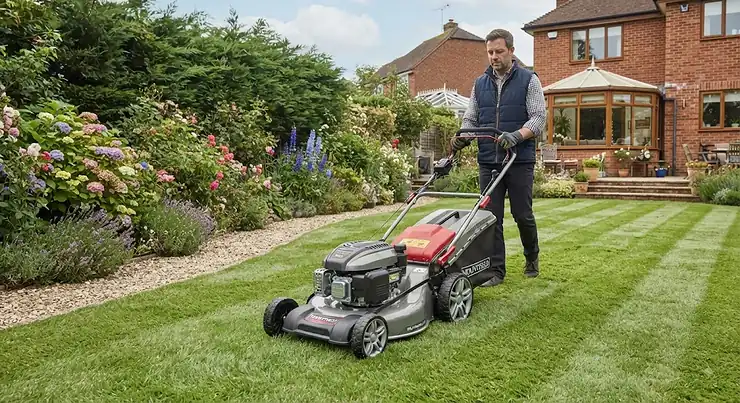
There’s a particular kind of dread that sets in around April, when the grass starts growing faster than you can keep up with it and your old push mower suddenly feels like it weighs as much as a small car. If that sounds familiar, a self-propelled lawn mower might be the single best upgrade you make to your garden kit this year. Put simply, a self-propelled lawn mower is a walk-behind mower with a drive system built into the wheels, so the machine pulls itself forward (or backward, on some models) while you simply steer and set the pace, rather than muscling the whole unit across the lawn yourself.
For anyone with a lawn over roughly 200 square metres, a slope, or a bad back, this one feature changes mowing from a chore into something closer to a stroll. But not all self-propelled mowers are built the same. Some use front-wheel drive that’s cheap but skittish on hills. Others use rear-wheel drive traction that claws through wet grass without a hint of wheelspin. Some run on petrol, some on batteries, and the gap between a budget model and a flagship petrol mower can be genuinely enormous once you start comparing real-world performance rather than marketing copy.
This guide is built around seven real, currently available machines — from a sub-£300 Hyundai to a Honda-engined flagship from Mountfield — with honest analysis of specs, aggregated review sentiment, and practical buying advice drawn from UK retailers and independent testing. As Wikipedia’s overview of lawn mower design notes, smaller walk-behind mowers are increasingly self-propelled rather than manually pushed, needing the operator only to steer, which tells you how mainstream this category has become. Let’s get into which model actually deserves a spot in your shed.
Quick Comparison Table
Before diving into the full reviews, here’s a snapshot of how the seven models stack up on the numbers that matter most: drive type, cutting width, and who each one suits best.
| Mower | Power Source | Cutting Width | Drive Type | Best For |
|---|---|---|---|---|
| Hyundai HYM430SPE | Petrol (139cc) | 42cm | Rear-wheel drive | Budget buyers wanting easy starts |
| Einhell GC-PM 46 S | Petrol (139cc) | 46cm | Rear-wheel drive | Large lawns on a tight budget |
| Worx Nitro WG749E | Cordless (40V x2) | 46cm | Rear-wheel drive, variable speed | Mid-range power without petrol |
| Greenworks GD60LM46SP | Cordless (60V) | 46cm | Self-propelled, single speed | Lightest cordless option |
| Ego LM1702E-SP | Cordless (56V) | 42cm | Variable speed drive | Smoothest slope performance |
| Cobra RM43SP80V | Cordless (80V) | 43cm | Rear-wheel drive | Classic striped finish |
| Mountfield SP555 V | Petrol (Honda 167cc) | 53cm | Variable speed drive | Large gardens, premium finish |
Looking at this table, the spread of prices and technologies is the real story here. The two petrol budget options — the Hyundai HYM430SPE and the Einhell GC-PM 46 S — undercut every cordless model on price but ask you to deal with fuel and engine maintenance in return. Meanwhile, the Ego LM1702E-SP and Mountfield SP555 V both use genuinely variable speed drive systems that adjust automatically to your walking pace, which is a meaningfully different (and more comfortable) experience than the fixed-speed rear-wheel drive on the budget models. If you’re weighing up cutting width against garden size, note that 42-43cm suits most average UK plots, while the 46-53cm decks on the Einhell GC-PM 46 S, Worx Nitro WG749E, Greenworks GD60LM46SP and Mountfield SP555 V shave real time off mowing anything over 400 square metres.
💬 Which mower matches your lawn size and budget best? Scroll down for the full breakdown of all seven models below.🤗
Top 7 Self-Propelled Lawn Mowers: Expert Analysis
We’ve picked these seven models specifically to cover every realistic UK buying scenario: tight budgets, mid-range value seekers, and premium buyers who want the best cut on the market. Each one is a genuine, currently sold product — no filler, no fictional “editor’s picks.”
1. Hyundai HYM430SPE — best budget petrol mower with electric start
The standout feature here is the push-button electric start, which on paper sounds like a small convenience but in practice is the difference between mowing today and giving up after the fifth failed pull-cord attempt. Powered by a 139cc 4-stroke OHV engine with a 42cm cutting width, the Hyundai HYM430SPE is built around rear-wheel drive, which matters more than most spec sheets let on — rear-wheel drive keeps traction under load, particularly once the 45-litre grass collector starts filling up and shifting weight backwards. Six cutting heights from 25mm to 75mm, adjusted via a single lever, cover everything from a tight spring cut to a shaggy late-summer trim.
Based on the spec comparison against other sub-£350 petrol mowers, the HYM430SPE punches above its price bracket mainly because of that electric start and its genuinely low 30kg weight, which is light for a petrol self-propelled unit. This is a mower for first-time buyers with small to medium gardens (up to roughly 400 square metres) who want the reliability of petrol without wrestling with a stubborn recoil cord every weekend. Reviewers consistently note that the OPC (Operator Presence Control) safety cut-out and the tool-free folding handles make it genuinely easy to live with, and aggregated feedback across UK retailer sites points to strong reliability for this price bracket, though a handful of buyers mention the fuel tank is on the small side for larger plots.
Pros:
- ✅ Push-button electric start removes recoil-cord frustration
- ✅ Lightweight for a petrol self-propelled mower at 30kg
- ✅ Rear-wheel drive holds traction as the grass box fills
Cons:
- ❌ Small 42cm deck means more passes on bigger lawns
- ❌ 1-litre fuel tank needs topping up more often on large jobs
Prices for the Hyundai HYM430SPE typically sit in the £300-£380 range at the time of research, making it one of the most accessible self-propelled petrol mowers on amazon.co.uk — check current price and availability before buying, as petrol mower pricing shifts with fuel and steel costs.
2. Einhell GC-PM 46 S — best for covering large lawns on a budget
What stands out immediately is the sheer area this machine is rated for: Einhell recommends the Einhell GC-PM 46 S for lawns up to 1,400 square metres, which is genuinely enormous for a mower in this price bracket. The 46cm cutting width comes from a 139cc single-cylinder 4-stroke engine producing around 1.9kW, and the drive is a disengageable rear-wheel system, meaning you can switch propulsion off entirely if you just want to reposition the mower without it lurching forward.
In practice, what most buyers overlook about this model is the 9-stage central height adjustment, which is unusually granular for a budget petrol mower — most rivals offer 5 or 6 stages. That fine control matters if your lawn has both a formal front section and a rougher back patch that needs a different cut. This is squarely a mower for gardeners with large, unfussy lawns who want raw cutting capacity over refinement; it isn’t going to give you a showroom stripe, but it will get through thick grass without stalling. Aggregated review sentiment from UK retailer sites is broadly positive on reliability and value, with the recurring theme being that the 65-litre grass bag (on the larger variant) is a genuine time-saver on big plots, though the plain recoil-start version does require a firm pull to get going from cold.
Pros:
- ✅ Rated for lawns up to 1,400m², among the largest in its class
- ✅ 9-stage height adjustment for precise, granular control
- ✅ Disengageable drive lets you reposition without self-propulsion
Cons:
- ❌ Recoil start only on the base model (no electric start)
- ❌ Steel deck adds weight versus polymer cordless rivals
The Einhell GC-PM 46 S typically retails in the £280-£360 range depending on which variant (electric start or grass box size) you choose, and remains one of the strongest value-per-square-metre picks currently available.
3. Worx Nitro WG749E — best mid-range cordless with power-boost tech
The headline feature on the Worx Nitro WG749E is Worx’s Intellicut system, which automatically ramps up motor power the moment it senses thicker or longer grass, then eases back off to conserve battery once conditions get easier again. Running on two 20V 4Ah batteries combined into a 40V system, it drives a brushless motor turning a 46cm blade, with Worx claiming coverage of up to 500 square metres on a full charge. The self-propelled system includes genuine variable speed control via a dial on the handlebar, which is a step up from the fixed-pace drive found on cheaper cordless mowers.
Here’s what the spec sheet won’t tell you, but reviewers note: the brushless motor isn’t just a power upgrade, it also means significantly less vibration through the handlebar over a typical 30-minute mowing session, which matters more than people expect until they’ve used both types back to back. This model suits homeowners with medium-to-large gardens (500-800 square metres) who want petrol-equivalent performance without the smell, noise, or annual service bill. An Ideal Home review of the WG749E praised its all-round value for money and highlighted the 55-litre collection bag as a genuinely useful practical touch, and aggregated feedback consistently flags the 7-position height adjustment and folding handle for compact storage as standout features too.
Pros:
- ✅ Intellicut auto-adjusts power for thick or thin grass
- ✅ Genuine variable speed self-propelled drive, not fixed-pace
- ✅ Brushless motor cuts vibration on longer mowing sessions
Cons:
- ❌ Two separate batteries add bulk versus single-battery rivals
- ❌ Full charge takes around 2 hours before you can mow again
Expect to pay in the £400-£460 range for the Worx Nitro WG749E kit complete with both batteries and a charger, positioning it as a genuine mid-range value leader against pricier single-brand cordless systems.
4. Greenworks GD60LM46SP — lightest cordless self-propelled option
The Greenworks GD60LM46SP leads with its DigiPro brushless motor, a digitally controlled unit that Greenworks says delivers up to 30% more torque and 70% less vibration than a comparable petrol engine of similar output. Built around a 60V battery platform with a 46cm steel cutting deck, it offers collection, mulching and side or rear discharge, giving genuine flexibility depending on the time of year and how much you want to feed nutrients back into the lawn.
Based on the spec comparison, what makes this one interesting isn’t outright power — it’s weight. At a genuinely light build for a 46cm self-propelled deck, it’s one of the easiest cordless mowers on this list to lift in and out of a shed or car boot, which matters more than people admit when you’re doing it every single week through summer. This is a strong pick for gardeners who value manoeuvrability over maximum runtime, and particularly for anyone who currently struggles to physically manage a heavier petrol machine. Reviewers consistently note that the single-lever height adjustment and foldable handlebar make it simple to store, though some flag that battery run time on the smaller 2Ah battery option is on the short side for anything beyond a compact garden — stepping up to the 4Ah or 6Ah battery resolves this but adds to the overall cost.
Pros:
- ✅ DigiPro brushless motor with markedly reduced vibration
- ✅ One of the lightest 46cm cordless self-propelled mowers around
- ✅ 3-in-1 flexibility: collect, mulch, or side discharge
Cons:
- ❌ Entry-level 2Ah battery gives limited runtime on larger lawns
- ❌ Battery and charger frequently sold separately from the bare tool
Bare-tool pricing for the Greenworks GD60LM46SP sits around £250-£320, while a complete kit with battery and charger typically lands in the £350-£450 range — always check current price, since Greenworks sells this model in several battery-inclusive configurations.
5. Ego LM1702E-SP — smoothest variable-speed drive for sloped gardens
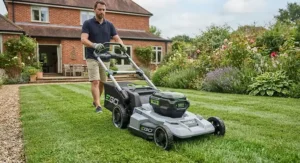
What immediately sets the Ego LM1702E-SP apart is its infinitely variable self-propelled drive system, which automatically adjusts pace and power based on the terrain rather than requiring you to fiddle with a manual speed dial. Powered by a 56V ARC Lithium battery (supplied as a 4.0Ah unit in the kit), it drives a 42cm polymer deck with seven cutting heights from 20mm to 80mm, and Ego rates it for lawns up to roughly 480-500 square metres per charge.
On paper this means less physical effort on undulating ground, and reviewers consistently back that up — the automatic speed adjustment genuinely reduces the sensation of the mower fighting you on an incline, which is the single biggest complaint people have about fixed-speed self-propelled units. What most buyers overlook is that the polymer deck, while lighter than steel, has also proven durable in Ego’s wider mower range for resisting dents and corrosion. This is the mower for anyone with a sloped or undulating garden who’s tired of a mower either dragging them forward or stalling on the incline. The trade-off is that Ego’s cordless ecosystem carries a premium price versus own-brand budget cordless mowers, but the five-year warranty on the mower body goes some way to justifying it.
Pros:
- ✅ Automatically variable drive adapts to slopes without manual input
- ✅ Five-year warranty, among the longest in the cordless category
- ✅ IPX4 rating means light rain won’t end your mowing session
Cons:
- ❌ 42cm deck is narrower than several rivals at a similar price
- ❌ Mulching kit and rear roller are sold as separate accessories
The Ego LM1702E-SP kit, including a 4.0Ah battery and charger, typically retails in the £500-£620 range, placing it firmly in premium cordless territory, but the drive quality is genuinely a step above cheaper alternatives.
6. Cobra RM43SP80V — best for a classic striped lawn finish
The rear roller is the star of the show on the Cobra RM43SP80V, giving it the ability to lay down the kind of light-and-dark stripe pattern usually associated with cylinder mowers and cricket pitches, but from a rotary cordless machine. Twin 40V 5Ah lithium batteries combine to power an 80V brushless motor, running a 43cm cutting width with up to seven cutting heights between 17mm and 75mm, and Cobra rates the batteries for up to 100 minutes of continuous mowing.
Here’s what the spec sheet won’t tell you, but reviewers note: rear-roller mowers generally handle slightly differently to four-wheel rotary mowers, requiring a touch more care on tight turns since the roller doesn’t pivot like a wheel does — but the self-propelled drive largely compensates for this by doing the forward work for you. This is the mower for anyone who genuinely cares about lawn aesthetics, particularly owners of period or formal gardens where a striped finish is part of the overall look. Aggregated review sentiment consistently praises the build quality and the inclusion of two fast chargers as standard, which is a thoughtful touch that shortens downtime between charges considerably compared to single-charger rivals.
Pros:
- ✅ Rear roller creates a genuine striped, cylinder-mower-style finish
- ✅ Twin 40V batteries deliver up to 100 minutes of run time
- ✅ Two fast chargers included as standard, cutting downtime
Cons:
- ❌ 43cm cutting width is modest for the premium price point
- ❌ Roller design needs a slightly more deliberate turning technique
Expect to pay in the £550-£680 range for the Cobra RM43SP80V with both batteries and chargers included, which sits it at the upper end of cordless pricing but justified by the striping capability alone for buyers who prioritise finish over raw cutting width.
7. Mountfield SP555 V — flagship Honda-powered mower for large gardens
The Mountfield SP555 V leads with its Twinclip blade system, which cuts grass twice in a single pass using four cutting edges instead of the usual two, producing a finish Mountfield compares to a cylinder mower. Power comes from a genuinely premium Honda GCVx170 Autochoke engine at 167cc, driving a substantial 53cm cutting width through a variable speed transmission that Mountfield rates for lawns up to around 2,500 square metres.
Based on the spec comparison against every other mower on this list, the SP555 V is unambiguously the performance flagship here — the combination of Honda engine reliability, true variable speed drive, and that double-cutting blade technology puts it in a different tier to the budget petrol options. What most buyers overlook is the hybrid galvanised steel and aluminium chassis, which balances the durability of steel with meaningfully reduced weight versus an all-steel competitor of similar cutting width. This is the mower for larger gardens (half an acre plus) where both cutting performance and finish quality genuinely matter, and where the extra investment pays for itself in reduced mowing time and a noticeably tidier lawn. Reviewers consistently flag the smooth acceleration through the torque-converter transmission and the 70-litre collector as standout practical features, with the five-year warranty reinforcing the sense that this is built to last.
Pros:
- ✅ Twinclip four-edge blade gives a cylinder-mower-quality finish
- ✅ Honda GCVx170 engine is renowned for reliability and easy starting
- ✅ Rated for lawns up to roughly 2,500m², among the largest here
Cons:
- ❌ 52kg weight makes it noticeably heavier to manoeuvre and store
- ❌ Premium pricing puts it out of reach for casual mowers
The Mountfield SP555 V typically sits in the £750-£900 range at the time of research, making it a genuine investment purchase, but one that’s consistently positioned by UK retailers as a flagship rather than a mid-range option — value here comes from longevity and finish quality rather than upfront affordability.
Practical Usage Guide: Setting Up and Maintaining Your Self-Propelled Lawn Mower
Getting a new self-propelled mower right in the first month sets the tone for years of reliable use, so it’s worth doing properly rather than rushing straight into your first cut. Start by reading the drive-engagement instructions specifically — self-propelled mowers vary considerably in how the propulsion is activated, whether that’s a bail lever you squeeze against the handlebar, a dial for variable speed drive, or a separate clutch lever entirely. Getting this wrong in your first few minutes is the single most common cause of that jarring “lurch forward” experience that puts people off self-propulsion altogether.
For petrol models like the Hyundai HYM430SPE or Mountfield SP555 V, add the correct oil grade before the first start (most arrive with dry engines, though some Mountfield models ship pre-filled), and run the first tank of fuel through gently rather than at full throttle to bed the engine in. For cordless mowers such as the Ego LM1702E-SP or Cobra RM43SP80V, fully charge the battery before first use even if it arrives partially charged, since lithium cells calibrate more accurately after a complete charge cycle.
In terms of ongoing maintenance, the biggest optimisation trick that most owners never bother with is simply cleaning the underside of the deck after every third or fourth cut. Compacted grass clippings under the deck reduce airflow, which hurts both cutting quality and, on cordless models, battery efficiency, since the motor works harder against resistance. Sharpen or replace the blade at least once per season — a blunt blade tears rather than slices grass, leaving ragged, browning tips that make even a well-maintained lawn look neglected. The most common first-30-days mistake is skipping the drive-belt or cable tension check that most manuals recommend after the initial bedding-in period; a loose drive cable is the number one cause of “my self-propelled mower isn’t propelling itself” complaints in the first month of ownership.
Real-World Scenarios: Matching a Self-Propelled Mower to Your Garden
Rather than talking in the abstract, it helps to see how these mowers map onto actual UK garden situations. Consider a retired couple in a bungalow with a flat 300-square-metre lawn and no storage space for petrol cans: the Hyundai HYM430SPE‘s electric start and light 30kg weight make it far easier to manage than a heavier cordless alternative, and the modest fuel costs are a non-issue at this lawn size.
Now picture a family with a sloped half-acre garden in a village with no mains electricity near the shed — petrol remains the pragmatic choice here, and the Mountfield SP555 V‘s variable speed drive and Honda engine reliability suit the scale and terrain far better than a budget alternative would, even accounting for the higher upfront cost. Contrast that with a young professional in a new-build with a compact, tidy 250-square-metre lawn and a strong preference for quiet, low-maintenance tools — the Greenworks GD60LM46SP or Ego LM1702E-SP fit that profile well, since neither requires fuel storage, engine servicing, or the noise that might annoy close neighbours on a Sunday morning.
Finally, think about a gardening enthusiast with a formal front lawn who genuinely cares about presentation for kerb appeal or entertaining guests: the Cobra RM43SP80V‘s rear roller and striping capability directly serves that specific priority in a way none of the other six models can quite match, even though its 43cm cutting width is more modest than some rivals.
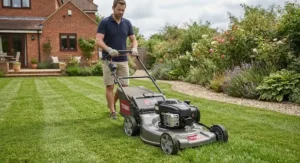
Problem → Solution: Fixing the Most Common Self-Propelled Mower Issues
Even a well-chosen mower runs into a handful of predictable problems, most of which have straightforward fixes once you know what’s actually going wrong.
Problem: the mower pulls to one side while self-propelled. This is almost always uneven tyre pressure (on petrol models with pneumatic tyres) or a partially engaged drive on one wheel. Check tyre pressures are matched and confirm the drive belt or cable tension is even on both sides before assuming there’s a deeper fault.
Problem: cordless runtime feels shorter than advertised. Manufacturer runtime figures like those quoted for the Worx Nitro WG749E or Ego LM1702E-SP are typically measured on dry, well-maintained lawns at moderate height. Wet, thick, or overgrown grass can cut runtime by a third or more, since the motor draws more current to cut through denser material.
Problem: petrol engine struggles to start after winter storage. Stale fuel is the usual culprit. Drain the tank before long-term storage, or use a fuel stabiliser, and always start the season with fresh unleaded petrol in models like the Hyundai HYM430SPE or Einhell GC-PM 46 S.
Problem: uneven or scalped patches on the lawn. This is very rarely a mower fault — it’s almost always cutting too low, too infrequently, or on uneven ground. Raise the cutting height and mow more often rather than trying to catch up on overgrown grass in one aggressive pass.
Problem: self-propel drive feels sluggish or has stopped working entirely. On cordless mowers, check the battery charge state first, since low charge often throttles propulsion before it affects the blade motor. On petrol models, a slipping drive belt is the most common cause and is a straightforward, inexpensive replacement part.
Self-Propelled Lawn Mower Buying Guide: How to Choose the Right Model
Working through a self-propelled lawn mower buying guide properly means thinking beyond the headline price and considering how the machine will actually behave in your specific garden. Here’s the order in which to weigh up your decision.
- Measure your lawn area first. Anything under roughly 200 square metres rarely justifies the expense of self-propulsion at all; a decent push mower will do. Above that, self-propulsion earns its keep quickly.
- Assess your terrain honestly. Flat lawns tolerate front-wheel drive and fixed-speed systems fine. Sloped or uneven gardens genuinely benefit from rear-wheel drive traction and, ideally, variable speed drive.
- Decide between petrol and cordless based on storage and noise tolerance, not just price. Petrol needs fuel storage and annual servicing; cordless needs battery storage and charging discipline.
- Check cutting width against garden size. A 42cm deck suits compact plots; anything over 400 square metres benefits from 46cm or wider to cut mowing time meaningfully.
- Consider finish requirements. If a striped lawn matters to you, prioritise a rear-roller model like the Cobra RM43SP80V over a standard four-wheel rotary mower.
- Factor in weight and storage. A heavier premium mower like the Mountfield SP555 V needs a flat, accessible storage spot; lighter cordless options are easier if you’re carrying a mower up steps or into a car boot.
- Look at warranty length as a value signal. Longer warranties (the five years offered on both the Ego LM1702E-SP and Mountfield SP555 V) generally correlate with manufacturer confidence in component durability.
Variable Speed Drive Explained: Why It’s Worth Paying For
Variable speed drive is one of those features that sounds like marketing fluff until you’ve actually used a mower with and without it back to back. In basic terms, it means the self-propulsion system can automatically or manually adjust how fast the wheels turn, rather than driving at one fixed pace regardless of terrain or your own walking speed. On the Ego LM1702E-SP, this happens automatically and continuously; the mower senses resistance and adjusts, meaning it slows itself on an incline rather than dragging you forward, then speeds back up on flat, easy ground.
What most buyers overlook about variable speed drive is that it isn’t just a comfort feature — it directly affects cutting quality too. A mower moving too fast for the grass density leaves an uneven, choppy cut, while one moving too slowly on easy ground wastes your time and, on cordless models, unnecessarily drains the battery through inefficient low-speed operation. The Mountfield SP555 V achieves something similar through its torque-converter transmission, letting you dial in a pace that suits your comfort level on the day rather than forcing a single walking speed regardless of how tired you are by the third lap of a large garden.
The trade-off, honestly, is cost. Variable speed systems add mechanical or electronic complexity, which is reflected in the premium pricing of both the Ego and Mountfield models compared with the fixed-speed Hyundai HYM430SPE or Einhell GC-PM 46 S. For smaller, flat gardens, a fixed-speed rear-wheel drive genuinely does the job fine, and paying extra for variable speed may not deliver proportional benefit. For larger, sloped, or irregularly shaped lawns, though, it earns its price back in reduced physical strain over a full mowing season.
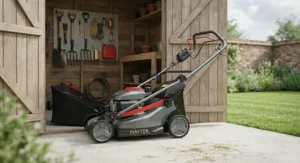
Rear-Wheel Drive Traction: Why It Wins on Slopes and Wet Grass
Rear-wheel drive traction consistently outperforms front-wheel drive on anything other than a small, flat, dry lawn, and understanding why helps explain a lot of the pricing and design choices across this list. As you push or guide a mower forward, weight naturally shifts backward, particularly once the grass collector starts filling with clippings. Front-wheel drive mowers lose grip precisely when this happens, because the front wheels — carrying less weight — are the ones trying to pull the machine forward. Rear-wheel drive mowers, by contrast, gain traction as weight shifts back, which is exactly the opposite and far more favourable relationship.
This matters enormously on slopes, where a front-wheel drive mower can genuinely struggle to climb while a rear-wheel drive equivalent claws its way up without hesitation. It also matters in damp conditions — a common reality on British lawns for a good chunk of the mowing season — where wet grass adds resistance and reduces wheel grip generally. Every petrol mower on this list, including the Hyundai HYM430SPE, Einhell GC-PM 46 S, and Mountfield SP555 V, uses rear-wheel drive for exactly this reason, and it’s a significant part of why they handle uneven British gardens confidently. The Worx Nitro WG749E and Cobra RM43SP80V carry this design philosophy into the cordless space too.
What the spec sheet won’t tell you, but reviewers note repeatedly: the difference is most obvious not in everyday flat mowing but specifically at the boundary conditions — the wet Tuesday morning cut, the steep bank at the bottom of the garden, the last lap with a nearly full grass box. If your garden has any of those characteristics, rear-wheel drive traction isn’t a nice-to-have; it’s close to essential.
Self-Propelled vs Push Mowers: Which Is Actually Right for You
The self-propelled vs push mower debate ultimately comes down to lawn size, physical comfort, and how much you value mowing as light exercise versus a chore to get through quickly. Push mowers are lighter, simpler, cheaper to buy and maintain, and give you complete manual control over pace at every moment. For small, flat lawns under roughly 150-200 square metres, a good push mower genuinely does the job just as well as a self-propelled one, without the added weight or mechanical complexity of a drive system.
Self-propelled mowers earn their higher price the moment your lawn gets larger, sloped, or irregularly shaped, or if you have any physical limitations that make sustained pushing uncomfortable. Reviewers and buyers consistently report that the fatigue difference over a 30-45 minute mowing session is substantial — self-propulsion effectively removes the forward-pushing effort entirely, leaving you to focus on steering and pattern rather than raw exertion. This is particularly relevant for older gardeners or anyone recovering from injury, for whom a self-propelled option like the lightweight Hyundai HYM430SPE or Greenworks GD60LM46SP can be the difference between managing the lawn independently and needing to pay someone else to do it.
There’s also a weight trade-off worth acknowledging honestly: self-propelled mowers carry a drive system, which adds several kilograms versus an equivalent push model, meaning that lifting the mower in and out of a shed or over a step is marginally harder even as the actual mowing becomes dramatically easier. For most UK gardens over roughly 250 square metres, though, that trade-off firmly favours self-propulsion.
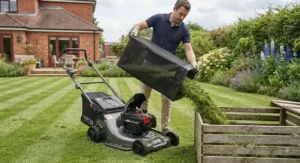
Common Mistakes When Buying a Self-Propelled Lawn Mower
The single most common mistake is buying based on cutting width alone without considering drive type, which leads plenty of people to end up with a wide-decked mower that struggles on their actual terrain. A 53cm deck on a flat lawn is fantastic; the same deck struggling with front-wheel drive on a slope is a daily frustration.
A second frequent error is underestimating battery requirements for cordless models. Buyers regularly purchase a bare tool like the Greenworks GD60LM46SP without accounting for the cost of a suitably sized battery and charger, only to discover the complete kit costs considerably more than the advertised bare-unit price. Always price the full working kit, not just the mower body, before comparing against petrol alternatives.
Third, many buyers skip checking storage dimensions and weight against their actual shed, garage, or car boot situation, then discover a 52kg mower like the Mountfield SP555 V is genuinely difficult to manoeuvre up a step or into a tight storage space. Fourth, it’s common to overlook warranty terms entirely, missing the fact that many petrol mower warranties distinguish between domestic and commercial use, with commercial use (including regularly mowing a neighbour’s or relative’s lawn for payment) sometimes reducing the warranty period substantially. Finally, buyers frequently underestimate ongoing costs — for petrol models, factor in fuel, oil changes, and annual servicing; for cordless models, factor in eventual battery replacement, since lithium-ion cells do degrade gradually over several years of seasonal use.
What to Expect: Real-World Performance on British Lawns
Specs on a page rarely translate directly into how a mower feels in an actual British garden through a full mowing season, so it’s worth setting realistic expectations. On a typical spring day after a wet week, expect even the better mowers on this list to slow down noticeably in thick, damp grass — this is completely normal and not a sign of a faulty machine, though it’s exactly the scenario where rear-wheel drive traction proves its worth over front-wheel alternatives.
Petrol models like the Hyundai HYM430SPE and Mountfield SP555 V will need roughly five to ten minutes of warm-up consideration on cold mornings, and expect a faint but persistent smell of two-stroke or four-stroke exhaust that cordless owners simply don’t experience. Cordless models such as the Ego LM1702E-SP, Worx Nitro WG749E, and Cobra RM43SP80V are dramatically quieter — quiet enough that early Sunday morning mowing becomes genuinely feasible without upsetting neighbours, something worth considering if you live in a terrace or semi-detached property.
Across the board, expect the first cut of the season (after winter dormancy) to be noticeably harder work than subsequent weekly cuts, regardless of which mower you choose — this is a lawn characteristic, not a machine limitation, and the RHS specifically recommends starting on the highest cutting setting for exactly this reason. By midsummer, with regular weekly mowing established, all seven mowers on this list should feel comparatively effortless in typical conditions, with the differences between models becoming most apparent specifically on slopes, in wet conditions, or when the grass has been allowed to grow unusually long.
Long-Term Cost & Maintenance: The True Cost of Ownership
The sticker price is only part of the real cost of owning a self-propelled mower, and the total cost of ownership picture looks quite different once you factor in several years of use. Petrol mowers like the Hyundai HYM430SPE and Einhell GC-PM 46 S have lower upfront prices but carry ongoing costs: fuel (typically a few pounds per mowing session depending on lawn size), annual oil changes, occasional spark plug and air filter replacement, and a yearly service if you want to maintain warranty compliance and peak performance. Over a five-year ownership period, these costs add up to a meaningful sum beyond the initial purchase price.
Cordless mowers flip this equation. The Ego LM1702E-SP, Worx Nitro WG749E, Greenworks GD60LM46SP and Cobra RM43SP80V all carry higher upfront prices but essentially zero fuel costs and minimal routine maintenance beyond blade sharpening and deck cleaning. The main long-term cost to plan for is eventual battery replacement — lithium-ion cells typically retain strong capacity for several hundred charge cycles, which translates to roughly five to eight years of typical seasonal UK mowing before performance noticeably declines, though replacement batteries do carry a real cost, often £80-£150 depending on capacity and brand.
The Mountfield SP555 V sits in an interesting middle ground: its premium Honda engine costs more upfront and does require petrol and servicing, but Honda’s reputation for engine longevity means many owners get considerably longer service life before needing major repairs, which can offset the higher initial outlay over a decade of ownership. When comparing value across all seven models, it’s worth calculating a rough cost-per-year figure over an expected five-year ownership period rather than fixating purely on the purchase price.
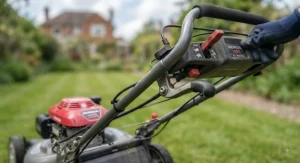
Features That Actually Matter (And Those That Don’t)
With every mower manufacturer competing on feature lists, it’s genuinely useful to separate what changes your actual mowing experience from what’s mostly marketing polish. Rear-wheel drive traction, genuine variable speed drive, and cutting width matched sensibly to your lawn size are the three features that most directly affect day-to-day performance, and all three deserve real weight in your buying decision.
Grass collection capacity matters more than most buyers initially assume — a larger bag, like the 70-litre unit on the Mountfield SP555 V or 65-litre option on the Einhell GC-PM 46 S, genuinely reduces how often you stop to empty it, which adds up over a full mowing session. Mulching capability is worth having if you’re interested in reducing lawn feed costs, since the RHS’s lawn mowing guide confirms that mulched clippings break down and return nutrients to the soil rather than being wasted as green waste, but it’s rarely a deciding factor on its own.
On the other side of the ledger, headline horsepower or voltage figures often matter less than they appear to. A 60V battery system like the Greenworks GD60LM46SP doesn’t automatically outperform a well-engineered 56V system like the Ego LM1702E-SP, because motor efficiency and blade design affect real-world cutting power just as much as raw voltage. Similarly, an extensive list of cutting height positions (nine stages versus six, for example) sounds impressive but delivers diminishing practical returns once you’re past five or six sensible increments — most gardeners settle into two or three preferred heights across a season regardless of how many options the mower technically offers.
Best Self-Propelled Mower by Category: Top Self-Propelled Mowers and Best Self Drive Lawn Mower Picks
Pulling together everything covered so far, here’s how these seven models sort into the categories most UK buyers are actually searching for when they look for the best self drive lawn mower for their situation.
For the best self-propelled mower overall on value, the Worx Nitro WG749E earns the nod thanks to its genuine variable speed drive, Intellicut power management, and mid-range pricing that undercuts premium cordless rivals without sacrificing meaningful performance. Among the top self-propelled mowers for large gardens specifically, the Mountfield SP555 V stands clearly ahead thanks to its 53cm deck, Honda engine, and rating for lawns up to 2,500 square metres — genuinely in a different league to anything else on this list for scale.
If budget is the primary constraint, the Hyundai HYM430SPE and Einhell GC-PM 46 S both deserve serious consideration, with the Hyundai winning on ease of starting and the Einhell winning on sheer rated coverage area. For anyone specifically prioritising a striped, formal lawn finish, the Cobra RM43SP80V is the standout choice among these seven, and arguably one of the more distinctive rear-roller cordless options currently available in the UK. Finally, for buyers who simply want the lightest, lowest-fuss cordless experience without compromising on cutting width, the Greenworks GD60LM46SP consistently comes up as a sensible, well-reviewed middle-ground pick.
✨ Ready to Stop Pushing and Start Mowing Smarter?
🔍 Compare current prices and availability on any of these seven self-propelled lawn mowers above — click through to check today’s stock, confirm your preferred cutting width and drive type, and get your lawn back under control this season!
FAQ
❓ What is the difference between front-wheel and rear-wheel drive self-propelled mowers?
❓ How much does a good self-propelled lawn mower cost in the UK?
❓ Are cordless self-propelled mowers powerful enough for thick grass?
❓ Do self-propelled mowers need more maintenance than push mowers?
❓ Can I use a self-propelled mower on a steep slope?
Conclusion
Choosing the right self-propelled lawn mower ultimately comes down to being honest about your lawn’s size, terrain, and your own physical comfort with pushing versus guiding a machine. For most UK gardens, the jump from a standard push mower to any of the seven models covered here — whether that’s the budget-friendly Hyundai HYM430SPE, the mid-range Worx Nitro WG749E, or the flagship Mountfield SP555 V — pays for itself in reduced physical effort within the first full mowing season.
If you take one thing away from this guide, let it be this: prioritise drive type and terrain-matching over headline specs. A mower with rear-wheel drive traction and sensible variable speed drive will outperform a higher-powered rival that’s mismatched to your garden’s slope or grass conditions, every single time. Whether you land on a petrol classic or a modern cordless system, the seven models above represent genuine, currently available options across every realistic UK budget — the “best” choice is simply the one that matches your specific lawn rather than the one with the flashiest spec sheet.
Whichever direction you go, remember that safety fundamentals apply regardless of price point: always clear the lawn of debris before mowing, keep children and pets away from the cutting area, and dispose of old batteries or worn-out petrol components responsibly through your local household recycling centre — gov.uk’s guidance on WEEE-covered equipment explains why cordless mower batteries and other electricals shouldn’t go in general household bins.
Recommended for You
- Push Mower vs Electric Mower: 7 Best Picks for UK Gardens (2026)
- Push Lawn Mower Guide: 7 Best Manual Models
- Hover Mower vs Rotary Mower: 7 Ultimate Picks for UK Gardens 2026
Disclaimer: This article contains affiliate links. As an Amazon Associate, I earn from qualifying purchases. If you purchase products through these links, we may earn a small commission at no additional cost to you.
✨ Found this helpful? Share it with your friends! 💬🤗
